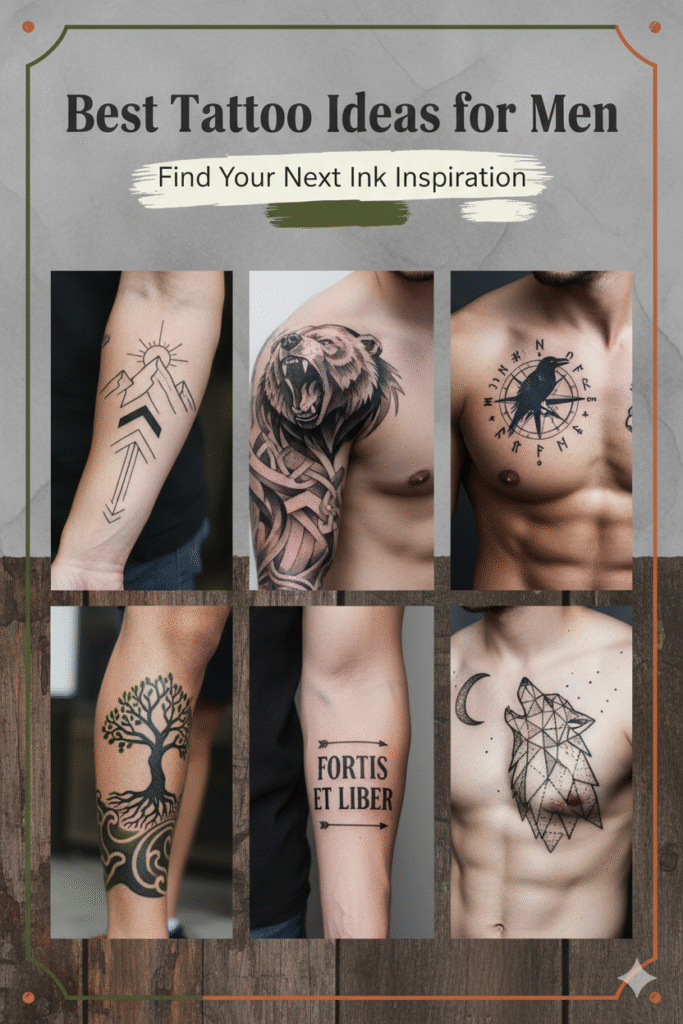
Getting a tattoo is one of the most personal decisions you’ll make. It’s a permanent piece of art that tells your story, reflects your personality, and becomes part of your identity. Whether you’re planning your first tattoo or adding to your collection, choosing the right design can feel overwhelming with endless possibilities.
This comprehensive guide explores 50 of the best tattoo ideas for men across every style, size, and placement. We’ll dive deep into design variations, meanings, placement considerations, and expert tips to help you find the perfect tattoo that truly resonates with who you are.
From bold tribal patterns to delicate minimalist designs, colorful masterpieces to meaningful quotes, we’ve covered every style to inspire your next ink.
Table of Contents
Understanding Tattoo Styles: Finding Your Aesthetic
Before diving into specific designs, it’s essential to understand the major tattoo styles available. Each style has unique characteristics, techniques, and visual appeal that will influence your final choice.
- Traditional American: Bold lines, limited color palette, and iconic imagery like roses, eagles, and anchors. This style has timeless appeal and ages well.
- Realism: Photorealistic designs that capture intricate details, perfect for portraits, animals, or landscapes. Requires a highly skilled artist.
- Blackwork: Uses solid black ink to create bold, graphic designs. Includes tribal, geometric, and abstract patterns.
- Neo-Traditional: Evolution of traditional style with more color options, dimension, and detail while maintaining bold outlines.
- Japanese: Rich in symbolism with designs like koi fish, dragons, and cherry blossoms. Features flowing compositions and traditional color schemes.
- Watercolor: Mimics watercolor painting with soft edges and vibrant color blending. Creates an artistic, painterly effect.
- Dotwork: Creates images using thousands of tiny dots, producing unique shading and texture effects.
- Illustrative: Combines various techniques with an artistic, sketch-like quality that resembles fine art drawings.
Best Small Tattoo Ideas for Men
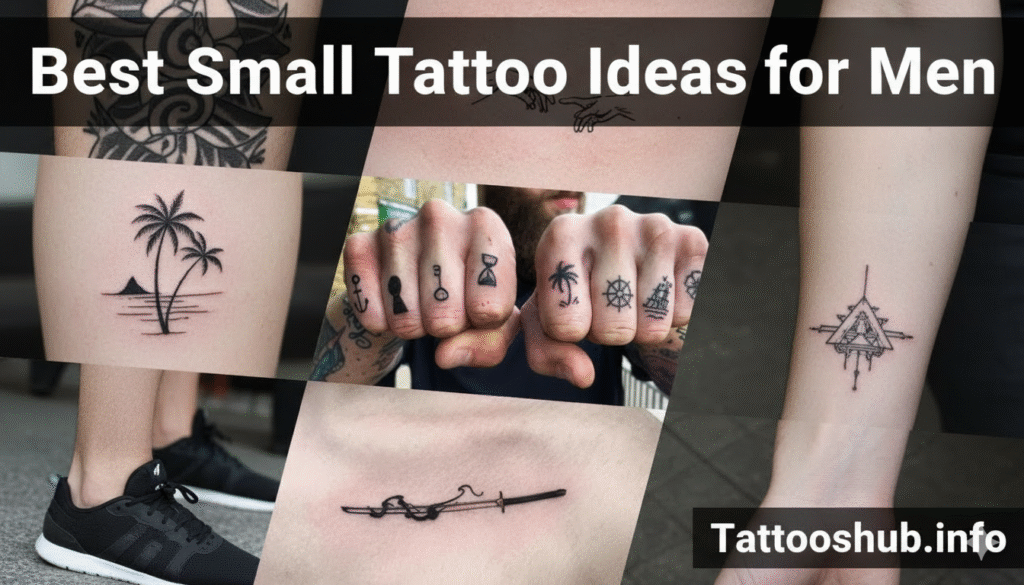
Small tattoos have surged in popularity, offering meaningful expression without overwhelming commitment. They’re perfect for first-timers, professionals who need discretion, or anyone who prefers subtle ink. Despite their size, small tattoos can pack significant visual and symbolic punch.
Advantages of Small Tattoos:
- Less painful and quicker sessions
- More affordable
- Easier to conceal for professional settings
- Can be placed virtually anywhere on the body
- Less commitment for first-time tattoo recipients
- Perfect for testing your pain tolerance
Top Small Symbol Tattoos for Men:
- Compass Rose: A classic symbol representing guidance, direction, and finding your path. Perfect for forearm, wrist, or behind the ear. The compass works beautifully in both traditional and minimalist styles.
- Arrow: Symbolizes moving forward, protection, and determination. Single arrows represent direction and focus, while crossed arrows signify friendship. Ideal for fingers, wrist, or forearm.
- Mountain Range: Represents challenges overcome, strength, and love of nature. Works exceptionally well as a minimalist line design on the forearm or chest.
- Coordinates: GPS coordinates of meaningful locations like birthplaces, where you met someone special, or travel destinations. Typically placed on ribs, collarbone, or forearm.
- Roman Numerals: Birth dates, anniversaries, or significant years in your life. Clean and sophisticated, usually on wrists, forearms, or chest.
- Wave: Symbolizes strength, life’s ups and downs, and connection to the ocean. Perfect for surfers or ocean lovers. Ideal placement includes ankles, wrists, or behind the ear.
- Anchor: Traditional maritime symbol representing stability, strength, and being grounded. Excellent first tattoo choice for wrist or forearm.
- Lightning Bolt: Represents power, speed, and sudden inspiration. Works great in minimalist style on fingers or behind the ear.
- Semicolon: Powerful symbol for mental health awareness, representing continuation when you could have ended. Often placed on wrist or behind ear.
- Crown: Symbolizes authority, leadership, and self-confidence. Perfect for fingers, wrist, or behind ear.
Placement Considerations for Small Tattoos:
- Finger Tattoos: Trendy but fade faster due to constant use and exposure. Require more frequent touch-ups. Best for simple symbols or words.
- Wrist: Visible but can be covered with a watch or bracelet. Minimal pain, heals quickly. Perfect for coordinates, small symbols, or dates.
- Behind the Ear: Easily concealed by hair, subtle and intimate. Great for first tattoos. Works well for small symbols, stars, or simple designs.
- Ankle: Can be shown or hidden with footwear. Slightly more painful due to proximity to bone. Ideal for small nature symbols or geometric designs.
- Ribcage: More painful but completely concealable. Perfect for words, dates, or meaningful small symbols you want to keep private.
Tribal Tattoo Ideas for Men
Tribal tattoos represent one of the oldest forms of body art, with roots in ancient cultures worldwide. These bold, black designs feature powerful geometric patterns that create striking visual impact. Modern tribal tattoos blend traditional symbolism with contemporary aesthetics.
Cultural Origins and Meanings:
- Polynesian Tribal: Features intricate patterns with deep spiritual meaning. Each symbol represents aspects like strength, protection, family, or status. Common elements include spearheads (courage), shark teeth (protection), and tiki figures (guardians).
- Maori Tribal: Traditional Ta Moko designs from New Zealand feature spirals and curved shapes. Each pattern tells a story about the wearer’s ancestry, achievements, and social status.
- Native American Tribal: Incorporates animals, nature elements, and geometric patterns with spiritual significance. Eagles represent freedom, bears symbolize strength, and wolves represent loyalty.
- Celtic Tribal: Features intricate knotwork and spirals representing eternity, nature, and spirituality. Celtic designs often have no beginning or end, symbolizing eternal life.
- African Tribal: Bold geometric patterns representing status, rites of passage, and tribal identity. Features strong lines and symmetrical designs.
Popular Tribal Symbols and Their Meanings:
- Spearheads: Represent the warrior spirit, courage in battle, and protection from enemies. Multiple spearheads show strength in numbers.
- Turtle (Honu): Symbolizes longevity, peace, and navigation. Important in Polynesian culture as the turtle guided sailors to land.
- Sun: Represents life, energy, leadership, and rebirth. Central to many tribal cultures as a life-giving force.
- Shark Teeth: Symbolize protection, adaptability, and fearlessness. Shows respect for one of nature’s most powerful predators.
- Lizard: Represents good fortune, survival, and adaptability in Polynesian culture.
- Ocean Waves: Symbolize life’s journey, change, and the power of nature. Represents going with the flow while maintaining strength.
- Tribal Band: Armband or leg band designs represent strength, protection, and marking life milestones. Each pattern tells a unique story.
Placement Tips for Tribal Tattoos:
- Upper Arm and Shoulder: Most popular placement for tribal designs. The rounded muscle shape complements flowing tribal patterns. Can extend onto chest or back for larger pieces.
- Forearm: Excellent canvas for tribal bands or elongated designs. Highly visible, making a bold statement. Works well for both traditional and modern tribal styles.
- Chest: Provides large, flat surface perfect for symmetrical tribal designs. Can extend over shoulder and down arm for dramatic effect.
- Back: Offers the largest canvas for elaborate tribal pieces. Popular for full-back tribal designs featuring multiple elements and extensive detail.
- Leg and Calf: Great for tribal bands or vertical designs. The calf muscle provides good shape for flowing patterns.
- Ribcage: More painful but creates dramatic effect with tribal designs that follow body contours.
Design Considerations:
Authentic vs. Modern: Decide whether you want traditional tribal designs with cultural meaning or modern interpretations. If choosing authentic designs, research the meaning and show respect for the culture.
Size and Scale: Tribal tattoos typically look better larger due to intricate patterns and bold lines. Small tribal tattoos can look cluttered or lose detail.
Black vs. Color: Traditional tribal uses solid black ink. Modern interpretations sometimes incorporate color, though this deviates from authentic styles.
Symmetry: Many tribal designs feature symmetrical patterns that create visual balance and harmony.
Minimalist Tattoo Ideas for Men
Minimalist tattoos embrace the “less is more” philosophy, using simple lines, shapes, and limited detail to create sophisticated designs. This style has exploded in popularity for its modern aesthetic, versatility, and timeless appeal. Minimalist tattoos prove that powerful statements don’t require elaborate artwork.
Benefits of Minimalist Tattoos:
Timeless Appeal: Simple designs age better than complex, detailed work. They’re less likely to look dated as trends change.
Quick Sessions: Most minimalist pieces can be completed in one short session, reducing time commitment and discomfort.
Professional-Friendly: Subtle and sophisticated, making them easier to display in professional environments.
Cost-Effective: Require less time and ink, making them more affordable than elaborate pieces.
Versatile Placement: Work on any body part, including smaller areas like fingers, wrists, or behind ears.
Easy Touch-Ups: Simple designs are easier to touch up if needed over time.
Popular Minimalist Design Inspirations:
Line Art: Single or few continuous lines creating recognizable shapes. Mountains, waves, skylines, animals, or abstract forms.
Geometric Shapes: Clean triangles, circles, hexagons, or combination shapes. Often represents balance, harmony, and precision.
Outline Animals: Simple animal outlines capturing essence with minimal lines. Popular choices include wolves, bears, elephants, whales, or birds.
Constellation Patterns: Connected dots forming constellations, especially zodiac signs. Represents connection to the cosmos and personal astrology.
Simple Words or Phrases: Single words or short phrases in clean, simple fonts. Represents personal mantras, values, or reminders.
Heartbeat Lines: Simple EKG-style line with heartbeat spike. Represents life, passion, or specific date incorporated into the line.
Botanical Elements: Simple leaf, branch, or flower outlines. Represents growth, nature, and simplicity.
Architectural Elements: Buildings, bridges, or famous landmarks reduced to simple line drawings.
Abstract Designs: Non-representational shapes and lines creating artistic patterns.
Mathematical Symbols: Infinity signs, pi, equations, or symbols representing logic and order.
Minimalist Design Techniques:
Fine Line Work: Uses single needle or very thin needles for delicate lines. Requires skilled artist for consistency. These tattoos need gentle aftercare as fine lines can be fragile during healing.
Negative Space: Uses skin as part of the design, creating images through what’s not tattooed. Creates clever, eye-catching effects.
Single Line Drawings: Entire design created without lifting needle, forming continuous line. Requires exceptional artist skill and planning.
Micro Tattoos: Extremely small, detailed work requiring specialized techniques. Often no larger than a coin.
Blackwork Minimalism: Uses solid black shapes in simple, bold forms. Creates strong contrast and graphic appeal.
Best Placements for Minimalist Tattoos:
Forearm: Perfect visibility for line art and simple designs. Can be shown or covered easily.
Inner Bicep: Subtle placement that follows muscle contours. Great for words, small symbols, or line art.
Collarbone: Elegant placement for horizontal designs like coordinates, dates, or simple phrases.
Ribs: Intimate placement for personal designs. Follows body lines beautifully.
Ankle: Perfect for small, delicate minimalist designs. Easy to conceal or show.
Behind Ear: Ultimate minimalist placement for tiny, personal symbols.
Finger: Trending placement for extremely minimalist symbols or bands.
Choosing Your Minimalist Design:
Consider Longevity: Very fine lines may blur slightly over time. Discuss line thickness with your artist for longevity.
Think About Visibility: Decide if you want your tattoo visible or hidden. This affects placement and size.
Personal Meaning: Even simple designs should resonate personally. Don’t get something just because it’s trendy.
Artist Selection: Find an artist specializing in fine line or minimalist work. Check portfolios for consistency and precision.
Geometric Tattoo Ideas for Men
Geometric tattoos combine mathematics, nature, and art into mesmerizing designs. These tattoos use precise shapes, patterns, and symmetry to create visually stunning pieces that represent order, balance, and the underlying structures of reality. From sacred geometry to modern abstract patterns, geometric tattoos offer endless creative possibilities.
Symmetry and Shapes in Geometric Design:
Sacred Geometry: Ancient patterns believed to represent fundamental forms and energy patterns. Includes Flower of Life, Metatron’s Cube, and Sri Yantra. These designs carry spiritual meaning about the interconnectedness of all life.
Platonic Solids: Five three-dimensional shapes that are perfectly symmetrical. Includes tetrahedron, cube, octahedron, dodecahedron, and icosahedron. Each represents an element (earth, fire, air, water, ether).
Mandala Patterns: Circular designs radiating from a center point, representing wholeness and universe. Can be simple or incredibly intricate. Traditional Buddhist and Hindu spiritual symbol.
Fibonacci Sequence: Mathematical pattern found throughout nature. Often depicted as spiral or connected rectangles. Represents natural growth and perfect proportion.
Tessellations: Repeating patterns that fit perfectly together without gaps. Creates mesmerizing, continuous designs. M.C. Escher popularized this artistic approach.
Polyhedrons: Three-dimensional geometric shapes adding depth and dimension. Creates optical illusions and architectural feel.
Popular Geometric Tattoo Concepts:
Geometric Animals: Animals constructed from geometric shapes and lines. Popular subjects include wolves, bears, lions, eagles, and owls. Combines nature with mathematical precision.
Sacred Geometry Sleeves: Full sleeve incorporating multiple sacred geometry patterns. Creates cohesive, spiritually meaningful artwork covering entire arm.
Dotwork Geometry: Uses stippling technique (thousands of tiny dots) to create geometric patterns. Creates unique texture and shading effects. Time-intensive but stunning results.
Geometric Landscapes: Mountains, forests, or oceans rendered in geometric style. Combines love of nature with modern aesthetic.
Optical Illusions: Geometric patterns creating 3D effects, impossible objects, or visual tricks. Includes Penrose triangles, impossible cubes, and perspective illusions.
Geometric Portraits: Faces or skulls constructed from geometric shapes. Merges realism with abstraction for striking effect.
Symmetrical Body Placement: Identical or mirrored geometric designs on both arms, legs, or sides of chest. Creates harmonious, balanced aesthetic.
Blackwork Geometric: Uses solid black ink in geometric shapes. Creates bold, graphic designs with strong visual impact.
Key Considerations for Geometric Tattoos:
Precision is Critical: Geometric tattoos require exceptional precision. Small errors in symmetry or line work are immediately noticeable. Choose an artist specializing in geometric work with proven portfolio.
Size Matters: Complex geometric patterns need adequate size to maintain detail and impact. Very small geometric tattoos may lose clarity as they age.
Body Placement: Consider how body curves affect straight lines and symmetry. Some placements (like ribs or shoulders) may distort patterns as you move.
Expansion Potential: Geometric designs work well for phased projects. Start with a central piece and expand outward with complementary patterns.
Color vs. Black: Most geometric tattoos use black ink for clarity and precision. Color can be added but may reduce the mathematical purity of the design.
Healing Considerations: Geometric tattoos with heavy black fill require proper aftercare to maintain crisp lines and solid color saturation.
Best Placements for Geometric Tattoos:
Forearm: Perfect for cylindrical geometric designs that wrap around arm. Highly visible for showing intricate work.
Chest: Large, relatively flat surface ideal for symmetrical geometric designs. Popular for sacred geometry centerpieces.
Back: Ultimate canvas for elaborate geometric compositions. Can incorporate spine as central axis for perfect symmetry.
Shoulder: Rounded surface works well for circular geometric patterns like mandalas. Can extend onto chest or upper arm.
Sleeve: Full or half sleeves allow geometric patterns to flow and connect. Creates comprehensive, cohesive artistic statement.
Thigh: Large, flat surface perfect for substantial geometric pieces. Less common placement makes it more unique.
Combining Geometric with Other Styles:
Geometric Realism: Combines photorealistic elements with geometric patterns. Often features realistic animal or portrait emerging from geometric shapes.
Geometric Watercolor: Precise geometric lines with watercolor splashes. Creates interesting contrast between rigid structure and fluid color.
Geometric Tribal: Merges traditional tribal patterns with modern geometric precision. Updates classic tribal aesthetic.
Biomechanical Geometry: Combines mechanical elements with geometric patterns. Creates cyborg or futuristic aesthetic.
Compass Tattoo Designs for Men
Compass tattoos rank among the most meaningful and versatile designs for men. These timeless symbols represent guidance, direction, adventure, and finding your true path in life. Whether you’re a traveler, someone going through transition, or simply someone who values self-direction, compass tattoos offer rich symbolism and stunning visual appeal.
Symbolism and Meaning:
Navigation and Guidance: Original purpose of compasses—finding direction. Represents being guided toward your goals and true north.
Adventure and Travel: Perfect for wanderers, travelers, and those with adventurous spirits. Represents desire to explore and experience new things.
Finding Your Way: Symbolizes finding your path in life, making right decisions, and staying true to yourself.
Protection: Historically, sailors believed compass tattoos would ensure safe return home. Represents protection during life’s journey.
Independence: Represents self-reliance and ability to chart your own course without following others.
Balance: Cardinal directions represent balance between different aspects of life—work/play, logic/emotion, etc.
Popular Compass Tattoo Styles:
Traditional Nautical Compass: Classic design with ornate details, often featuring rope borders, anchors, or maritime elements. Bold colors and heavy black outlines in traditional American style.
Vintage Compass Rose: Elaborate star pattern with detailed directional points. Often includes decorative elements like scrollwork and ribbons. Can be simple or extremely intricate.
Minimalist Compass: Simple line work showing basic compass structure. Perfect for those wanting subtle symbolism. Quick to tattoo and easy to place anywhere.
Realistic Compass: Photorealistic rendering of actual compass, often with weathered, antique appearance. Shows incredible detail including scratches, patina, and wear.
Geometric Compass: Incorporates sacred geometry, sharp angles, and precise lines. Merges navigation symbolism with modern aesthetic.
Watercolor Compass: Combines traditional compass outline with watercolor background. Creates artistic, painterly effect with vibrant colors.
Map and Compass Combination: Features compass overlaid on map, often of meaningful location. Can include coordinates of significant places.
Compass with Additional Elements: Combined with anchors, ships, mountains, forests, or other symbolic imagery. Creates personalized narrative.
Broken Compass: Intentionally “broken” or fractured compass representing lost period in life or overcoming being lost. Powerful symbol of recovery and finding direction again.
Design Elements to Consider:
Cardinal Directions: Traditional N-E-S-W or expanded to include NE, SE, SW, NW. Some designs include degrees for more technical appearance.
Center Star: Decorative star or rose in compass center. Can range from simple to extremely ornate.
Border Details: Rope, chains, circular bands, or decorative rings framing compass. Adds visual interest and completes composition.
Color Palette: Traditional uses reds and blues with black. Modern versions may use any colors or stay entirely black.
Background Elements: Waves, maps, mountains, stars, or abstract patterns behind compass. Adds depth and personal meaning.
Text Integration: Coordinates, dates, quotes, or meaningful words incorporated into design. Common additions include “Not all who wander are lost.”
Best Placements for Compass Tattoos:
Forearm: Extremely popular placement allowing you to see your “guidance” daily. Works for various sizes from small to large.
Chest: Powerful placement over heart, representing internal guidance. Can be large centerpiece or incorporated into larger chest piece.
Shoulder: Natural circular placement following shoulder contour. Can extend onto chest or upper arm.
Upper Arm: Classic location for medium to large compass designs. Easy to show or conceal.
Back: Between shoulder blades for medium pieces or large back pieces incorporating additional elements.
Hand: Bold placement for those wanting visible statement. Usually smaller, minimalist designs.
Thigh: Growing in popularity, offers large canvas for elaborate compass designs.
Calf: Vertical orientation works well for compass with additional elements above or below.
Personalizing Your Compass Tattoo:
Coordinates: Add GPS coordinates of home, birthplace, where you met someone special, or dream destinations.
Dates: Incorporate significant dates into compass design through Roman numerals or integrated numbering.
Initials: Include initials of loved ones in cardinal directions or decorative elements.
Specific Location Elements: Add landmarks, mountains, or geographical features meaningful to you.
Cultural Elements: Incorporate Celtic, Norse, or other cultural patterns into compass design.
Personal Symbols: Add elements representing hobbies, passions, or significant life aspects (musical notes, sports equipment, etc.).
Animal Tattoo Ideas for Men
Animal tattoos connect us to nature’s power, wisdom, and primal energy. Throughout human history, animals have served as spirit guides, totems, and symbols of traits we aspire to embody. From fierce predators to majestic birds, each animal carries unique symbolism that can represent your personality, values, and life philosophy.
Traditional Animal Symbols and Their Meanings:
Wolf: Loyalty, family, intelligence, and freedom. Wolves represent strong family bonds while maintaining independence. Popular for those who value pack mentality but refuse to be tamed. Can be shown howling (calling to others), hunting (determination), or in peaceful pack scenes.
Lion: Courage, strength, royalty, and leadership. King of the jungle represents masculine power and authority. Perfect for natural leaders or those aspiring to greatness. Can feature full mane (strength), roaring (power), or with crown (kingship).
Eagle: Freedom, vision, spirituality, and patriotism. Eagles soar above earthly concerns, representing higher perspective. Important in Native American and American culture. Can be shown in flight (freedom), perched (watchfulness), or hunting (precision).
Bear: Strength, courage, confidence, and protection. Bears represent raw power combined with protective instincts. Often chosen by fathers or protectors. Can show grizzly (ferocity), polar bear (adaptation), or hibernating bear (rebirth).
Tiger: Power, passion, independence, and fearlessness. Tigers combine beauty with deadly force. Represents Asian cultures and warrior spirit. Can feature prowling (patience), pouncing (action), or roaring (dominance).
Snake: Transformation, rebirth, healing, and temptation. Snakes shed skin, representing personal transformation. Also symbolizes medicine (caduceus). Can show coiled (potential energy), striking (decisive action), or ouroboros (eternity).
Dragon: Power, wisdom, mystery, and good fortune. Eastern dragons represent wisdom and good fortune; Western dragons represent power and conquest. Extremely popular for large pieces. Can feature Asian style (serpentine, benevolent) or European style (winged, fierce).
Owl: Wisdom, knowledge, intuition, and mystery. Owls see in darkness, representing insight and awareness. Popular among scholars and philosophers. Can show realistic, geometric, or stylized versions.
Raven/Crow: Intelligence, mystery, transformation, and magic. These birds feature prominently in Norse, Celtic, and Native American mythology. Represent thought, memory, and connection to the spirit world.
Shark: Fearlessness, adaptability, and relentless forward motion. Sharks must keep moving or die, representing persistence. Popular in Polynesian culture. Great white, hammerhead, or traditional tribal styles.
Elephant: Memory, wisdom, loyalty, and family. Elephants never forget, representing intelligence and strong family bonds. Important in Hindu and Buddhist traditions. Can show realistic, mandala style, or geometric.
Phoenix: Rebirth, resurrection, renewal, and triumph over adversity. Perfect for those who’ve overcome major challenges. Always shown with flames, representing rising from ashes.
Koi Fish: Perseverance, determination, and achieving goals. Koi swim upstream against current, representing overcoming obstacles. Japanese tradition with color meanings: black (adversity overcome), red (love/strength), blue (reproduction).
Skull with Animals: Combines animal symbolism with mortality themes. Ram skull represents sacrifice, bull skull represents strength, and deer skull represents gentleness with mortality awareness.
Creative Animal Combinations:
Two Wolves: Often one white/one black representing inner battle between good and evil, logic and emotion. Based on Cherokee legend.
Wolf Pack: Multiple wolves representing family, loyalty to tribe, and strength in numbers.
Lion and Lamb: Contrast between power and peace, ferocity and gentleness.
Eagle and Snake: Eternal battle between sky and earth, good and evil. Mexican coat of arms features this imagery.
Animals with Geometric Elements: Modern approach combining realistic animal with geometric patterns, creating striking contrast.
Spirit Animal Sleeves: Multiple spirit animals representing different life aspects or periods.
Animals with Nature Elements: Wolf with moon, bear with mountains, eagle with clouds. Connects animal to natural habitat.
Morphing Animals: One animal transforming into another, representing personal transformation or duality.
Placement Considerations for Animal Tattoos:
Size Requirements: Most animals look best with adequate space for detail. Lions, tigers, bears, eagles, and dragons particularly benefit from larger placements.
Body Contours: Consider how animal fits body shape. Snakes and dragons work beautifully on curved surfaces. Climbing animals (panthers, lizards) can follow muscle contours.
Realistic vs. Stylized: Realistic animal portraits require skilled artist and significant size. Geometric, tribal, or illustrative styles offer alternatives.
Single Animal vs. Scene: Decide between isolated animal portrait or full scene with environment and additional elements.
Color vs. Black and Grey: Realistic animals often use black and grey for timeless appeal. Traditional styles use bold colors. Neo-traditional offers middle ground.
Best Placements by Animal Type:
Large Predators (Lion, Tiger, Bear): Back, chest, thigh, or sleeve for proper scale and detail.
Birds (Eagle, Owl, Raven): Back (wings spread), chest (flying toward you), or upper arm (perched).
Serpentine (Snake, Dragon): Arm, leg, ribcage, or spine—anywhere they can wrap and flow.
Wolves: Forearm, upper arm, chest, or back—versatile placement works almost anywhere.
Small Animals: Can be placed anywhere but ensure adequate size for detail.
Colorful Tattoo Ideas for Men
While black and grey tattoos offer timeless appeal, colorful tattoos bring vibrancy, emotion, and eye-catching visual impact. Color tattoos have evolved from traditional limited palettes to modern masterpieces using every hue imaginable. Whether you’re drawn to bold traditional colors or subtle watercolor washes, color adds new dimensions to your tattoo story.
Vibrant Color Palettes:
Traditional Bold Colors: Red, green, blue, and yellow in saturated, pure form. Creates iconic, timeless look. High contrast between colors and black outlines makes colors pop. Ideal for traditional American, neo-traditional, and Japanese styles.
Watercolor Splashes: Soft, blended colors mimicking watercolor paintings. Features gradients, drips, and splashes without defined outlines. Creates dreamy, artistic effect. Works beautifully for abstract pieces or combined with line work.
Realistic Color: Full color spectrum creating photorealistic effects. Requires skilled artist who understands color theory, shading, and blending. Perfect for portraits, nature scenes, or any realistic subject matter.
Pastel Tones: Softer, muted colors creating gentle aesthetic. Less common for men but growing in popularity. Works well for minimalist designs or nature elements.
Neon and Bright Colors: Ultra-vibrant, almost fluorescent colors. Creates modern, eye-catching effect. Pink, purple, electric blue, and bright green. Popular for new school and contemporary styles.
Complementary Color Schemes: Uses opposite colors on color wheel (blue/orange, red/green, purple/yellow). Creates maximum contrast and visual pop.
Monochromatic with Color Accent: Primarily black and grey with selective color highlights. Red rose on black and grey sleeve, blue water in otherwise black piece. Creates focal point and visual interest.
When to Choose Color:
Subject Matter Benefits: Some subjects naturally call for color—flowers, birds, sunsets, ocean scenes, and portraits often look better with color.
Personal Expression: Color allows greater emotional expression. Warm colors (red, orange, yellow) convey energy and passion. Cool colors (blue, green, purple) suggest calm and depth.
Standing Out: In world of black tattoos, color makes statement and ensures uniqueness.
Covering Old Work: Color can help cover or rework old tattoos effectively.
Cultural Significance: Some styles (Japanese, traditional Polynesian with modern adaptation) specifically use color for meaning.
Popular Colorful Tattoo Ideas:
Japanese Full Sleeves: Dragons, koi fish, cherry blossoms, and samurai in traditional Japanese palette. Uses bold outlines with colored fills, creating powerful visual narrative.
Floral Designs: Roses (red for love, yellow for friendship, black for loss), cherry blossoms (life’s fleeting nature), lotus flowers (enlightenment), peonies (prosperity), and sunflowers (positivity). Flowers naturally lend themselves to color.
Nature Scenes: Forests, mountains, oceans, and sunsets capture beauty of natural world. Color adds realism and emotional impact. Northern lights particularly stunning in color.
Psychedelic Art: Abstract, surreal designs with vibrant, contrasting colors. Influenced by art movements and consciousness exploration. Features impossible geometry, flowing patterns, and eye-bending effects.
Phoenix Rising: Mythical bird in brilliant reds, oranges, yellows, and golds. Flames and feathers create dynamic color composition.
Skull with Flowers: Contrast between dark skull and vibrant flowers. Represents life and death duality. Sugar skull (Dia de los Muertos) designs particularly colorful.
Comic Book/Pop Art: Bold colors with Ben-Day dots, speech bubbles, and graphic style. Pays homage to comic books and pop art movement.
Ocean Themes: Waves, sea creatures, and maritime scenes benefit from blues, teals, and aqua tones. Can add coral pinks, orange, and yellows for reef scenes.
Space and Cosmos: Nebulas, galaxies, and planets allow creative color use. Purples, blues, pinks, and stellar whites create cosmic wonder.
Stained Glass Effect: Designs mimicking stained glass windows with bold colors separated by black lines. Religious imagery, nature scenes, or geometric patterns work beautifully.
Color Longevity and Maintenance:
Fading Factors: All tattoos fade over time, but certain colors faster than others. Yellows, whites, and light colors fade quickest. Reds, blues, and blacks last longest. Sun exposure is primary cause of fading.
Skin Tone Considerations: Color appears differently on various skin tones. Lighter skin shows colors more vibrantly. Darker skin tones may need adjusted color selection for visibility.
Touch-Up Expectations: Plan for touch-ups every 5-10 years to maintain vibrancy. Some colors may need more frequent attention.
Aftercare Importance: Proper healing critical for color saturation. Follow artist’s instructions precisely. Use high-SPF sunscreen on healed tattoo to preserve colors.
Artist Selection: Color tattoos require specific skills. Find artist with strong portfolio of color work showing good saturation, blending, and aging examples.
Placement Considerations: Areas with less sun exposure maintain color better. Inner arm, chest, and areas typically covered by clothing preserve color longer.
Meaningful Quote Tattoos for Men
Words carry power. Quote tattoos transform meaningful phrases, personal mantras, or inspirational words into permanent reminders of values, beliefs, and life philosophy. Whether it’s a single word or full phrase, text tattoos offer direct, unambiguous meaning combined with aesthetic appeal.
Popular Quote Categories:
Motivational Quotes:
- “What doesn’t kill me makes me stronger”
- “Fortune favors the bold”
- “The only way out is through”
- “Strength through adversity”
- “Never give up”
- “Impossible is nothing”
Latin Phrases:
- “Carpe Diem” (Seize the day)
- “Memento Mori” (Remember death)
- “Veni Vidi Vici” (I came, I saw, I conquered)
- “Per Aspera Ad Astra” (Through hardships to the stars)
- “Amor Fati” (Love of fate)
- “Dum Spiro Spero” (While I breathe, I hope)
Literary Quotes:
- “Not all who wander are lost” (Tolkien)
- “So it goes” (Vonnegut)
- “Everything was beautiful and nothing hurt” (Vonnegut)
- “And still I rise” (Maya Angelou)
- “This too shall pass”
- “To thine own self be true” (Shakespeare)
Philosophical Quotes:
- “Know thyself”
- “The only constant is change”
- “Be here now”
- “This is the way”
- “Everything happens for a reason”
- “What we think, we become”
Family and Love:
- “Blood is thicker than water” (or full version: “The blood of the covenant is thicker than the water of the womb”)
- “Family first”
- “Love conquers all”
- Names and dates of children/family
- “Forever and always”
Spiritual and Religious:
- Scripture verses (Psalm 23:4, Philippians 4:13, etc.)
- “Faith over fear”
- “Blessed”
- “God is greater than the highs and lows”
- “Allah” in Arabic calligraphy
- Sanskrit mantras
Personal Mantras:
- “Stay strong”
- “Keep going”
- “One day at a time”
- “Progress not perfection”
- “Breathe”
- “Let it be”
Personalization Tips:
Font Selection Matters: Typography dramatically affects tattoo’s feel and readability. Consider these options:
Script Fonts: Flowing, cursive styles create elegant, personal feel. Great for emotional quotes or names. Ensure script isn’t too elaborate—it must remain readable as it ages.
Sans Serif: Clean, modern fonts without decorative elements. Highly readable and ages well. Perfect for minimalist aesthetic or professional discretion.
Serif Fonts: Traditional fonts with decorative strokes. Creates classic, timeless appearance. Good for literary quotes or formal phrases.
Typewriter Style: Vintage, mechanical look perfect for literary quotes or nostalgic phrases.
Gothic/Blackletter: Medieval, ornate style used for dramatic effect. Works well for Latin phrases or dark themes.
Handwriting Style: Can replicate actual handwriting of loved one. Incredibly personal and unique. Popular for signatures of parents, grandparents, or lost loved ones.
Custom Lettering: Artist creates unique lettering specifically for your tattoo. Ensures complete originality.
Size and Readability:
Bigger is Better: Letters need adequate size to remain readable as tattoo ages and ink spreads slightly. Minimum letter height should be about 1/4 inch.
Letter Spacing: Proper spacing (kerning) critical for readability. Too close causes bleeding together over time; too far looks disconnected.
Line Length: Consider breaking long quotes into multiple lines. Single long line may not fit chosen placement well.
Test It Out: Have artist create actual-size printout. See how it looks on your body before committing.
Placement Considerations:
Forearm: Most popular for quotes. Easy to read yourself, serves as personal reminder. Horizontal text on inner forearm very popular.
Ribcage: Intimate placement for personal mantras or quotes you want to keep private. Follows body line beautifully.
Chest: Over heart for meaningful quotes about love, loss, or core values. Can be horizontal across chest or vertical down sternum.
Spine: Vertical text down spine creates striking effect. Best for single words or short phrases.
Collarbone: Horizontal text across collarbone subtle and sophisticated. Perfect for shorter quotes.
Upper Arm/Shoulder: Can wrap around arm or follow muscle line. Good visibility with option to conceal.
Forearm Inner/Outer: Inner forearm for quotes you want to see yourself; outer forearm for quotes you want to show world.
Design Enhancements:
Minimalist Approach: Simple text only, relying on words alone for impact. Timeless and clean.
Decorative Elements: Add underlines, banners, frames, or flourishes. Complements text without overpowering it.
Combined with Imagery: Integrate quote with relevant symbol or image. Compass with “not all who wander are lost,” anchor with nautical quote, etc.
Negative Space: Use background shading or geometric shapes to highlight text. Creates depth and visual interest.
Watercolor Background: Soft color washes behind text add artistic element while maintaining readability.
Dotwork Shading: Stippling technique creates texture around text. Adds dimension without overwhelming words.
Common Mistakes to Avoid:
Spelling and Grammar Errors: Triple-check spelling, punctuation, and grammar. Mistakes are permanent. Have multiple people verify before session.
Font Too Small or Elaborate: Overly fancy fonts or tiny letters won’t age well. They blur and become unreadable.
Too Long: Lengthy paragraphs difficult to place and may lose impact. Edit to essential message.
Trendy Phrases: Popular quotes can become dated. Choose something with lasting personal meaning, not just current trend.
Wrong Language: If using foreign language, consult native speaker to verify accuracy and meaning. Google Translate isn’t sufficient.
Poor Placement: Text on curved surfaces (ribs, shoulder blade) may distort. Discuss with artist how body movement affects text.
Questions to Ask Yourself:
- Will this quote still resonate in 10, 20, 30 years?
- Does it represent my core values or temporary feelings?
- Is it my own words or someone else’s? (Both valid, just consider which is more meaningful)
- Can I commit to seeing these words every day?
- Does the quote need context to make sense?
- Am I getting this because it’s meaningful or because it’s popular?
Nautical Tattoo Ideas for Men
Nautical tattoos have rich history rooted in maritime tradition. Sailors pioneered tattoo culture, using specific symbols to mark achievements, superstitions, and hopes for safe return. Today, nautical tattoos appeal to sailors, ocean lovers, and anyone drawn to symbolism of adventure, journey, and connection to the sea.
Anchor and Compass Designs:
Traditional Anchor: Most iconic nautical symbol representing stability, grounding, and staying true to your roots. Sailors earned anchor tattoos after crossing Atlantic Ocean. Symbolizes holding steady during life’s storms while maintaining ability to move forward.
Design variations include rope wrapped around anchor (connection), banner with name or date (dedication), flowers incorporated (beauty in strength), and broken chain attached (freedom while maintaining stability).
Anchor with Compass: Combines grounding (anchor) with direction (compass). Represents being grounded while finding your path. Popular chest or forearm placement.
Ship’s Wheel (Helm): Represents control, navigation, and steering your own destiny. Traditional sailors believed it would help them find their way home. Can be realistic, traditional, or minimalist style.
Anchor with Heart: Combines stability with love. Often includes name or initials of loved one. Represents anchoring to person or relationship.
Cultural Significance:
Sailor Jerry Tradition: Norman “Sailor Jerry” Collins created iconic traditional nautical designs that remain popular today. Bold outlines, limited color palette (red, blue, green, yellow, black), and specific symbolism.
Naval Traditions: Different tattoos marked specific achievements:
- Anchor: Crossed Atlantic
- Golden Dragon: Crossed International Date Line
- Shellback Turtle: Crossed Equator
- Pig and Rooster: On feet, believed to prevent drowning
- Swallow: Every 5,000 nautical miles traveled
Superstitions and Protection: Sailors believed certain tattoos provided protection during voyages. Nautical star (North Star) would guide them home. Rooster and pig wouldn’t drown since these animals survived shipwrecks. Hold Fast knuckle tattoos for grip strength during storms.
Additional Nautical Symbols:
Nautical Star: Five-pointed star representing North Star, used for navigation. Symbolizes guidance, finding your way, and safe return home. Can be simple black outline or traditional shaded red/black design.
Ship/Sailing Ship: Full-rigged ships represent adventure, journey, and overcoming challenges. Different ship types carry different meanings: clipper ships (speed), pirate ships (rebellion), ghost ships (mystery).
Lighthouse: Represents guidance through darkness, hope, and safe harbor. Symbolizes being beacon for others or having guiding light in your life.
Kraken/Octopus: Mythical sea monster or giant octopus represents mystery of deep, adaptability, and intelligence. Can be rendered as fierce monster or realistic sea creature.
Mermaid: Feminine figure representing temptation, mystery of sea, and duality of beauty and danger. Traditional sailors’ symbol based on maritime legends.
Swallow: Small bird tattoo representing journey, return home, and loyalty. Sailors knew land was near when they saw swallows. Pairs of swallows often placed symmetrically.
Waves: Ocean waves represent life’s ups and downs, power of nature, and going with flow. Can be Japanese-style (Great Wave off Kanagawa), traditional, or minimalist.
Rope: Twisted rope represents strength through unity, binding commitments, and nautical work. Often used as borders or connecting elements.
Crossed Anchors: Represents naval service, specifically Boatswain’s Mate rating. Also symbolizes stability from multiple sources.
Harpoon or Trident: Represents maritime hunting, Poseidon/Neptune mythology, and power over seas.
Modern Nautical Designs:
Geometric Nautical: Traditional symbols rendered in modern geometric style. Combines maritime heritage with contemporary aesthetic.
Watercolor Ocean Scenes: Realistic or abstract ocean scenes with watercolor technique. Blues, teals, and aquas create fluid, artistic interpretation.
Minimalist Nautical: Simple line work of anchors, ships, or waves. Clean, modern take on traditional symbols.
Blackwork Nautical: Solid black designs with nautical themes. Creates bold, graphic effect.
Neo-Traditional Nautical: Updates traditional designs with more colors, dimension, and detail while maintaining bold outlines.
Placement Ideas:
Forearm: Traditional location for anchors, compasses, and smaller nautical symbols. Easy visibility honors maritime tradition.
Chest: Large canvas for ship scenes, lighthouse, or central nautical piece. Can extend to shoulders for full maritime scene.
Shoulder/Upper Arm: Traditional location for swallows, anchors, or nautical stars. Can be starting point for sleeve.
Ribs: Vertical placement for ship, lighthouse, or elongated nautical scene.
Calf/Leg: Growing in popularity for larger nautical pieces. Traditional location for pig/rooster on feet.
Back: Large pieces like full ships, ocean scenes, or maritime narratives. Provides canvas for detailed storytelling.
Combining Nautical Elements:
Create cohesive nautical theme by combining multiple elements:
- Anchor with rope and compass creating central piece
- Ship on waves with lighthouse in distance
- Sleeve incorporating anchor, wheel, waves, and nautical star
- Chest piece with ship, compass, and quote about journey
- Nautical star with coordinates of significant location
Best First Tattoo Ideas for Men
Getting your first tattoo is significant decision requiring careful consideration. First tattoos set foundation for potential future work and represent stepping into tattoo culture. Choosing right design, placement, and artist ensures positive experience and lasting satisfaction.
Choosing the Right Design:
Start with Meaning: First tattoo should have personal significance. Avoid trends or impulse decisions. Consider:
- What values or beliefs do you want to represent?
- Which life experiences shaped who you are?
- What symbols or images consistently resonate with you?
- Is there family heritage or cultural connection to honor?
Size Considerations: Many tattoo artists recommend starting smaller. Benefits include:
- Less time commitment (shorter session)
- Lower cost
- Testing pain tolerance
- Room for future expansion
- Less intimidating for first experience
However, don’t go too small. Tiny tattoos can blur and lose detail over time. Discuss minimum size with artist for your chosen design.
Style Selection: Research different tattoo styles to find aesthetic that resonates:
- Traditional: Bold, timeless, ages well
- Minimalist: Clean, subtle, modern
- Blackwork: Strong, graphic, high contrast
- Realistic: Detailed, requires skilled artist
- Geometric: Precise, mathematical, contemporary
Timeless vs. Trendy: Consider longevity:
- Will this design matter to you in 20 years?
- Is it currently trendy but might date quickly?
- Does it represent core part of your identity?
- Can you see yourself explaining it to grandchildren?
Importance of Placement:
Visibility Considerations:
Highly Visible Areas (Hands, Neck, Face):
- Not recommended for first tattoo
- May impact professional opportunities
- Limited ability to conceal
- Consider workplace policies
- Can always add visible work later
Moderately Visible Areas (Forearms, Lower Leg):
- Can be shown or covered with clothing
- Popular first tattoo locations
- Good balance of visibility and discretion
- Easy to admire yourself
Easily Concealed Areas (Chest, Upper Arm, Back, Thigh):
- Hidden by normal clothing
- Professional-friendly
- Can reveal selectively
- Good starting point for workplace concerns
Pain Level by Location:
Lower Pain Areas (Good for First Tattoos):
- Outer shoulder and upper arm
- Forearm
- Calf
- Thigh
- Upper back
Moderate Pain Areas:
- Inner bicep
- Chest
- Lower back
- Upper ribcage
Higher Pain Areas (Avoid for First Tattoo):
- Ribs
- Feet
- Hands
- Spine
- Inner elbow
- Behind knee
Top First Tattoo Recommendations:
Simple Symbol on Forearm: Anchor, compass, arrow, or mountain range. Visible but not overwhelming, meaningful but not too elaborate. Good test of tattoo experience.
Small Script on Inner Bicep: Word or short phrase with personal meaning. Easily concealed but visible when desired. Lower pain level.
Minimalist Design on Shoulder: Animal outline, geometric shape, or simple icon. Classic placement, low pain, room for future expansion.
Traditional Piece on Upper Arm: Classic design in traditional style. Bold lines age well, timeless aesthetic, established body of work to reference.
Geometric Shape on Forearm: Triangle, circle with elements, or simple sacred geometry. Modern, clean, conversation starter.
Small Nature Element on Calf: Mountain range, tree, wave, or minimal landscape. Lower pain, easy to hide, good size for first tattoo.
Memorial Piece on Chest: Dates, names, or small symbol honoring loved one. Personal, over heart, easily concealed.
Finding the Right Artist:
Research Thoroughly:
- Review portfolios on Instagram, website, and shop
- Look for consistent quality across multiple tattoos
- Find artists specializing in your chosen style
- Read reviews and testimonials
- Check hygiene ratings and licensing
Red Flags to Avoid:
- No visible portfolio or social media presence
- Unwilling to show healed tattoo photos
- Pressuring you to get tattooed immediately
- Unclear pricing or hidden fees
- Unprofessional shop environment
- No sterilization procedures visible
Consultation Process:
- Book consultation before committing
- Bring reference images
- Discuss design, placement, and sizing
- Ask about experience with similar work
- Discuss pricing and session length
- Trust your gut—if something feels off, walk away
First Tattoo Session Preparation:
Before Your Appointment:
- Get good sleep the night before
- Eat substantial meal 1-2 hours before
- Stay hydrated days leading up to session
- Avoid alcohol 24 hours before (thins blood)
- Wear comfortable, appropriate clothing for placement
- Bring snacks and water
- Avoid painkillers that thin blood (aspirin, ibuprofen)
During Session:
- Communicate with artist if you need breaks
- Bring headphones and music/podcast
- Practice breathing techniques
- Don’t be embarrassed about pain reactions
- Stay as still as possible
- Trust your artist’s process
Managing Expectations:
It Will Hurt: Everyone’s pain tolerance differs, but expect discomfort. Pain is manageable and part of the experience. Many describe it as annoying rather than excruciating.
It Takes Time: Even small tattoos require setup, stencil application, and careful work. Don’t rush your artist.
It’s Permanent: While tattoos can be removed or covered, approach it as permanent decision. Choose wisely.
It May Itch During Healing: Healing process includes itching—don’t scratch! Follow aftercare instructions precisely.
Colors May Look Different Initially: Tattoos appear more vibrant when fresh. Some settling is normal during healing.
Questions to Ask Your Artist:
- How long will this take?
- What’s the total cost including tip?
- What aftercare products do you recommend?
- When can I swim/exercise again?
- What’s normal vs. concerning during healing?
- When should I come back for touch-ups if needed?
- Do you have photos of how this style ages?
Best Back Tattoo Ideas for Men
The back provides the largest uninterrupted canvas on the human body, making it ideal for elaborate, detailed tattoos. From full back pieces telling complete stories to smaller designs highlighting specific areas, back tattoos offer unique advantages: easy to hide, less painful than many locations, and perfect for large-scale artwork.
Advantages of Back Placement:
Maximum Space: The back allows for expansive designs impossible elsewhere. Full back pieces can be 18+ inches wide and 24+ inches tall.
Professional Discretion: Completely hidden by shirts, perfect for professional environments with tattoo restrictions.
Lower Pain Level: Most back areas have good muscle and fat padding, making them less painful than bony areas.
Aging Considerations: Back skin ages slower than hands, feet, or frequently sun-exposed areas. Tattoos maintain quality longer.
Flexibility: Start with upper back, shoulder blade, or lower back piece and expand over time if desired.
Full Back Piece Ideas:
Japanese-Inspired Dragons: Traditional Japanese dragons flowing across entire back. Represents wisdom, strength, and good fortune. Features scales, clouds, waves, and vibrant colors. Can take multiple sessions (20-40+ hours) to complete.
Religious/Spiritual Scenes: Angels, demons, heaven and hell imagery, or religious figures. Common themes include St. Michael defeating Satan, guardian angels, or spiritual enlightenment journey.
Mythological Narratives: Greek, Norse, or other mythology told through connected scenes. Could feature multiple gods, legendary battles, or mythological creatures interacting.
Nature Landscapes: Mountain ranges, forests, oceans, or complete nature scenes. Can be realistic, illustrative, or stylized. Popular choices include Pacific Northwest forests, Japanese landscapes, or personal meaningful locations.
Biomechanical: Skin appearing torn away revealing mechanical parts underneath. Popular in 90s, still compelling when done well. Modern versions incorporate organic and mechanical elements seamlessly.
Mandala/Sacred Geometry: Centered on spine, radiating outward symmetrically. Can be simple or incredibly intricate. Represents balance, harmony, and spiritual connection.
Upper Back/Shoulder Blade Designs:
Wings: Angel wings, bird wings, or dragon wings spreading across upper back and shoulders. Symbolizes freedom, spirituality, or protection. Can be realistic, illustrative, or abstract.
Lion Head: Powerful lion portrait centered on upper back. Represents courage, strength, and leadership. Works beautifully with mane flowing outward.
Skull and Roses: Classic combination representing life and death duality. Traditional or realistic styling both work well.
Name/Memorial Banner: Decorative banner with names, dates, or memorial text across shoulders. Often combined with roses, wings, or other symbolic elements.
Shoulder to Shoulder Script: Text across shoulders, either single line or two lines. Popular for meaningful quotes or family mantras.
Upper Back Mandala: Centered between shoulder blades, radiating outward. Can be standalone or centerpiece for future expansion.
Cross: Religious cross centered on upper back. Can be simple or elaborate with additional elements like rosary, light rays, or biblical scenes.
Lower Back Designs:
Tribal Band: Tribal pattern stretching across lower back horizontally. Can be thick band or intricate pattern.
Animal Prowling: Panther, tiger, or wolf positioned horizontally across lower back as if prowling. Dynamic, powerful composition.
Geometric Pattern: Modern geometric design taking advantage of horizontal space. Clean lines and symmetrical patterns.
Quote or Name: Text across lower back, often arched to follow body contour. Less common for men but works for right design.
Spine Tattoos:
Spine Script: Vertical text running down spine. Popular for single meaningful word, short phrase, or list of words.
Rosary: Catholic rosary beads flowing down spine. Represents faith and devotion.
Sword or Dagger: Weapon running down spine, handle at neck, point at lower back. Represents strength, protection, and warrior spirit.
Vertebrae Enhancement: Geometric or mechanical design following and enhancing appearance of spine. Creates striking effect.
Tribal Spine: Vertical tribal pattern flowing down spine. Can be thin line or elaborate pattern.
Side Back/Shoulder Blade Designs:
Phoenix: Bird rising on shoulder blade with wings spreading. Represents rebirth and transformation.
Clock: Pocket watch or ornate clock on shoulder blade. Represents time’s passage, mortality, or specific meaningful time.
Compass: Large detailed compass on shoulder blade. Represents direction and guidance.
Tree: Tree on shoulder blade with roots and branches. Represents growth, family, and grounding.
Portrait: Loved one’s portrait on shoulder blade area. Requires skilled realistic artist.
Combining Back with Other Areas:
Back Piece to Sleeve: Design flowing from back over shoulder and down arm. Creates cohesive, connected artwork.
Back to Chest Wrap: Design starting on back, flowing over shoulders to chest. Bold, comprehensive approach.
Full Back with Ribs: Main piece on back extending to ribcage sides. Maximizes canvas usage.
Considerations for Back Tattoos:
Can’t Watch Progress: Unlike arm or leg tattoos, you can’t watch artist work on your back. Requires trust in your artist.
Healing Challenges: Back location makes aftercare slightly more difficult. May need help applying ointment to middle/upper back.
Sleeping Position: Need to avoid sleeping on back during initial healing period.
Session Length: Large back pieces require multiple long sessions. Plan accordingly for time and budget.
Shirt Interference: New tattoos may stick to shirts. Wear loose, dark clothing during healing.
Best Forearm Tattoo Ideas for Men
Forearms rank among the most popular tattoo placements for men—and for good reason. They offer excellent visibility, moderate pain levels, relatively flat surface for detailed work, and ability to be covered or displayed as desired. Forearm tattoos make statements while remaining professional-friendly when needed.
Why Forearm Tattoos Are Popular:
High Visibility: You see your forearm tattoo constantly, serving as personal reminder. Others notice it easily during conversation and interaction.
Professional Flexibility: Long sleeves completely cover forearm tattoos. Can be professional during work hours, personal during off time.
Ideal Canvas: Forearms provide good surface area without excessive curvature. Perfect for detailed work, portraits, or geometric designs that require precision.
Pain Level: Moderate pain compared to ribs, feet, or hands. Outer forearm generally less painful than inner.
Conversation Starter: Visible placement naturally leads to questions and discussions about your tattoo.
Inner Forearm Ideas:
Quotes and Script: Most popular inner forearm placement. Text reads naturally when arm is raised or extended. Perfect for mantras, coordinates, dates, or meaningful phrases.
Roses: Classic rose or rose arrangement. Represents love, beauty, passion, or loss (black roses). Can be traditional, realistic, or illustrative style.
Religious Imagery: Crosses, praying hands, rosaries, or biblical scenes. Close to heart, easily displayed or concealed.
Portrait: Loved one’s face or meaningful figure. Inner forearm offers good size for facial detail. Requires skilled realistic artist.
Compass: Detailed compass rose. Represents guidance and direction. Can incorporate coordinates or dates.
Geometric Animals: Wolf, lion, or eagle head in geometric style. Modern aesthetic with powerful symbolism.
Tree of Life: Roots and branches creating complete composition. Represents growth, family connections, and life cycles.
Clock/Watch: Pocket watch, melting clock, or ornate timepiece. Represents time’s passage, mortality, or specific meaningful moment.
Outer Forearm Ideas:
Animal Portraits: Lion, wolf, bear, or eagle showing power and strength. Outer placement makes strong statement.
Tribal Band: Armband-style tribal pattern circling forearm. Traditional placement with cultural significance.
Skull: Human skull, sugar skull, or animal skull. Represents mortality, Day of the Dead, or specific symbolism.
Japanese Koi: Koi fish swimming up or down forearm. Represents perseverance and overcoming adversity.
Biomechanical: Mechanical parts appearing beneath skin. Creates illusion of cyborg or android anatomy.
Phoenix: Mythical bird in flames. Represents rebirth and transformation after hardship.
Landscape: Mountain scene, forest, or ocean view wrapping around forearm. Nature lovers’ choice.
Samurai Mask: Traditional Japanese warrior mask. Represents discipline, honor, and warrior spirit.
Full Forearm/Half Sleeve Ideas:
Japanese Sleeve: Traditional Japanese elements (dragons, koi, cherry blossoms, waves) flowing together. Rich cultural imagery and symbolism.
Black and Grey Realism: Photorealistic composition in black ink. Could feature portraits, animals, nature, or symbolic objects.
Religious Full Piece: Multiple religious elements creating cohesive narrative. Angels, saints, crosses, and sacred imagery.
Nature Scene: Complete landscape wrapping around forearm. Forest, mountain range, or ocean scene creating immersive artwork.
Geometric Full Piece: Connected geometric patterns creating unified design. Modern, striking, mathematical precision.
Skull and Flowers: Large skull with floral arrangements. Represents life/death duality. Traditional or realistic styling.
Nautical Composition: Anchor, compass, ship, waves combined into maritime story. Traditional sailor aesthetic.
Placement Strategies:
Single Large Piece: One cohesive design covering most or all of forearm. Creates bold statement with unified theme.
Stacked Elements: Multiple separate but related designs stacked vertically. Allows for phased approach, adding pieces over time.
Wrapped Design: Image wrapping around forearm to be viewed from multiple angles. Works well for animals, serpents, or flowing designs.
Inner vs. Outer Focus: Choose which side to emphasize based on desired visibility and personal preference.
Half Sleeve Planning: If planning eventual half sleeve, start with forearm and plan elbow/upper arm connection points.
Font and Script Considerations for Forearm:
Orientation: Inner forearm script typically oriented to read when looking at your own arm (upside-down to others). Outer forearm oriented for others to read.
Length: Forearm length approximately 10-12 inches for most men. Plan text size accordingly.
Wrapping: Text can wrap around forearm, but consider how it reads from different angles.
Mixed Elements: Script can be combined with imagery (roses, compass, geometric shapes) for visual interest.
Best Friend Tattoo Ideas for Men
Friendship tattoos celebrate bonds between brothers in spirit, if not blood. These matching or complementary tattoos represent shared experiences, loyalty, and lifelong connections. While some might dismiss friendship tattoos as fleeting, meaningful designs can honor relationships that have shaped your life.
Matching Tattoo Ideas:
Coordinates: GPS coordinates of where you met, shared apartment, favorite hangout, or meaningful location. Each person gets same coordinates, forever marking shared geography.
Dates: Date you met, specific adventure, or inside joke moment. Simple, subtle, deeply personal.
Symbols: Matching symbols representing friendship, shared interests, or inside jokes. Could be anything from simple shapes to elaborate designs.
Complementary Designs:
Puzzle Pieces: Interlocking puzzle pieces that fit together when hands touch. Literal representation of completing each other.
Lock and Key: One friend gets key, other gets lock. Represents unlocking each other’s potential or being key to each other’s happiness.
Yin and Yang: Each friend gets one half. Represents balance, complementary personalities, and wholeness together.
Sun and Moon: Opposite yet complementary forces. Represents different personalities that balance each other.
Playing Cards: Each friend gets different card with personal meaning. Ace of spades, king of hearts, etc.
Quotes Split Between: Meaningful quote split into parts. One friend gets first half, other gets second. Complete only when together.
Brotherhood and Friendship Symbols:
Band of Brothers: Tribal or decorative band representing unity. Can be identical or variations on theme.
Celtic Brotherhood Knot: Intricate Celtic design specifically representing brotherhood. Eternal, unbreakable bonds.
Roman Numerals: Group member numbers (I, II, III, IV for four friends). Simple way to mark your crew.
Military Unit Symbols: For military friends, unit insignia, motto, or shared deployment information.
Sports Team Related: Matching jerseys numbers, team logos, or championship years if you played together.
Shared Interest Tattoos:
Hobbies: Matching tattoos representing shared passion—surfing, skiing, gaming, music, etc.
Inside Jokes: Visual representation of shared humor only you understand. Most personal friendship tattoos.
Favorite Quote: Literary, movie, or song quote that defined your friendship.
Matching Animals: Each friend gets same animal representing shared traits or spirit animal.
Group Tattoo Considerations:
More Than Two: For groups of three or more, consider:
- Each person gets sequential number
- Shared symbol each person interprets differently
- Complementary set (like different cards in a hand)
- Same design, different placements
Life Changes: Friendships can change. Choose designs with meaning beyond just friendship—symbols that represent values, experiences, or beliefs you’ll maintain regardless.
Style Consistency: If getting matching tattoos, use same artist if possible to ensure style consistency.
Questions Before Friend Tattoos:
- Have we been close for several years (not just recently)?
- Does this represent shared values beyond just friendship?
- Am I comfortable explaining this tattoo if friendship changes?
- Is the design meaningful independently of the friendship?
- Are we all committed to quality work (choosing good artist, not just cheap option)?
Best Family Tattoo Ideas for Men
Family tattoos honor the most important relationships in life—parents, siblings, children, or family as concept. These deeply personal tattoos carry emotional weight and serve as permanent tributes to those who matter most. From subtle memorial pieces to bold declarations of family pride, these tattoos celebrate bonds that transcend everything else.
Children’s Names and Birthdates:
Simple Script: Children’s names in elegant script. Can be single name or multiple names stacked or arranged artistically. Often includes birthdates in smaller text or Roman numerals.
Name with Heartbeat: Child’s name with EKG heartbeat line. Represents life and vitality. Can use actual heartbeat from ultrasound.
Footprints: Baby footprints actual size from hospital records. Incredibly personal and touching tribute.
Handprints: Child’s handprint at specific age. Some fathers collect prints at different ages for multiple children.
Birth Flowers: Each child represented by their birth month flower arranged in bouquet or composition.
Infinity Symbol with Names: Names incorporated into infinity symbol. Represents eternal, unbreakable bond.
Family Tree: Tree with names on branches, leaves, or roots. Represents family growth and interconnection.
Roman Numerals: Birthdates in Roman numerals. Sophisticated, timeless aesthetic.
Parent Memorial Tattoos:
Portraits: Realistic portrait of deceased parent. Requires highly skilled artist. Most emotionally powerful tribute.
Dates: Birth and death dates (1950-2020 format or Roman numerals). Simple, classic, always respectful.
Handwriting: Last note, signature, or handwritten “I love you” from parent. Captures their essence uniquely.
Favorite Quote: Something parent always said or phrase they lived by. Keeps their wisdom alive.
Religious Imagery: Praying hands, cross, angels, or rosary for religious parents. Honors their faith.
Symbols They Loved: If parent loved specific things (roses, military service, occupation symbol), incorporate those elements.
“In Memory Of”: Traditional memorial with decorative elements like roses, doves, or light rays.
Sibling Tattoos:
Matching Symbols: Siblings get matching or complementary tattoos representing shared childhood, family motto, or inside references.
Birth Order: Roman numerals indicating birth order in family (I for first-born, II for second, etc.).
Coordinates: GPS location of childhood home, family gathering spot, or meaningful shared location.
Family Crest: Traditional family coat of arms or crest if your family has one. Honors heritage and lineage.
Parents’ Initials: Mother and father’s initials with decorative elements. All siblings get same design.
Family Motto or Values:
“Family First”: Popular phrase with decorative elements. Can be simple text or incorporated into larger design.
“Blood is Thicker Than Water”: Traditional saying (or full version: “The blood of the covenant is thicker than the water of the womb”).
Cultural Heritage: Symbols, flags, or imagery representing family’s cultural background—Italian, Irish, Mexican, etc.
Family Name: Last name in decorative script or traditional typography. Pride in family identity.
Combined Family Elements:
Family Portrait Collage: Multiple small portraits of family members arranged artistically.
Tree with Multiple Names: Family tree with all immediate family members’ names on branches or roots.
Timeline: Important family dates arranged chronologically—births, marriages, significant events.
Generations: Tribute spanning multiple generations—grandparents’ names, parents’ names, children’s names.
Placement Considerations for Family Tattoos:
Over Heart: Most meaningful placement for family tributes, especially memorials.
Inner Forearm: Can see it yourself daily as reminder of family importance.
Chest: Large area for comprehensive family piece with multiple elements.
Ribcage: Private, intimate location for deeply personal family tattoos.
Upper Arm: Traditional placement, easily shown or concealed.
Back: Large pieces honoring entire family or elaborate memorial scenes.
Abstract Tattoo Designs for Men
Abstract tattoos break from representational imagery to explore pure form, color, movement, and emotion. These avant-garde designs appeal to those who appreciate modern art, want truly unique tattoos, or find traditional imagery too literal. Abstract work allows for personal interpretation and artistic freedom unlike any other style.
Abstract Style Categories:
Brushstroke Style: Bold, sweeping brushstrokes like abstract expressionist paintings. Black ink or colorful. Creates sense of movement and energy. Mimics artists like Franz Kline or Jackson Pollock.
Geometric Abstraction: Precise shapes, lines, and patterns creating non-representational designs. Think Mondrian or Bauhaus influence. Clean, modern, mathematical precision.
Abstract Tattoo Designs for Men (Continued)
Fluid/Organic Abstraction: Flowing, organic shapes without defined subject. Resembles naturally occurring patterns—cells under microscope, topographical maps, or aerial landscape views. Creates contemplative, nature-inspired aesthetic without literal representation.
Cubist-Inspired: Multiple perspectives and fragmented forms creating complex compositions. Breaks subjects into geometric planes and reconstructs them abstractly. Inspired by Picasso and Braque.
Splatter and Drip: Paint splatter effects, drips, and spontaneous marks. Creates energetic, spontaneous feeling. Can be monochromatic or multicolored.
Line Work Abstraction: Complex networks of intersecting lines creating depth and movement. Can be chaotic or organized. Creates optical effects and visual interest through pure line.
Color Field: Large areas of solid or blended color creating emotional impact through hue and saturation. Minimalist approach focusing on color relationships.
Popular Abstract Concepts:
Abstract Sleeves: Full arm coverage using abstract elements—brushstrokes, geometric shapes, organic forms—creating cohesive yet non-representational composition. Allows complete artistic freedom while maintaining visual flow.
Blackwork Abstract: Solid black shapes, negative space, and bold forms. Creates high contrast, graphic designs. Modern, striking, ages exceptionally well.
Abstract Nature: Natural elements (mountains, waves, forests) reduced to essential shapes and forms. Suggests landscape without literal representation. Perfect balance between abstraction and recognition.
Smoke and Ink: Swirling, billowing patterns resembling smoke or ink in water. Creates sense of motion and transformation. Often rendered in black and grey with subtle gradients.
Abstract Portraits: Faces or figures fragmented, distorted, or reduced to essential elements. Cubist influence or complete abstraction. Challenges conventional portraiture while maintaining human connection.
Watercolor Abstract: Soft washes, bleeding colors, and spontaneous marks. Creates painterly, artistic effect. Vibrant colors blending and flowing organically.
Architectural Abstraction: Buildings, cityscapes, or structures broken into geometric fragments. Urban aesthetic meets abstract art. Sharp angles and linear elements.
Cosmic/Space Abstract: Nebulas, galaxies, and cosmic phenomena rendered abstractly. Swirling colors, stars, and celestial patterns. Creates sense of infinite space and mystery.
Technical Considerations:
Artist Selection Critical: Abstract work requires artist comfortable working without reference images and strong composition skills. Look for portfolios showing abstract work, not just ability to copy photos.
Collaboration Process: Abstract pieces often develop through artist-client collaboration. Discuss concepts, emotions, colors, and general direction rather than specific imagery.
Sketching Freedom: Unlike realistic tattoos requiring detailed stencils, abstract work may evolve during tattooing. Trust your artist’s creative process.
Color vs. Black: Abstract work showcases color beautifully. However, black abstract tattoos offer timeless sophistication. Discuss which approach fits your aesthetic.
Size Requirements: Abstract compositions often need adequate size to breathe and develop complexity. Very small abstract tattoos may appear unclear or incomplete.
Placement Strategies:
Flow with Body: Abstract designs can follow body contours naturally. Curves of shoulders, flow of muscles, or lines of limbs can guide composition.
Contained vs. Flowing: Decide between contained piece within defined borders or flowing design that extends organically across body area.
Negative Space: Abstract work uses negative space (untouched skin) as compositional element. Embracing empty space creates visual interest.
Meaning in Abstract Tattoos:
Emotional Representation: Abstract tattoos can represent emotions, periods of life, or internal states better than literal imagery. Chaos of difficult time, flow of good period, or complexity of personal growth.
Open Interpretation: Abstract work allows viewers to find their own meaning. Creates conversation and connection as people interpret differently.
Personal Symbolism: While not obvious to others, abstract elements can hold deep personal meaning. Specific colors, shapes, or patterns representing private significance.
Pure Aesthetic: Sometimes abstract tattoos exist purely for visual impact. Not every tattoo needs explicit meaning—aesthetic pleasure is valid purpose.
Combining Abstract with Other Styles:
Abstract-Realistic Hybrid: Realistic element emerging from or dissolving into abstract forms. Creates visual journey from recognizable to interpretive.
Abstract Backgrounds: Abstract elements behind traditional subjects. Provides context and atmosphere while showcasing both styles.
Geometric-Abstract Fusion: Precise geometry combined with organic abstraction. Balances mathematical precision with artistic freedom.
Abstract Sleeves with Focal Points: Primarily abstract sleeve with occasional realistic elements—portrait, animal, symbol—creating visual anchors.
Best Tattoo Ideas for Men With Meaning
While all tattoos carry some meaning to their wearers, certain symbols and designs are universally recognized for their deep significance. These meaningful tattoos represent life philosophies, spiritual beliefs, personal struggles, or values that guide your journey. Beyond aesthetic appeal, these tattoos serve as permanent reminders of what matters most.
Life Philosophy Symbols:
Ouroboros: Ancient symbol of serpent eating its own tail. Represents eternal cycle of life, death, and rebirth. Symbolizes infinity, wholeness, and life’s cyclical nature. Can be rendered traditionally, geometrically, or realistically.
Yin Yang: Chinese symbol representing balance of opposites—light and dark, masculine and feminine, good and evil. Reminds us that opposites are interconnected and interdependent. Can be traditional or incorporated into larger designs.
Unalome: Buddhist symbol showing path to enlightenment. Spiraling line straightening as it rises, topped with lotus or dots. Represents life’s twists and eventual clarity. Popular for those on spiritual journeys.
Lotus Flower: Rising from mud to bloom beautifully above water. Represents spiritual awakening, purity despite difficulties, and beauty emerging from struggle. Different colors carry meanings—white (purity), pink (spiritual), red (love), blue (wisdom).
Hourglass: Represents passage of time, mortality, and making each moment count. Reminder that time is finite and precious. Often combined with skulls, roses, or wings.
Balance Symbols: Scales, equilibrium imagery, or balanced geometric shapes. Represents seeking balance in life, justice, or harmony between opposing forces.
Phoenix Rising: Ultimate rebirth symbol. Represents overcoming adversity, starting anew after destruction, and personal transformation. Powerful for those who’ve survived trauma or major life changes.
Spiritual and Religious Meaning:
Cross Variations: Simple cross (faith), Celtic cross (heritage and faith), ornate cross (devotion). Represents Christianity, sacrifice, and redemption. Can be minimalist or elaborate.
Praying Hands: Represents faith, prayer, devotion, and hope. Often includes rosary beads, light rays, or meaningful dates. Classic religious tattoo.
Hamsa Hand: Middle Eastern symbol representing protection against evil eye. Five fingers often contain eyes or intricate patterns. Represents divine protection and blessings.
Om Symbol: Sacred sound and spiritual icon in Hinduism and Buddhism. Represents ultimate reality, consciousness, and connection to divine. Often incorporated with mandalas or lotus flowers.
Buddha: Represents enlightenment, peace, and spiritual awakening. Various Buddha poses carry different meanings—meditating Buddha (inner peace), laughing Buddha (happiness), protection Buddha (overcoming fear).
Meaningful Quote Themes:
Overcoming Adversity:
- “What doesn’t kill me makes me stronger”
- “This too shall pass”
- “Through hardship to the stars” (Per Aspera Ad Astra)
- “Still I rise”
- “Warrior not worrier”
Living Fully:
- “Carpe Diem” (Seize the day)
- “Memento Mori” (Remember death)
- “Live without regrets”
- “No rain, no flowers”
- “The only way out is through”
Self-Discovery:
- “Know thyself”
- “To thine own self be true”
- “Not all who wander are lost”
- “Find your own path”
- “Be the change”
Personal Struggle Symbols:
Semicolon: Grammatical symbol representing continuation when sentence could have ended. Powerful mental health awareness symbol. Represents choosing to continue when suicide was option. Simple yet profound.
Broken Chain: Represents breaking free from addiction, abuse, or limitation. Symbolizes freedom and overcoming bondage. Often shows chain with broken link or completely shattered.
Mountain Range: Represents obstacles overcome, challenges ahead, and strength gained through difficulty. “The mountains you’re carrying, you were only meant to climb.”
Warrior Symbols: Spartan helmets, samurai masks, Viking symbols, or tribal warrior marks. Represents fighting spirit, refusing to surrender, and warrior mentality toward life’s challenges.
Anchor with Broken Chain: Traditional anchor (stability) combined with broken chain (freedom). Represents being grounded while being free. Perfect for those who’ve escaped difficult situations while maintaining core values.
Kintsugi-Inspired: Japanese art of repairing broken pottery with gold. Tattoos showing “broken” and “repaired” sections. Represents being more beautiful for having been broken. Powerful healing symbol.
Japanese Hannya Mask: Demon mask representing jealousy transformed. Shows that negative emotions can be acknowledged and integrated rather than denied. Represents emotional complexity.
Family and Love Meaning:
Heartbeat Line: EKG heartbeat, often incorporating important date, name, or other element. Represents life, love, and what makes your heart beat. Can be literal heartbeat from medical scan.
Infinity Symbol: Endless loop representing eternal love, unbreakable bonds, or limitless potential. Often includes names, dates, or combined with other symbols.
Trinity Knot: Celtic symbol with three interlocking loops. Can represent multiple trinities—past/present/future, mind/body/spirit, or father/mother/child. Eternal, unbreaking nature.
Roman Numerals: Dates of children’s births, wedding day, or when loved ones were lost. Simple, elegant, deeply personal.
Two Arrows: Crossed arrows represent friendship in Native American tradition. Parallel arrows represent moving forward together.
Protection and Guidance:
All-Seeing Eye: Eye of Providence or Horus. Represents divine watching over you, spiritual protection, and higher awareness. Can be traditional religious or abstract mystical.
Guardian Angel: Angel watching over, often positioned on back between shoulder blades. Represents divine protection and connection to lost loved ones.
Runes: Viking/Norse symbols carrying specific meanings—protection, strength, prosperity, wisdom. Choose runes aligned with personal values or needs.
Talisman Symbols: Various cultural protection symbols—evil eye, dreamcatcher, four-leaf clover, horseshoe. Represents luck, protection, and positive forces.
Compass: Already discussed but worth noting—represents finding your way, having direction in life, and not becoming lost. Moral compass and literal navigation.
Creating Personal Meaning:
Custom Symbol Development: Work with artist to create unique symbol representing your specific story. Combine elements meaningful to you into original design.
Dates and Coordinates: GPS coordinates of significant locations or dates of meaningful events. Simple numbers carry profound personal significance.
Elemental Combinations: Combine elements representing different life aspects—earth (stability), water (emotion), fire (passion), air (thought).
Cultural Heritage: Symbols from your ancestry—Celtic, Norse, African, Asian, Native American, etc. Connects you to roots and honors heritage.
Questions for Meaningful Tattoos:
Before committing to meaningful tattoo, ask:
- Does this represent enduring value or temporary feeling?
- Will this meaning remain relevant in 20 years?
- Is the symbolism universally understood or personal?
- Am I getting this for myself or others’ approval?
- Does this truly capture what I want to express?
- Have I researched cultural appropriation concerns?
- Will I be proud to explain this meaning?
Best Sleeve Tattoo Ideas for Men
Sleeve tattoos represent serious commitment to body art. These comprehensive arm tattoos—whether half sleeve (shoulder to elbow) or full sleeve (shoulder to wrist)—create cohesive artistic statements telling complete stories. Sleeves allow for complex narratives, multiple elements working together, and impressive visual impact impossible with smaller pieces.
Types of Sleeves:
Full Sleeve: Shoulder to wrist coverage. Most comprehensive and impressive. Requires multiple sessions (typically 20-40+ hours total). Significant time and financial investment. Creates complete, unified artwork.
Half Sleeve: Shoulder to elbow or elbow to wrist. Less commitment than full sleeve while maintaining impact. Popular starting point with option to extend later. Typically 10-20 hours.
Quarter Sleeve: Covers shoulder to mid-bicep. Smallest sleeve option, easily expanded. Good introduction to larger work.
Japanese Traditional Sleeve: Complete cultural style with specific rules and traditions. Features flowing compositions with symbolic elements working together. Common themes:
Dragon Sleeve: Asian dragon flowing around arm with clouds, waves, or wind. Represents wisdom, strength, and good fortune. Colors carry meaning—golden (wisdom), black (experience), green (nature).
Koi Fish: Swimming upstream representing perseverance. Often combined with lotus flowers, waves, or cherry blossoms. Direction matters—swimming up (overcoming obstacles), swimming down (already overcame).
Samurai/Warrior: Japanese warriors in battle or meditation. Represents discipline, honor, and bushido code. Often includes armor details, weapons, and dramatic scenes.
Geisha: Traditional Japanese woman representing beauty, mystery, and art. Complex, detailed work requiring skilled artist.
Phoenix and Tiger: Two powerful symbols combined. Phoenix (rebirth) and tiger (strength) create balanced narrative about transformation through power.
Black and Grey Realism Sleeve:
Portrait Sleeve: Multiple portrait elements—family members, historical figures, or meaningful people. Requires exceptional artist with portrait skills. Most technically demanding sleeve style.
Religious Sleeve: Angels, saints, Jesus, Mary, crosses, and biblical scenes in realistic style. Represents faith journey and spiritual beliefs. Light rays, clouds, and dramatic shading create heavenly atmosphere.
Skull and Roses: Classic combination representing life and death. Can include multiple skulls, flower arrangements, clocks, and other mortality symbols.
Wildlife Sleeve: Wolves, bears, eagles, lions rendered realistically in natural settings. Represents connection to nature and animal spirit guides.
Biomechanical Sleeve: Skin appearing torn revealing mechanical/robotic parts underneath. Creates cyborg illusion. H.R. Giger influence. Complex shading and detail work.
Horror Sleeve: Dark imagery—demons, monsters, horror movie references. Appeals to horror enthusiasts and creates striking, unconventional look.
Neo-Traditional Sleeve:
Traditional Elements, Modern Execution: Takes classic imagery (roses, daggers, ships, eagles) and updates with more colors, dimension, and detail. Bold outlines with elaborate shading and expanded color palette.
Nautical Neo-Traditional: Ships, anchors, compasses, mermaids, and ocean elements. Maritime theme with contemporary execution. Rich blues, teals, and ocean colors.
Animal Neo-Traditional: Lions, tigers, bears, wolves with traditional bold outlines but realistic details and shading. Best of both worlds—traditional impact with modern quality.
Floral Neo-Traditional: Oversized roses, peonies, chrysanthemums with bold outlines. Vibrant colors and dramatic shading. Often combined with animals, skulls, or other traditional elements.
Themed Sleeve Ideas:
Nature/Wilderness: Forest scenes, mountains, wildlife, and natural elements. Can be realistic, illustrative, or stylized. Represents love of outdoors and connection to nature.
Mythology Sleeve: Greek, Norse, Egyptian, or other mythological narrative. Multiple gods, creatures, and scenes telling cohesive story. Rich symbolism and cultural depth.
Music Sleeve: Instruments, notes, lyrics, or portraits of musical influences. Perfect for musicians or music lovers. Can be realistic or abstract.
Space/Cosmic: Planets, galaxies, astronauts, and cosmic phenomena. Creates sense of infinite possibility and wonder. Beautiful color opportunities with nebulas and stars.
Geometric Sleeve: Connected geometric patterns creating unified design. Sacred geometry, modern patterns, or abstract shapes. Precise, mathematical, contemporary aesthetic.
Blackwork Sleeve: Solid black coverage with negative space creating design. Bold, graphic, striking impact. Modern tribal evolution. Creates dramatic contrast.
Sleeve Planning Considerations:
Flow and Connection: Elements should connect naturally and flow around arm. Avoid “sticker” look where elements float independently. Background (clouds, waves, geometric patterns) unifies composition.
Negative Space: Don’t over-fill. Negative space lets design breathe and creates visual rest points. Too much ink creates muddy appearance.
Cohesive Theme: Decide on unified theme or accept eclectic approach. Cohesive sleeves tell clear story; eclectic sleeves showcase variety. Both valid but require different planning.
Starting Point: Most sleeves start upper arm/shoulder and work down. Allows testing artist, style, and commitment before expanding.
Inside vs. Outside Arm: Inside arm more painful but less sun exposure (better preservation). Outside arm more visible but fades faster without protection.
Elbow Coverage: “Ditch” (inside elbow) painful and difficult. Discuss with artist whether to leave partially clear or push through. Affects continuity of full sleeve.
Wrist Transition: How sleeve ends at wrist matters. Can fade out naturally, end with defined border, or extend to hand. Consider professional implications of hand tattoos.
Session Planning:
Multiple Sessions Required: Sleeves can’t be completed in single session. Plan for 4-10+ sessions depending on complexity and detail.
Session Length: Most sessions run 3-6 hours. Longer sessions lead to diminishing quality as both artist and client fatigue.
Spacing Between Sessions: Allow 2-4 weeks healing between sessions on same area. Can work on different arm areas while others heal.
Budget Considerations: Full sleeves cost $2,000-$15,000+ depending on artist, location, detail, and time required. Quality work costs more but worth investment.
Touch-Ups: Plan for touch-up session after completion to perfect any areas that didn’t heal perfectly.
Lifestyle Considerations:
Professional Impact: Even in 2025, visible tattoos can affect job opportunities in certain fields. Long sleeves provide coverage but consider career trajectory.
Social Reactions: Be prepared for increased attention, comments, and questions. Sleeves are conversation starters whether you want them to be or not.
Commitment: Sleeve tattoos represent serious commitment. Ensure you’re ready for permanent, highly visible body modification.
Sun Protection: Sleeves require diligent sunscreen use to maintain quality and prevent fading. UV exposure biggest enemy of tattoo longevity.
Best Neck Tattoo Ideas for Men
Neck tattoos make bold statements. They’re highly visible, can’t be easily concealed, and demonstrate serious commitment to body art. While neck tattoos have become more socially acceptable, they remain edgier choice requiring careful consideration regarding career, social situations, and personal comfort with attention.
Front Neck (Throat) Tattoos:
Script/Words: Single words or short phrases across front or side of neck. Popular choices include names, dates, meaningful words, or mantras. Visible statement of personal values or beliefs.
Religious Symbols: Small crosses, rosaries, or scripture references. Represents faith openly and prominently.
Small Geometric Designs: Minimal geometric shapes or patterns. Modern, clean aesthetic on neck’s clean lines.
Roses: Single rose or small rose arrangement. Classic imagery with romantic or memorial meaning.
Side Neck Tattoos:
Script Along Jawline: Text following jaw or wrapping around side. Reads vertically or curved. Popular for names, dates, or meaningful phrases.
Animal Heads: Lion, wolf, eagle, or tiger head positioned on side neck. Fierce, powerful imagery. Creates striking profile view.
Roses and Flowers: Floral arrangements extending from behind ear down side of neck. Can connect to chest or shoulder pieces.
Geometric Patterns: Clean lines and shapes following neck’s vertical lines. Modern, sophisticated look.
Stars: Nautical stars or regular stars clustered on side neck. Traditional imagery with maritime roots.
Traditional Designs: Daggers, anchors, or other traditional flash positioned on side neck. Bold, classic tattooing.
Back of Neck (Nape) Tattoos:
Script Across Nape: Horizontal text across back of neck just below hairline. Easily covered by hair when grown. Popular for quotes, names, or mantras.
Central Symbol: Single symbol centered on back of neck. Crosses, lotus flowers, geometric shapes, or personal icons. Smaller, more discreet than side or front neck.
Animals: Prowling animal (panther, tiger) or bird (eagle, owl) positioned centrally. Creates powerful imagery emerging from clothing.
Geometric Patterns: Sacred geometry or modern patterns centered on back neck. Can extend down spine.
Behind Ear Tattoos:
Minimalist Symbols: Small, simple designs behind ear. Hearts, stars, arrows, initials, or tiny icons. Most discreet neck tattoo placement.
Flowers: Small roses, lotus, or other flowers. Delicate, feminine aesthetic but increasingly popular for men.
Numbers/Dates: Important dates or numbers. Personal, easily concealed by hair.
Words: Single word or very short phrase. Subtle placement for personal reminders.
Full Neck Coverage:
Mandala: Large mandala design covering front, sides, or back of neck. Symmetrical, spiritual imagery. Bold statement requiring serious commitment.
Tribal Patterns: Traditional tribal patterns wrapping around neck. Historical significance and bold aesthetic. Requires experienced artist for proper flow.
Connected to Chest/Back: Neck tattoos designed to connect with existing chest or back pieces. Creates unified body suit approach. Most comprehensive option.
Pain Level Considerations:
Most Painful Areas: Throat/front neck typically most painful due to thin skin and proximity to vital structures. Side neck moderate to high pain. Back of neck moderate pain.
Vibrations: Neck tattooing creates unusual vibrations through skull and jaw. Some find this more uncomfortable than actual pain.
Swelling: Neck tattoos can swell significantly during healing. Plan for potential breathing discomfort and visible swelling.
Professional Considerations:
Career Impact: Despite growing acceptance, neck tattoos still limit opportunities in:
- Corporate environments
- Client-facing positions
- Conservative industries (law, finance, healthcare management)
- Public safety (varying by department)
Consider:
- Current career path and goals
- Industry standards and expectations
- Ability to cover when needed
- Long-term professional aspirations
Social Considerations:
Visibility: Neck tattoos can’t be hidden in normal social situations. Be prepared for:
- Constant visibility and attention
- Strangers’ comments and questions
- Potential judgment or stereotyping
- Standing out in formal situations
Family Reactions: Consider family expectations and potential reactions. Neck tattoos may strain relationships with traditional family members.
Dating: Highly visible tattoos can affect dating dynamics, both positively and negatively depending on potential partners’ preferences.
Design Considerations:
Flow with Body Lines: Neck has strong vertical and horizontal lines. Design should complement rather than fight anatomy.
Size Appropriate: Neck provides limited space. Designs must be sized appropriately—not too small (will blur) or too large (won’t fit properly).
Aging Concerns: Neck skin ages and wrinkles. Consider how design will age with skin changes.
Artist Selection: Choose experienced artist comfortable working on neck. Technical challenges require skilled hand.
When Neck Tattoos Work Best:
Established Tattoo Collection: Neck tattoos often work best as part of larger collection connecting to chest, back, or sleeve work rather than first tattoo.
Career Flexibility: Ideal for self-employed, creative industries, or careers where tattoos are accepted/celebrated.
Personal Confidence: Requires confidence to handle attention, questions, and potential judgment that comes with highly visible tattoos.
Clear Meaning: Should represent deeply held beliefs or values you’re comfortable defending and explaining.
Portrait Tattoo Ideas for Men
Portrait tattoos capture likenesses of loved ones, historical figures, or meaningful people in permanent art form. These technically demanding tattoos require exceptional artist skill and represent ultimate memorial or tribute. When done well, portrait tattoos create stunning, emotional pieces. When done poorly, they’re difficult to fix or cover.
Memorial Portraits:
Deceased Family Members: Most common portrait tattoo—honoring parents, grandparents, siblings, or children who’ve passed. Provides permanent tribute and keeps their memory alive. Often includes:
- Realistic face rendering
- Birth and death dates
- Decorative elements (roses, angels, halos)
- Meaningful quotes or phrases
- Religious imagery
Living Loved Ones:
Children’s Faces: Portraits of children at specific age. Captures moment in time as permanent memory. Some fathers collect portraits at different ages.
Parents: Honoring living parents for their sacrifice and love. Powerful statement about family importance.
Spouses/Partners: Romantic tribute to significant other. Requires extreme confidence in relationship permanence. Consider carefully before committing.
Historical Figures and Icons:
Leaders and Activists: Martin Luther King Jr., Malcolm X, Gandhi, Mandela, or other influential leaders. Represents values and principles they embodied.
Artists and Musicians: Portraits of musical, artistic, or cultural influences—Jimi Hendrix, Bob Marley, David Bowie, Kurt Cobain, or others who shaped your life.
Historical Warriors: Spartans, samurai, Vikings, or gladiators representing warrior spirit and values.
Religious Figures: Jesus, Mary, Buddha, saints, or other religious figures. Represents faith and spiritual devotion.
Celebrities and Characters: Movie characters, superheroes, or celebrities. Represents fandom but consider longevity of interest.
Portrait Styles:
Photorealistic: Most technically demanding. Captures every detail, pore, wrinkle, and nuance exactly like photograph. Requires master-level artist. Black and grey or color. Creates stunning, lifelike results when done correctly.
Black and Grey Realism: Realistic rendering using only black ink with grey tones. Classic, timeless approach. Shows incredible depth and dimension through shading alone.
Illustrative Portraits: Less literal interpretation incorporating artistic elements. May include geometric patterns, watercolor splashes, or stylistic choices. Provides artistic interpretation rather than exact replication.
Neo-Traditional Portraits: Bold outlines with realistic shading and detail. Updates traditional portrait style with modern techniques.
Dotwork Portraits: Created entirely with dots (stippling). Creates unique texture and appearance. Time-intensive but stunning results.
Line Art Portraits: Continuous line or minimal line work creating recognizable likeness. Modern, minimalist interpretation.
Technical Considerations:
Artist Selection Critical: Portrait tattoos require specialized skills. Many excellent tattoo artists can’t do quality portraits. Look for:
- Extensive portfolio of healed portrait work
- Ability to capture likeness and expression
- Understanding of facial anatomy and proportions
- Experience with skin tones and shading
- Client testimonials specifically about portraits
Reference Photo Quality: Portrait quality depends on reference photo quality. Best results come from:
- High resolution images
- Good lighting showing facial structure
- Clear, sharp focus
- Straight-on or three-quarter angle (avoid extreme angles)
- Subject showing desired expression
Size Requirements: Portraits need adequate size for detail. Face approximately 3-4 inches minimum for recognizable features. Smaller portraits lose detail as they age. Most portrait artists recommend larger sizes.
Placement Considerations:
Large Flat Areas Best:
- Upper arm/shoulder
- Chest
- Back
- Thigh
Avoid Curved or Irregular Areas: Portraits on ribs, inner bicep, or areas with significant contours can distort facial proportions.
Color vs. Black and Grey:
Black and Grey:
- Classic, timeless appearance
- Ages well
- Works for all skin tones
- Less expensive (fewer sessions)
- Most portrait artists specialize in this
Color:
- Can capture more lifelike appearance
- Better for younger subjects
- More expensive and time-consuming
- Requires artist skilled in color portraits specifically
- Fades faster without proper sun protection
Common Mistakes to Avoid:
Wrong Artist: Using artist without specific portrait experience. Portraits are unforgiving—small errors in proportions create obvious problems.
Too Small: Trying to fit portrait in inadequate space. Features blur together, lose definition over time.
Poor Reference: Low quality, poorly lit, or awkward angle photos produce poor results regardless of artist skill.
Unrealistic Expectations: Even best portraits can’t capture every nuance of person’s essence. They capture specific moment or expression.
Recent Loss: Getting memorial tattoo immediately after loss. Grief can affect decision-making. Many artists recommend waiting several months.
Rushed Decision: Portraits require extensive consultation, planning, and execution. Rushing process yields regret.
Design Enhancements:
Background Elements:
- Clouds (heavenly)
- Light rays (divine)
- Favorite locations
- Symbolic objects
- Geometric patterns
- Watercolor splashes
Additional Text:
- Names
- Birth/death dates
- Meaningful quotes
- Life mottos
- Relationship descriptors (“Dad,” “Forever in our hearts”)
Multiple Portraits: Combining multiple portraits in single composition. Family grouping, before/after shots, or multiple angles of same person.
Integration with Other Elements: Portraits combined with roses, religious imagery, or other symbolic elements creating comprehensive memorial.
Questions Before Getting Portrait Tattoo:
- Have I thoroughly researched artist’s portrait work specifically?
- Have I seen healed examples of their portraits?
- Is my reference photo high quality?
- Am I giving adequate space for detail?
- Am I emotionally ready for permanent memorial?
- Have I discussed realistic expectations with artist?
- Can I afford quality work (portraits are expensive)?
- Am I comfortable with this person permanently on my body?
Sports Tattoo Ideas for Men
Sports tattoos celebrate passion for athletic competition, memorable achievements, team loyalty, and values learned through sports. Whether you’re professional athlete, dedicated fan, or weekend warrior, sports tattoos commemorate the role athletics play in shaping character, building community, and creating lasting memories.
Team Loyalty Tattoos:
Team Logos: Official team logos or emblems. Represents lifelong loyalty to team. Consider:
- Championship years
- Retired numbers
- Team colors
- Historic logos vs. current designs
Jersey Numbers: Your number, favorite player’s number, or significant number in team history. Can be stylized, traditional, or minimal.
Stadium Imagery: Favorite stadium or arena rendered realistically or stylistically. Captures atmosphere and memories of attending games.
Team Motto/Slogan: Historic team phrases or rally cries. Connects you to team culture and tradition.
Championship Commemorations: Specific championship years, scores, or memorable moments. Permanent record of historic victories.
Individual Sport Representations:
Football/Soccer:
- Ball designs
- Cleats
- Goal posts
- Field layouts
- Player silhouettes
- Famous goals recreated
Basketball:
- Basketballs with flames or effects
- Hoops and nets
- Court diagrams
- Dribbling/dunking silhouettes
- Sneaker portraits (Jordan,s, LeBrons)
Baseball:
- Baseballs with stitching detail
- Bats crossed or broken
- Diamond layouts
- Vintage baseball imagery
- Famous plays illustrated
Hockey:
- Sticks crossed
- Pucks
- Masks (goalie)
- Rink layouts
- Championship cups
Combat Sports:
- Boxing gloves
- MMA gloves
- Fighter silhouettes
- Ring or octagon
- Championship belts
Extreme Sports:
- Skateboards
- Surfboards and waves
- Snowboards
- BMX bikes
- Mountain biking scenes
Motorsports:
- Race cars
- Motorcycles
- Helmet designs
- Checkered flags
- Famous tracks
Achievement Commemorations:
Championship Rings: Replica of actual championship ring won. Permanent representation of achievement.
Race Medals: Marathon medals, triathlon completion, or race achievements. Commemorates dedication and accomplishment.
Personal Records: Times, distances, or statistics representing personal bests. Motivational reminder of capabilities.
Team Photos/Moments: Specific game moments, team celebrations, or memorable plays. Captures peak experiences.
Retired Jersey: If your number was retired, permanent commemoration of that honor.
Motivational Sports Tattoos:
Athlete Silhouettes: Dynamic action poses—running, jumping, throwing, kicking. Captures movement and athletic beauty.
Inspirational Quotes:
- “No pain, no gain”
- “Hard work beats talent”
- “Champions are made, not born”
- “Mind over matter”
- “Leave it all on the field”
Equipment as Symbol: Sports equipment representing broader values—discipline, dedication, teamwork, perseverance.
Finish Lines: Crossing finish line imagery. Represents completing goals and never giving up.
Olympian Imagery: Olympic rings, torches, or laurel wreaths. Represents pursuit of excellence and athletic ideals.
Coaching and Mentorship:
Coach Tributes: Names, faces, or quotes from influential coaches. Honors those who shaped your athletic development and character.
Team Unity: Imagery representing brotherhood, teamwork, and bonds formed through shared athletic experience.
Youth Sports Memories: Little League, youth soccer, or early athletic experiences that sparked lifelong passion.
Placement for Sports Tattoos:
Calf: Popular for sports tattoos—visible, flat surface, appropriate size. Can show while playing or working out.
Shoulder: Upper arm and shoulder represent strength and athletic prowess. Good placement for team logos or athlete portraits.
Ribcage: More painful but allows larger pieces. Can accommodate full action scenes or comprehensive sports narratives.
Sports Tattoo Ideas for Men (Continued)
Forearm: Highly visible placement showing dedication to sport. Perfect for equipment, balls, or smaller logos. Can serve as motivation during workouts.
Chest: Over heart placement signifies deep passion. Good for team crests, championship commemorations, or meaningful sports moments.
Back: Large canvas for comprehensive sports scenes—game action, stadium views, or multiple elements combined.
Combining Multiple Sports:
Multi-Sport Athletes: If you played or follow multiple sports, create unified design incorporating various elements. Can be organized chronologically, by season, or artistically arranged.
Triathlon Representations: Swimming, cycling, running combined in single design. Popular for dedicated triathletes showing commitment to all three disciplines.
Sports Evolution: Show progression from youth sports through current athletic pursuits. Visual timeline of athletic journey.
Considerations for Sports Tattoos:
Team Changes: Teams relocate, rebrand, or change dramatically. Ensure your loyalty is permanent enough for permanent ink.
Player Tributes: Players change teams, retire, or occasionally have scandals. Consider carefully before tattooing current players unless retired legends.
Timeless vs. Trendy: Classic team imagery ages better than current trendy designs. Consider longevity when choosing style.
Professional Implications: Some professional leagues have tattoo policies. If aspiring to professional athletics, research league rules.
Superstitions: Some athletes avoid tattoos of achievements before accomplishing them, believing it jinxes outcome.
Large Tattoo Ideas for Men
Large tattoos provide canvas for ambitious artistic visions. These substantial pieces—whether full back, chest, or leg—allow for incredible detail, complex narratives, and visual impact impossible with smaller work. Large tattoos represent serious commitment to body art and provide opportunity for truly masterful tattoo work.
Advantages of Large Tattoos:
Detail Possibilities: Large pieces accommodate intricate details—facial expressions, texture work, fine lines, and subtle shading creating photorealistic effects.
Storytelling: Multiple elements can interact, creating narrative flow. Beginning, middle, and end of story or multiple related scenes.
Visual Impact: Commanding presence impossible with smaller pieces. Creates “wow factor” and showcases artistry.
Artist Freedom: Provides artist space to demonstrate full skill range. Most tattoo artists prefer larger pieces for creative expression.
Better Aging: Larger tattoos with adequate spacing age better than packed small tattoos. Details have room to settle without bleeding together.
Full Back Pieces:
Japanese-Style Back Pieces: Traditional “irezumi” covering entire back. Features flowing compositions with dragons, koi, phoenixes, tigers, or warriors. Clouds, waves, wind, and cherry blossoms fill background. Takes months to years to complete. Ultimate commitment to Japanese tattoo tradition.
Religious Murals: Biblical scenes, heaven and hell imagery, or spiritual journeys depicted across full back. Common themes:
- St. Michael battling Satan
- Garden of Eden
- Crucifixion scenes
- Angels and demons battle
- Spiritual ascension
Biomechanical Landscapes: Entire back appearing as window into mechanical interior. Gears, pistons, circuitry, and robotic elements. Creates illusion of being partially machine.
Nature Panoramas: Sweeping landscapes—mountain ranges, forests, oceans, or complete ecosystems. Can be realistic, illustrative, or stylized. Captures majesty of natural world.
Mythological Epics: Greek, Norse, Egyptian, or other mythological narratives spanning entire back. Multiple gods, creatures, and scenes creating comprehensive story.
Abstract Compositions: Large-scale abstract work utilizing entire back canvas. Flowing shapes, colors, geometric patterns creating unified artistic statement.
Full Chest Pieces:
Eagle with Wings Spread: Classic chest tattoo with eagle wings extending across pectoral muscles. Represents freedom, power, and American symbolism.
Religious Centerpieces: Cross, Jesus, praying hands, or religious scenes centered on chest over heart. Wings, rays, or clouds extending outward.
Lion or Big Cat: Powerful predator face centered on chest showing strength and courage. Mane flowing outward naturally.
Clock and Roses: Ornate timepiece surrounded by roses and other elements. Represents mortality, time’s passage, and beauty.
Ship and Ocean: Traditional sailing ship with waves, creating maritime scene. Nautical theme with adventure symbolism.
Mandala: Large sacred geometry mandala centered on chest. Symmetrical, spiritual, mathematically precise.
Armor/Shield: Medieval armor, samurai chest plate, or ornate shield. Protection symbolism with warrior aesthetic.
Full Leg Sleeves:
Mythology Down Leg: Greek, Norse, or other mythology flowing from hip to ankle. Multiple scenes and characters creating narrative.
Nature Scenes: Forest scene wrapping around leg, ocean and marine life, or mountain landscapes. Utilizes leg’s cylindrical shape.
Japanese Traditional: Dragons, koi, or tigers flowing down leg with traditional elements. Similar to arm sleeves but utilizing leg canvas.
Biomechanical: Mechanical parts appearing beneath torn skin. Popular on calves and thighs.
Abstract Blackwork: Solid black patterns and designs creating bold, graphic leg coverage.
Skull and Themes: Multiple skulls with flowers, hourglasses, and mortality themes creating comprehensive leg piece.
Full Torso Pieces:
Chest to Stomach Connection: Unified design from chest through abdomen. Could be religious figure, animals, or flowing abstract work. Requires significant pain tolerance.
Ribcage Extensions: Chest piece extending down ribs on both sides. Creates frame effect around torso.
Connected Body Suit Elements: For those pursuing full body coverage, torso serves as connecting element between chest, back, and leg pieces.
Session Planning for Large Work:
Multiple Sessions Required: Large pieces require numerous sessions—potentially 10-30+ hours total spread across months or years.
Session Length Management: Longer sessions (4-8 hours) speed process but require physical and mental endurance. Shorter sessions (2-4 hours) easier to handle but extend timeline.
Healing Between Sessions: Must allow proper healing (2-4 weeks minimum) between sessions on same area. Can work on different areas while others heal.
Financial Planning: Large pieces cost thousands to tens of thousands of dollars. Budget accordingly and don’t rush quality work for financial reasons.
Design Evolution: Large pieces may evolve during process. Artist and client collaboration allows adjustments as work progresses.
Pain Management:
Different Areas, Different Pain: Large pieces span multiple pain zones. Back generally tolerable, ribs extremely painful, chest moderate.
Tolerance Changes: Pain tolerance varies by session, time of day, and personal factors. Communicate with artist about breaks.
Multiple Sessions Advantage: Breaking large piece into sessions allows recovery between painful areas rather than enduring everything at once.
Considerations Before Large Work:
Long-Term Commitment: Large pieces require months to years to complete. Ensure you’re ready for extended relationship with artist and design.
Artist Selection: Choose artist capable of maintaining quality throughout large piece. Review portfolios showing completed large work, not just individual pieces.
Design Cohesion: Large pieces need unified vision. Work with artist on comprehensive plan ensuring all elements work together.
Lifestyle Impact: Large, visible tattoos (chest, full sleeves) affect professional opportunities and social perceptions more than smaller, concealed work.
Body Changes: Significant weight gain/loss can distort large tattoos. Maintain stable weight during and after completion.
Starting Large Pieces:
Outline First Approach: Some artists outline entire large piece first, then fill in color/shading over subsequent sessions. Provides immediate sense of complete design.
Section-by-Section: Complete one section entirely before moving to next. Provides satisfaction of completed portions but delays seeing full piece.
Hybrid Approach: Combination of outlining major elements and completing sections. Provides flexibility based on time and tolerance.
Vintage Tattoo Ideas for Men
Vintage tattoos draw inspiration from tattooing’s rich history—sailor jerry traditions, circus sideshow aesthetics, 1920s-1950s flash art, and classic Americana. These timeless designs have proven their staying power over decades, offering bold imagery with historical significance and nostalgic appeal.
Traditional American/Sailor Jerry Style:
Bold Lines and Limited Colors: Thick black outlines with red, green, yellow, and blue fills. High contrast, minimal shading. Designed to age well and remain readable over time.
Classic Flash:
Roses: Traditional roses with leaves and thorns. Red (love), yellow (friendship), black (loss). Simple, recognizable, timeless.
Swallows: Small birds representing journey home, loyalty, and safe return. Traditionally earned after 5,000 nautical miles. Often paired symmetrically.
Anchors: Stability, grounding, and sailor tradition. Often combined with rope, banners, or flowers.
Daggers: Can represent betrayal (through heart), protection, or warrior spirit. Often shown with blood drops or combined with other elements.
Pin-Up Girls: 1940s-1950s style women representing idealized beauty and home. Sailor tradition with nostalgic appeal.
Eagles: American pride, freedom, and power. Often shown with spread wings, holding banners or American flags.
Ships: Clipper ships, sailing vessels, or warships. Adventure, journey, and maritime tradition.
Panther Heads: Fierce, powerful imagery representing strength and ferocity. Classic traditional subject rendered in bold style.
Snake and Dagger: Snake wrapped around dagger representing overcoming challenges or defeating enemies.
Lucky 13: Despite superstition, embracing 13 as lucky in tattoo tradition. Shows rebellion against conventional beliefs.
Circus and Sideshow Aesthetics:
Strongman Imagery: Vintage strongman figures, barbells, or circus equipment. Represents physical strength and showmanship.
Bearded Lady: Classic sideshow character representing embracing uniqueness and defying conventions.
Fortune Teller: Crystal balls, tarot cards, or mystical imagery. Vintage mysticism and fate themes.
Carnival Banners: Vintage circus-style banners with text. Perfect for names, dates, or meaningful phrases in authentic vintage style.
Circus Performers: Trapeze artists, tightrope walkers, or ringmasters. Represents risk-taking, performance, and entertainment history.
1920s-1930s Flash:
Art Deco Elements: Geometric patterns, symmetrical designs, and stylized motifs from Art Deco period. Sophisticated, elegant vintage aesthetic.
Old School Cars: Classic automobiles from early automotive era. Hot rods, vintage motorcycles, or classic models representing mechanical heritage.
Prohibition Era: Flasks, tommy guns, or gangster imagery. Roaring Twenties aesthetic and rebellion against authority.
Jazz Age: Musical instruments, jazz musicians, or Art Deco musical motifs. Celebrates cultural golden age.
Vintage Typography:
Old-School Fonts: Authentic vintage lettering styles from different eras:
- Sailor Jerry hand-drawn letters
- Art Deco geometric fonts
- Circus poster typography
- 1950s script styles
- Victorian ornate letters
Banner Integration: Text incorporated into traditional banner ribbons. Classic approach for names, dates, or phrases maintaining vintage aesthetic.
Vintage Color Palettes:
Muted Traditional: Slightly faded appearance mimicking aged tattoos. Olive greens, brick reds, navy blues creating authentic vintage feel.
Sepia Tones: Brown-based palette creating old photograph aesthetic. Warm, nostalgic appearance.
Bold Primary: Pure reds, yellows, blues of classic traditional work. High saturation, simple palette.
Vintage Americana:
American Traditional Eagles: Patriotic eagles with American flags, shields, or “USA” banners. Represents national pride through classic imagery.
Lady Liberty: Statue of Liberty rendered in traditional style. American icon with freedom symbolism.
Classic Cars and Motorcycles: 1950s hot rods, classic Harleys, or vintage racing vehicles. Represents automotive golden age and rebellion.
Military Heritage: Vintage military insignia, WWII planes, or classic war imagery. Honors military tradition and sacrifice.
Playing Card Motifs: Aces, kings, or lucky card combinations in vintage style. Gambling, luck, and risk-taking themes.
Rockabilly and Greaser Culture:
Switchblades: Classic folding knives representing 1950s greaser culture and rebellion.
Dice and 8-Balls: Gambling imagery representing risk, luck, and living on the edge.
Pompadour Skulls: Skulls with vintage hairstyles combining mortality with rockabilly aesthetic.
Cherry Imagery: Classic cherries representing innocence, temptation, or vintage tattoo culture.
Vintage Pin-Up Variations: Different pin-up poses and styles celebrating mid-century aesthetics.
Sailor Tradition Symbols:
Hold Fast: Knuckle tattoos reading “HOLD FAST” or “HOLD” on one hand, “FAST” on other. Traditional sailor tattoo for better grip during storms.
Pig and Rooster: Traditional foot tattoos believed to prevent drowning. Pigs and roosters survived shipwrecks in crates.
Golden Dragon: Earned by crossing International Date Line. Traditional navy achievement marker.
Shellback Turtle: Earned by crossing equator. Traditional maritime milestone.
Placement for Vintage Tattoos:
Traditional Placements: Honor tradition by using classic placements:
- Upper arm/shoulder (traditional wheel house)
- Forearm (highly visible sailor favorite)
- Chest (eagles, ships, pin-ups)
- Hands (HOLD FAST)
Creating Vintage Collections: Multiple traditional pieces creating vintage flash sheet aesthetic. Various classic images across different body areas.
Artist Selection:
Traditional Specialists: Seek artists specializing in traditional/vintage work. Should understand:
- Proper line weight
- Traditional color palette
- Flash art history
- Authentic techniques
Flash vs. Custom: Traditional work often pulled from flash (pre-drawn sheets) rather than custom. This honors tradition and ensures authentic style.
Authenticity: True vintage style requires understanding traditional techniques, not just imitating appearance. Choose artists respecting tradition.
Best Tattoo Ideas for Men 2025
While this guide covers timeless designs, certain trends and innovations are particularly popular in 2025. These contemporary ideas reflect current aesthetic preferences, technological advances in tattooing, and evolving social attitudes toward body art.
Current Trending Styles:
Fine Line Micro-Realism: Extremely detailed realistic work in tiny scale using single-needle techniques. Creates photorealistic images smaller than ever before possible. Popular for portraits, nature details, and architectural elements.
Ornamental Blackwork: Elaborate decorative patterns using solid black ink. Combines geometric precision with organic flowing elements. Modern evolution of traditional tribal work.
Sketch/Illustration Style: Tattoos deliberately looking like pencil sketches or pen drawings. Loose lines, visible “sketch marks,” and artistic imperfection. Appeals to those wanting art-forward aesthetic.
Surrealism: Dream-like imagery combining impossible elements. Salvador Dali influence with melting clocks, floating objects, and reality-bending scenes.
Cyberpunk/Tech: Futuristic imagery incorporating circuitry, digital effects, glitches, and technology themes. Reflects digital age and technological integration.
Single Needle Work: Entire tattoos created with single needle for ultimate precision and delicate detail. Creates soft, subtle images with incredible nuance.
Contemporary Color Trends:
Monochromatic Color: Single color used in various shades—all blues, all reds, all greens. Creates cohesive, sophisticated appearance.
Neon Accents: Bright, fluorescent color pops in otherwise black and grey pieces. Small amounts of neon pink, green, or blue creating striking contrast.
UV/Blacklight Ink: Special inks visible under UV light. Creates hidden tattoos or adds dimension to existing work. Growing in popularity though longevity questions remain.
Muted Earth Tones: Natural browns, olives, rust colors creating organic, earthy aesthetic. Appeals to nature lovers and those wanting subtler color work.
2025 Popular Subjects:
Mental Health Symbols: Growing openness about mental health reflects in tattoo choices:
- Lotus emerging from darkness
- Kintsugi-style “repaired” imagery
- Semicolons
- “It’s okay to not be okay”
- Phoenix rising (overcoming)
Environmental Themes: Climate consciousness inspiring nature-focused work:
- Endangered species
- Forest conservation imagery
- Ocean protection symbols
- Earth/nature connection
Minimalist Architecture: Clean line drawings of buildings, cityscapes, or architectural details. Urban aesthetic with minimal approach.
Constellation Maps: Star patterns from significant dates. More sophisticated than simple constellation outlines—actual star positions from specific moments.
QR Codes: Functional QR codes as tattoos linking to websites, videos, or digital content. Intersection of physical and digital.
Augmented Reality Integration: Tattoos designed to trigger AR experiences when viewed through smartphone apps. Cutting edge technology meeting traditional art form.
Contemporary Placement Trends:
Hand Tattoos: Growing acceptance making hand tattoos more common. Fingers, knuckles, and palm-side gaining popularity despite professional concerns.
Face Tattoos (Subtle): Very small, minimalist face tattoos (tiny dots, small symbols) gaining traction in creative industries. Still extreme but slowly normalizing.
Torso Focus: Chest and stomach receiving more attention as men embrace traditionally “feminine” placements. Floral chest pieces, ornamental stomach work growing popular.
Behind Knee: Previously rare placement gaining popularity for unique, unexpected location.
Scalp Tattoos: For those with shaved heads, scalp tattoos creating unique artistic opportunities.
Cultural Fusion Styles:
East Meets West: Combining Japanese techniques with American traditional. Bold lines with Asian imagery and color theory.
Global Symbol Integration: Respectfully combining symbols from multiple cultures into personal meaningful pieces. Requires cultural sensitivity and research.
Modern Tribal Evolution: Updated tribal work moving beyond 1990s bold black patterns. Incorporates negative space, fine details, and contemporary aesthetic while honoring traditional roots.
Technology-Enhanced Tattooing:
Digital Design Tools: Advanced iPad design allowing real-time collaboration and visualization before tattooing.
Improved Ink Technology: Longer-lasting, more vibrant inks with better health profiles. Colors maintaining saturation longer than previous generations.
Better Healing Products: Advanced aftercare products promoting faster, better healing with less scabbing and color loss.
Laser Removal Advances: Better removal technology making people bolder with choices knowing removal/lightening more effective if needed.
Social Media Influence:
Instagram-Worthy Designs: Tattoos designed to photograph well and generate social engagement. Influences aesthetic choices toward high-contrast, photogenic work.
Viral Trend Caution: While social media inspires, beware getting trendy designs that may feel dated quickly. Balance current trends with timeless personal meaning.
Artist Discovery: Social media makes finding perfect artist easier but also creates unrealistic expectations. Remember healed tattoos look different from fresh Instagram posts.
Conclusion:
Choosing the perfect tattoo is deeply personal journey. Whether you’re drawn to traditional bold imagery, minimalist modern designs, meaningful symbols, or elaborate artistic pieces, the most important factors are personal significance, quality execution, and thoughtful consideration.
Key Takeaways:
Take Your Time: Rushed tattoo decisions often lead to regret. Spend weeks or months considering design, placement, and meaning.
Research Artists: Find artist whose style matches your vision. Review portfolios, read reviews, and don’t compromise quality for cost.
Consider Longevity: Choose designs that will remain meaningful throughout your life. Avoid impulsive trends in favor of timeless personal significance.
Start Smaller: If uncertain, begin with smaller piece. Can always expand but can’t easily shrink.
Understand Commitment: Tattoos are permanent. While removal exists, it’s expensive, painful, and imperfect. Commit fully or don’t get tattooed.
Respect the Process: Quality tattoos take time, money, and proper healing. Respect your artist’s expertise and follow aftercare instructions precisely.
Make It Yours: Don’t copy someone else’s tattoo exactly. Use inspiration but create something unique to your story, values, and journey.
Professional Considerations: Be realistic about how visible tattoos may affect career opportunities in your field.
Health First: Choose licensed, reputable shops with proper sterilization procedures. Your health is non-negotiable.
Final Thoughts:
The best tattoo ideas for men ultimately come from within. External inspiration—whether from this guide, Instagram, or seeing others’ work—should spark ideas, but your final choice should resonate deeply with who you are and what you value. Tattoos tell your story, mark your journey, and become part of your identity. Choose wisely, commit fully, and wear your ink with pride.
Remember that tattooing is ancient art form with rich cultural history. By choosing to be tattooed, you’re joining tradition spanning thousands of years across every culture. Respect that tradition by making thoughtful choices, supporting talented artists, and wearing your tattoos with the meaning and intention they deserve.
Whether you choose single small meaningful symbol or comprehensive body coverage, make sure every piece of ink on your body represents something authentic about who you are. The best tattoo isn’t the most popular, most expensive, or most elaborate—it’s the one that speaks truthfully to your story and remains meaningful throughout your life’s journey.