
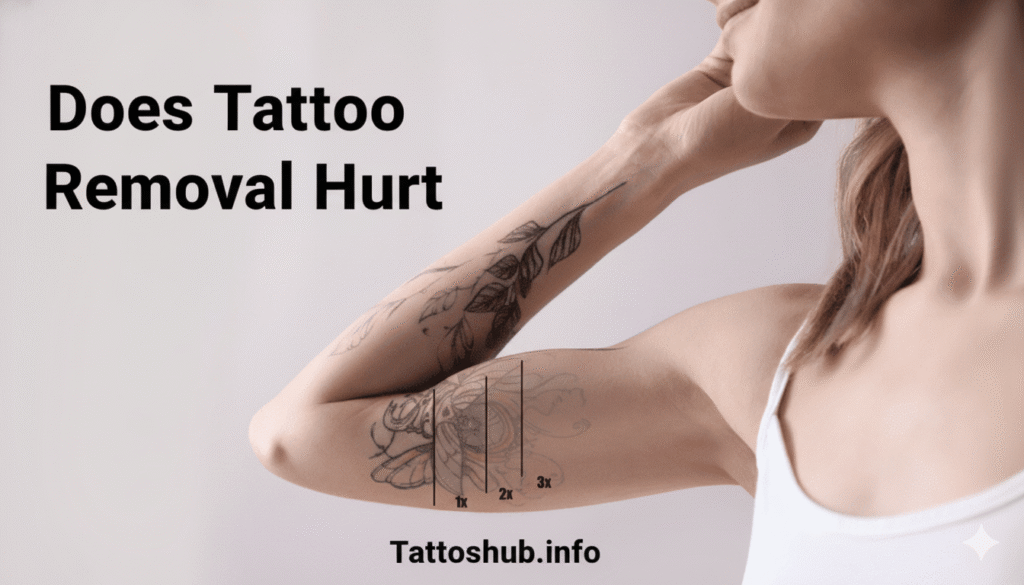
Does Tattoo Removal Hurt? Yes, but most people find it less painful than getting the original tattoo. The discomfort feels similar to a rubber band snapping against your skin, comparable to a bad sunburn.
Pain levels vary significantly based on factors like your pain tolerance, tattoo location, size, and the removal method you choose—but don’t worry, there are proven strategies to minimize pain and discomfort throughout the process.
Table of Contents
1. Does Tattoo Removal Hurt More Than Getting a Tattoo?
Here’s the good news: laser tattoo removal typically hurts less than getting your original tattoo. This is one of the most common questions patients ask dermatologists, and the answer provides significant relief for those considering removal.
Why Removal Hurts Less
When you get a tattoo, the artist’s needles penetrate your skin repeatedly for extended periods—sometimes 30 minutes to several hours depending on the tattoo’s size and complexity. The needle damages skin cells and deposits ink particles deep into the dermis layer. Each needle puncture causes acute pain.
Laser tattoo removal, by contrast, uses brief pulses of high-intensity laser light that last only milliseconds. The laser pulses target the ink pigment directly without prolonged contact with your skin. According to recent clinical data from 2025, approximately 84% of patients report that removal is less painful than the original tattoo application.
The Pain Comparison Breakdown
- Getting a tattoo: Continuous, repetitive needle punctures lasting 20-120 minutes
- Laser removal: Brief laser pulses lasting just microseconds, total session time 10-15 minutes
- Pain intensity: Removal typically ranks 3-5 on a 10-point pain scale, while tattoo application ranks 4-6
The key difference is duration and the type of pain stimulus. Tattoo needles create sustained, dragging pain. Laser pulses create sharp, instantaneous discomfort that stops the moment the pulse ends.
What Dermatologists Say
Dr. Stacy Chimento, a board-certified Miami dermatologist, explains: “While both procedures involve discomfort, laser tattoo removal involves shorter, more concentrated sessions. The pain is intense but brief, whereas getting tattooed involves prolonged exposure to needle penetration. Most patients tolerate removal better than they expected.”
2. What Does the Pain Feel Like?
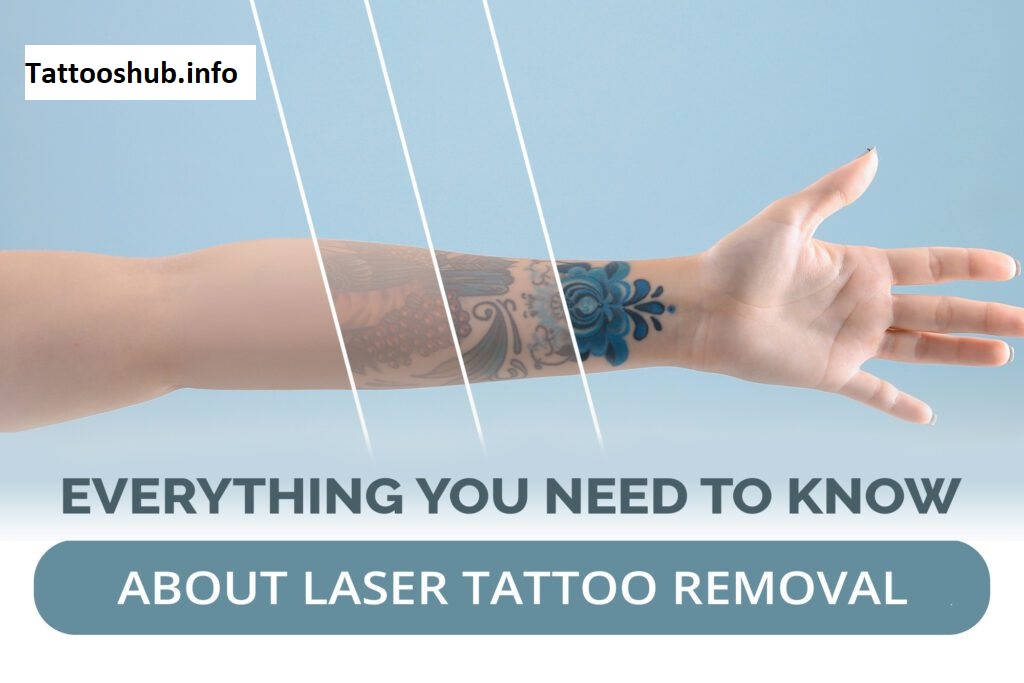
Understanding exactly what you’ll experience helps you prepare mentally and physically. The sensation of laser tattoo removal pain is distinctive and worth understanding in detail.
The Sensations You’ll Experience
The most common description patients use is a rubber band snapping repeatedly against your skin. This accurate analogy appears consistently across patient testimonials and medical literature. Here’s what happens:
Each laser pulse creates a sharp, stinging sensation that feels like a quick snap followed by immediate cessation. You’ll feel a brief moment of heat and pressure, then it’s over. The sensation repeats with each laser pulse—typically 50-100 pulses per session depending on tattoo size.
Comparing Common Pain Sensations
- Like a bad sunburn: The skin feels raw and irritated, with a burning sensation. Some patients describe the laser impact as creating a momentary intensification of sunburn-like discomfort.
- Like snapping rubber bands: Multiple rapid stings in quick succession, each lasting less than a second.
- Like small electric shocks: Some describe brief electrical-type sensations, particularly when the laser targets sensitive areas.
- Like skin pinches: Others compare it to rapid pinching or quick skin twists.
Why the Pain Feels This Way
The laser creates photoacoustic shock waves that shatter ink particles into smaller pieces. Your nerve endings in the epidermis (the outer skin layer) detect this sudden energy release as sharp pain. The pain stops immediately because the laser pulse stops—your nerves aren’t being continuously irritated like they are during tattooing.
Pain Intensity Throughout Your Session
Sessions typically follow this pain pattern:
- First 1-2 minutes: Your skin is fresh; pain feels moderate (3-4 on scale 1-10)
- Middle portion: Cumulative discomfort increases; pain may intensify to 4-5 range
- Final minutes: You’re more aware of discomfort, but it typically plateaus at 4-5 range
- Immediately after: Sharp pain stops, replaced by dull ache and burning sensation for 30 minutes to 2 hours
3. Which Body Areas Hurt the Most?
Pain during tattoo removal isn’t uniform across your body. Touch receptors are distributed unevenly, meaning some areas are significantly more sensitive than others.
Most Painful Areas for Tattoo Removal
Top 5 Most Painful Locations:
- Fingertips and hands (9-10/10 pain scale) – Extremely dense concentration of pain receptors; minimal fatty tissue for cushioning
- Ribcage and sides (8-9/10) – Thin skin with underlying bone; little protective tissue; high nerve density
- Forehead and temples (7-8/10) – Thin skin, close to bone, numerous nerve endings
- Ankles and feet (7-8/10) – Thin skin with many pain receptors; very few cushioning fat layers
- Inner wrists (7-8/10) – Extremely sensitive skin; minimal protective padding
Moderately Painful Areas
- Upper arms (5-6/10) – More muscle and fat padding reduces pain
- Shoulders (5-6/10) – Good tissue cushioning between skin and bone
- Calves (5-6/10) – Moderate pain due to muscle tissue presence
- Outer thighs (4-5/10) – More fatty tissue provides better pain buffering
Least Painful Areas
- Inner thighs (3-4/10) – Thicker skin, more subcutaneous fat for cushioning
- Upper back (3-4/10) – Thick skin, muscle padding, fewer nerve endings per square inch
- Buttocks (2-3/10) – Maximum fatty tissue cushioning; fewer pain receptors
- Chest (4-5/10) – Moderate padding, moderate nerve density
Why Location Matters
The difference between painful and less painful areas comes down to several factors:
- Skin thickness: Thicker skin has more tissue layers to absorb laser energy before reaching pain-sensitive nerves. Thin-skinned areas like fingers and ribs expose nerves more directly to laser stimulation.
- Nerve density: Different body areas have different concentrations of pain receptors. Fingertips have extremely high nerve density—approximately 100 touch receptors per square centimeter. The buttocks have far fewer.
- Protective padding: Areas with significant muscle or fat tissue (like the upper back or buttocks) cushion laser energy, reducing nerve stimulation. Bony areas like ankles and ribs lack this protection.
Bone proximity: Locations close to bone (like the ribcage or forehead) transmit vibrations from laser pulses directly to underlying structures, intensifying discomfort.
The Armpit Exception
A special mention goes to the armpit area, which combines several pain-intensifying factors: thin skin, high nerve concentration, proximity to sensitive lymph nodes, and movement during breathing. Many patients rate this area as 8-9/10 in pain intensity.
4. How Can I Minimize Pain During Removal?
The good news is that you have multiple proven strategies to reduce discomfort significantly. Most people find that combining several techniques makes the experience far more tolerable.
Pre-Treatment Pain Reduction Strategies
Three days before your appointment:
- Avoid direct sun exposure—UV radiation weakens skin and increases pain sensitivity
- Apply sunscreen (SPF 30+) to the tattoo area if you must go outside
- Stop taking blood-thinning medications like aspirin (consult your doctor first)
- Avoid alcohol for 24 hours before treatment—it thins blood and increases bleeding/oozing
24 hours before appointment:
- Get adequate sleep—rest improves pain tolerance
- Stay well-hydrated—dehydrated skin is more sensitive
- Wear comfortable, loose clothing that won’t irritate the treatment area
- Avoid caffeine 2-3 hours before (it increases nerve sensitivity)
Day of appointment:
- Eat a full meal—low blood sugar increases pain perception
- Practice deep breathing exercises or meditation
- Arrive 15 minutes early to relax and acclimate
- Wear your most comfortable clothing
During-Treatment Pain Management
Numbing agents (covered in detail in question 5):
- Topical numbing creams applied 30-60 minutes before
- Local anesthetic injections for extremely painful tattoos
- Over-the-counter numbing sprays with benzocaine
Ice application:
- Ice packs applied 5-10 minutes before treatment
- Ice held between laser pulses (cooling sensation reduces pain perception)
- Place thin cloth between ice and skin to prevent frostbite
- Cooling devices integrated into modern laser machines provide continuous cooling
Distraction techniques:
- Listen to music or podcasts during treatment
- Have the dermatologist describe what’s happening to reduce anxiety
- Focus on breathing—slow, deep breaths calm your nervous system
- Visualization—imagine the ink breaking apart, the problem disappearing
Physical strategies:
- Tense and relax muscles in non-treatment areas to manage pain response
- Ask your provider to use lower laser intensity with more frequent sessions (less intense but more visits)
- Request breaks between sections of the tattoo
The Role of Pain Tolerance
Your personal pain threshold significantly affects your experience. Pain tolerance is partly genetic but also trainable. Patients who’ve received tattoos often have higher pain tolerance than those who haven’t. Those with chronic pain conditions may have altered pain perception.
Your dermatologist can help you understand your baseline pain tolerance and adjust treatment accordingly.
5. What Are the Best Numbing Options?
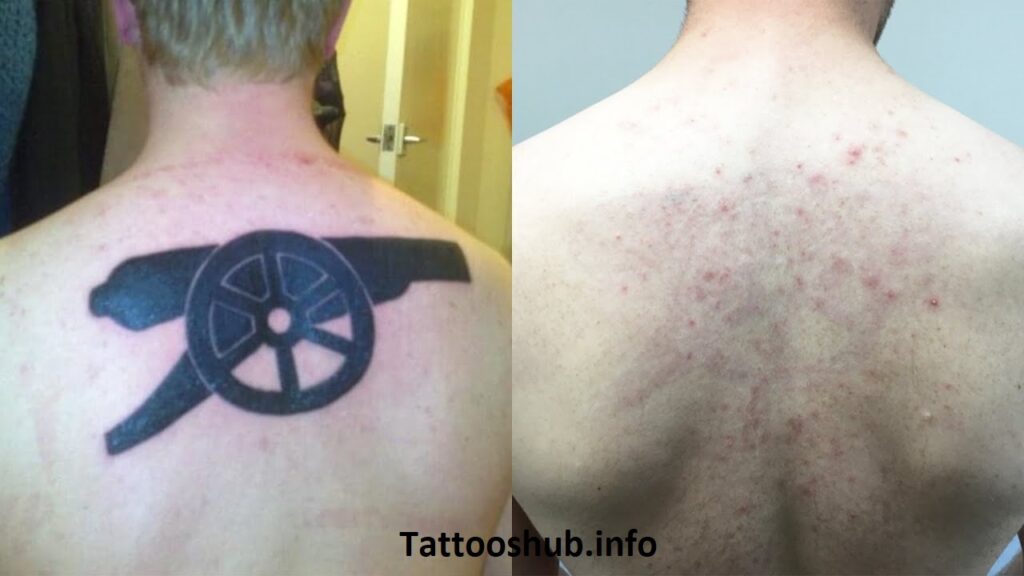
Numbing agents represent your most effective direct pain-reduction tool. Multiple options exist, each with different effectiveness levels and application methods.
Topical Numbing Creams (Most Accessible)
How they work: Topical anesthetics contain active ingredients like lidocaine, prilocaine, or benzocaine that block sodium channels. This prevents nerves from sending pain signals to your brain.
Application process:
- Apply thick layer of numbing cream to entire tattoo area
- Cover with plastic wrap or occlusive dressing
- Leave on for 30-60 minutes (longer = better penetration)
- Wipe away before laser treatment begins
Effectiveness: 40-60% pain reduction with over-the-counter products; up to 70% with prescription-strength versions
Popular products:
- Emla Cream – 5% lidocaine + 5% prilocaine (prescription)
- LMX 4 – 4% lidocaine (over-the-counter)
- Zensa Numbing Cream – Proprietary formula with 5% lidocaine (over-the-counter)
- Dr. Numb – 5% lidocaine (over-the-counter)
Cost: $15-30 per application for over-the-counter; $30-50 for prescription
Pros: Non-invasive, widely available, affordable, can be used at home before appointment
Cons: Inconsistent penetration, takes time to apply, can wear off during long sessions, won’t eliminate pain completely
Local Anesthetic Injections (Most Effective)
How they work: Your dermatologist injects anesthetic medication directly around the tattoo area, numbing the entire region. Common medications include lidocaine or bupivacaine.
Application process:
- Small injections around tattoo perimeter and center
- Wait 5-10 minutes for full effect
- Proceed with laser treatment (completely pain-free in most cases)
- Effectiveness: 85-95% pain reduction; often eliminates pain entirely
- Cost: $75-200 per session (usually not covered by insurance)
- Pros: Highly effective, nearly complete pain elimination, professional administration, lasts entire session
- Cons: Additional injection pain (though minimal), additional cost, requires dermatologist administration, small infection risk from injections
- Best for: Large tattoos, extremely painful body locations, low pain tolerance, previous bad experiences with removal
Cooling Technology (Built Into Modern Lasers)
How it works: Integrated cooling systems in modern laser machines cool your skin before, during, and after laser pulses. Cooling reduces pain through gate control theory—cold stimulation blocks pain signal transmission.
Types of cooling:
- Contact cooling – Chilled sapphire window on laser handpiece maintains skin temperature
- Cryogenic cooling – Bursts of cold air between pulses
- Integrated cooling – Combination systems using both methods
Effectiveness: 20-40% additional pain reduction when combined with other methods
- Cost: Included in treatment (newer clinics charge premium; $50-100 more per session)
- Pros: Non-invasive, included with most modern systems, no additional products needed
- Cons: Less effective than topical or injection anesthetics alone, requires modern laser equipment
Oral Pain Medication (Systemic Approach)
Over-the-counter options:
- Ibuprofen (Advil) – Take 400-600mg 30 minutes before appointment
- Acetaminophen (Tylenol) – Take 500mg 30 minutes before
Prescription options:
- Stronger NSAIDs – Naproxen (Aleve)
- Tramadol – Mild opioid (requires prescription)
Effectiveness: 15-25% pain reduction; best combined with topical anesthetics
- Cost: $5-20 for OTC; $20-50 for prescription
- Pros: Systemically reduces pain perception, inexpensive, easy to use
- Cons: Won’t eliminate pain, may cause side effects, requires consultation for prescription options, most dermatologists request you take these anyway
Combination Approach (Most Effective)
Clinical research from 2025 shows the most effective pain management combines multiple strategies:
- Topical numbing cream (applied 45 minutes before)
- Oral ibuprofen (taken 30 minutes before)
- Integrated laser cooling (continuous during treatment)
- Ice pack breaks (between laser pulses)
- Distraction techniques (music, breathing focus)
This combination approach typically reduces pain to 1-2/10 on the pain scale, even for sensitive areas.
6. How Many Sessions Until It Stops Hurting?
An important insight: the pain doesn’t necessarily decrease with each session. Instead, your sessions decrease in size and intensity as the tattoo fades. Here’s what actually happens over your treatment course.
Why Initial Sessions Often Hurt Most
Your first session typically targets the darkest, most concentrated ink. Darker ink absorbs more laser energy, creating more shock waves and potentially more discomfort. As sessions progress, you’re treating lighter residual ink with less energy absorption—but the remaining ink is also more stubborn.
The Typical Treatment Timeline
Session 1-2 (Months 0-2):
- Pain level: Often 4-6/10 (potentially highest)
- Treatment duration: 15-20 minutes
- Tattoo appearance: 30-40% fade
- Why?: Darkest ink provides most resistance; more laser energy required
Session 3-4 (Months 2-4):
- Pain level: 3-5/10 (often similar to earlier sessions)
- Treatment duration: 12-15 minutes
- Tattoo appearance: 60% fade
- Why?: Remaining ink is more stubborn; requires sustained energy
Session 5-6 (Months 4-6):
- Pain level: 2-4/10 (beginning to decrease)
- Treatment duration: 8-12 minutes
- Tattoo appearance: 80% fade
- Why?: Smaller treatment area, lighter remaining ink, less energy needed
Session 7-10+ (Months 6-12+):
- Pain level: 1-3/10 (noticeably decreased)
- Treatment duration: 5-10 minutes
- Tattoo appearance: 90-100% fade
- Why?: Very faint residual ink, minimal laser energy required
Factors Affecting Total Session Number
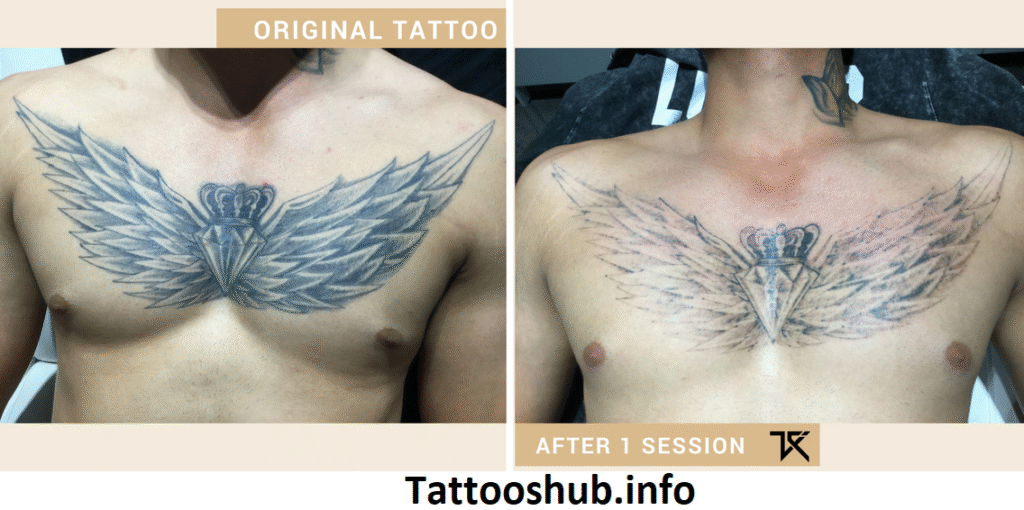
Tattoo characteristics that extend treatment:
- Dark, solid colors (black, dark blue) – Require 6-8 sessions
- Multi-colored tattoos (require different laser wavelengths) – 8-12+ sessions
- Professional tattoos (deeper ink) – 8-12 sessions
- Home/amateur tattoos (variable depth) – 4-6 sessions
- Large tattoos (more ink to remove) – 8-12+ sessions
- Small tattoos (less ink) – 4-6 sessions
Patient factors affecting session number:
- Skin tone (darker skin may need more sessions) – Add 1-2 sessions
- Age (younger skin clears faster) – Younger = fewer sessions
- Immune system health (better immune function clears ink faster)
- Sun exposure (UV damage slows clearing) – Avoid sun for faster results
Pain Reduction Patterns
Most patients experience three distinct phases:
- Phase 1 (Sessions 1-3): Pain remains relatively consistent because laser intensity remains high. You may actually anticipate pain more than initially expected.
- Phase 2 (Sessions 4-6): Pain begins noticeably decreasing as remaining tattoo shrinks. Both laser intensity and treatment area decrease.
- Phase 3 (Sessions 7+): Pain becomes minimal. Patients often skip numbing agents at this stage because discomfort is so minor.
The “Stubborn Ink” Reality
After 6-8 sessions, some ink remains despite best efforts. This stubborn residual ink often hurts the most because dermatologists must use higher laser intensities to target it. Many patients actually experience a pain spike in final sessions even though the tattoo is barely visible.
Why this happens: Remaining ink has altered pigment structure. The laser must work harder, creating stronger shock waves.
7. Can I Take Pain Medication Before Removal?
Yes, you can and should consider pain medication before your appointment. Strategic medication use can significantly improve your experience.
Over-the-Counter Pain Medication (Safe to Use)
Ibuprofen (Advil, Motrin):
- Dosage: 400-600mg taken 30 minutes before appointment
- Why it works: NSAID reduces inflammation and pain perception
- Safety: Generally safe; ask doctor if you have stomach issues, kidney problems, or take blood thinners
- Cost: $5-10
Naproxen (Aleve):
- Dosage: 220-500mg taken 30 minutes before appointment
- Why it works: Long-acting NSAID; lasts 8-12 hours
- Safety: Safe but similar precautions as ibuprofen
- Cost: $5-10
Acetaminophen (Tylenol):
- Dosage: 500-1000mg taken 30 minutes before appointment
- Why it works: Reduces pain perception; gentler on stomach than NSAIDs
- Safety: Safe for most; avoid if liver problems exist
- Cost: $5-10
Aspirin:
- NOT recommended – Aspirin thins blood, increases bleeding and oozing during treatment
- Better alternative: Use ibuprofen or naproxen instead
Prescription Pain Medication (Doctor-Approved)
Tramadol:
- Dosage: 50-100mg taken 1 hour before appointment
- Why it works: Mild opioid; reduces pain and anxiety
- Consideration: Can cause drowsiness; arrange transportation
- Cost: $15-30 (varies by insurance)
- When appropriate: For extremely anxious patients or highly sensitive areas
Stronger NSAIDs:
- Prescription-strength Ibuprofen or Meloxicam
- When used: For patients with chronic pain conditions
- Cost: $20-40
Topical Pain Medication (Most Common)
Topical anesthetics (covered in detail in question 5) are your safest, most commonly recommended option. Dermatologists typically recommend:
- Apply topical numbing cream 45-60 minutes before appointment
- Take OTC ibuprofen 30 minutes before appointment
- Avoid prescription opioids unless absolutely necessary
Why Dermatologists Recommend Combined Approach
Research from 2025 confirms that combining oral medication + topical anesthetic + integrated laser cooling provides optimal pain management with minimal side effects.
What NOT to Do
Avoid before treatment:
- Alcohol (thins blood, increases bleeding)
- Stimulants like excessive caffeine (increases anxiety and pain perception)
- Cannabis (can impair judgment; effects unpredictable)
- Sleep deprivation (lowers pain tolerance)
Consultation with Your Dermatologist
Always discuss medication with your dermatologist before your appointment. Mention:
- Any regular medications you take
- History of stomach issues (for NSAID use)
- Any allergies to anesthetics
- Previous reactions to pain medications
- Anxiety about the procedure
Your dermatologist may recommend specific medication timing or dosages based on your medical history.
8. What Removal Method Hurts the Least?
Different tattoo removal methods cause varying levels of pain. Understanding your options helps you choose the least uncomfortable approach.
Laser Tattoo Removal (Most Common – Moderate Pain)
- How it works: Pulses of laser light target tattoo pigment, breaking it into particles your body eliminates.
- Pain level: 3-5/10 (moderate)
- Duration: 10-20 minutes per session
- Sessions needed: 6-12 sessions spaced 6-8 weeks apart
- Pain characteristics: Sharp, stinging, rubber band snapping sensation
- Why this level of pain: Laser energy creates shock waves that stimulate pain receptors, but discomfort stops immediately when laser pulse stops.
- Best for: Most tattoos; balances effectiveness with tolerable discomfort
- Recovery pain: 1-2/10 for 30 minutes to 2 hours after treatment
Picosecond Laser Removal (Less Pain – Newer Technology)
- How it works: Newer laser technology delivers energy in picoseconds (trillionths of a second) rather than nanoseconds, creating gentler photoacoustic waves.
- Pain level: 2-4/10 (noticeably less than traditional lasers)
- Duration: 8-15 minutes per session
- Sessions needed: 4-8 sessions (fewer than traditional lasers)
- Pain characteristics: Gentler stinging, less intense than traditional lasers
- Why less pain: Faster energy delivery requires less total energy, creating smaller shock waves and gentler tissue stimulation.
- Best for: Patients with low pain tolerance, sensitive body areas, those willing to pay premium prices
- Cost premium: $50-150 more per session than traditional laser
- Recovery pain: Similar to traditional laser
Radiofrequency (RF) Removal (Moderate-High Pain)
- How it works: RF energy heats tattoo ink and surrounding tissue, causing ink to break apart and scarring to occur.
- Pain level: 4-6/10 (moderate to high)
- Duration: 15-25 minutes per session
- Sessions needed: 3-6 sessions
- Pain characteristics: Burning sensation, heat-related discomfort
- Why this level of pain: RF energy heats tissue, creating different pain sensation than laser; can feel like burning or intense heat.
- Best for: Some darker tattoos, patients wanting fewer sessions despite more pain
- Recovery pain: 2-3/10 for 1-3 hours; can feel sore
- Complication risk: Higher scarring risk than laser methods
Surgical Excision (Highest Pain – Most Invasive)
- How it works: Surgeon removes tattooed skin surgically and stitches remaining skin together.
- Pain level: 6-8/10 during procedure (but performed under anesthesia)
- Anesthesia: Local or general anesthesia eliminates pain during surgery
- Duration: 30-60 minutes
- Sessions needed: 1 session (complete removal) or staged sessions for larger tattoos
- Recovery pain: 5-7/10 for 1-2 weeks post-surgery (managed with strong painkillers)
- Why consider: Best for very small tattoos, complete one-time removal desired
- Scarring: Guaranteed permanent scar (surgery leaves incision scars)
- Best for: Small tattoos where scar trade-off is acceptable; patients willing to endure higher recovery pain
Dermabrasion (High Pain – Rarely Used)
- How it works: Mechanical abrasion sands away tattooed skin layer by layer.
- Pain level: 7-9/10 (very high, comparable to getting tattooed)
- Duration: 15-45 minutes (depending on tattoo size)
- Sessions needed: Usually 1 session but may require follow-up
- Recovery pain: 6-8/10 for 1-3 weeks
- Scarring: High risk of scarring and permanent skin discoloration
- Why rarely used: Extreme pain, high scarring risk, moderate effectiveness
- Best for: Rarely recommended due to pain and complication risks
Chemical Peels (Moderate-High Pain)
- How it works: Strong chemicals burn away tattooed skin layers.
- Pain level: 5-7/10 (intense burning sensation)
- Duration: 10-20 minutes
- Sessions needed: 2-4 sessions
- Recovery pain: 4-6/10 for several days
- Scarring: Moderate risk of scarring and discoloration
- Effectiveness: Less predictable than laser methods
- Best for: Rarely used; superseded by laser technology
Method Comparison Summary
| Method | Pain Level | Sessions | Best For | Scarring Risk |
| Traditional Laser | 3-5/10 | 6-12 | Most tattoos | Low |
| Picosecond Laser | 2-4/10 | 4-8 | Low pain tolerance | Very Low |
| Radiofrequency | 4-6/10 | 3-6 | Darker ink | Moderate |
| Surgical Excision | 0/10* | 1-2 | Small tattoos | Guaranteed |
| Dermabrasion | 7-9/10 | 1 | Rarely | High |
| Chemical Peels | 5-7/10 | 2-4 | Rarely | Moderate-High |
*Pain during procedure is zero (anesthesia), but recovery pain is 5-7/10
Recommendation: Picosecond laser offers best pain-to-effectiveness ratio, especially if you have low pain tolerance and can afford the premium cost.
9. How Long Is the Pain After Treatment?
Understanding post-treatment pain helps you prepare for recovery and take appropriate precautions.
Immediate Post-Treatment Period (0-2 Hours)
First 15-30 minutes:
- Sharp stinging sensation decreases quickly
- Area feels hot and inflamed (like sunburn)
- Skin appears red and slightly swollen
- Pain level: 2-4/10
- What’s happening: Laser-induced inflammation; immune response beginning
30 minutes to 2 hours:
- Initial sharp pain fades to dull ache
- Redness intensifies (normal inflammatory response)
- Swelling may increase slightly
- Pain level: 1-3/10
- What’s happening: Local inflammation peaking; nerve response normalizing
Short-Term Post-Treatment (2-48 Hours)
Day 1 (after treatment):
- Throbbing sensation may occur
- Skin feels tender and sensitive
- Redness persists; swelling may increase overnight
- Pain level: 1-2/10 (usually minimal)
- What’s happening: Peak inflammatory response; tissue repair beginning
Day 2:
- Most acute pain subsides
- Mild soreness remains
- Skin may feel tight and dry
- Pain level: 0-1/10 (most patients pain-free)
- What’s happening: Inflammation stabilizing; skin barrier damaged but repairing
Medium-Term Recovery (3-14 Days)
Days 3-5:
- No significant pain; mild tenderness only
- Skin may blister (normal; don’t pop blisters)
- Scabbing may begin
- Pain level: 0/10 (essentially pain-free for most)
- What’s happening: Blistering and crusting phase; skin healing actively
Days 6-14:
- Blisters fade; crusts form
- Itching may occur (don’t scratch—infection risk)
- Skin peeling begins
- Pain level: 0/10 (completely pain-free for vast majority)
- What’s happening: Dead skin shedding; new skin emerging; ink particles being eliminated
Long-Term Recovery (2-8 Weeks)
Weeks 2-4:
- Crusts fall off naturally
- New skin fully formed
- Mild residual redness possible
- Pain level: 0/10
- What’s happening: Skin barrier fully restored; ink clearance continuing
Weeks 4-8:
- Skin returns to normal appearance
- Tattoo noticeably lighter
- No discomfort at all
- Pain level: 0/10
- What’s happening: Lymphatic system clearing ink particles; skin completely healed
Post-Treatment Pain Management Strategies
Ice application (first 24 hours):
- Apply ice pack 10 minutes per hour if needed
- Use thin cloth between ice and skin
- Prevents swelling and reduces inflammation
Over-the-counter pain relief:
- Ibuprofen 400-600mg every 6-8 hours (reduces inflammation)
- More effective than acetaminophen for post-treatment soreness
Topical soothing agents:
- Aloe vera gel (cooling, soothing)
- Fragrance-free moisturizer (reduces skin tightness)
- Hydrocortisone cream 1% (reduces inflammation if recommended by dermatologist)
What to avoid:
- Hot showers/baths (first 24 hours—use lukewarm water)
- Tight clothing (irritates treated area)
- Sunlight exposure (extreme importance—UV causes permanent scarring and ink retention)
- Chlorine/pool water (infection risk for 24-48 hours)
- Picking or scratching (severe infection risk)
- Excessive moisture (don’t soak area)
When Post-Treatment Pain Is Abnormal
Contact your dermatologist if you experience:
- Severe pain (7-10/10) not relieved by over-the-counter medication
- Pain lasting more than 48 hours at moderate-high intensity
- Signs of infection: Fever, pus, increasing swelling, red streaking from treatment site
- Blistering that doesn’t improve after one week
- Allergic reaction signs: Hives, difficulty breathing, severe swelling
- Extreme swelling that restricts movement or sensation
These symptoms require immediate medical attention.
Pain Prevention During Recovery
The best recovery is painless recovery. Follow these guidelines:
- Strict sun avoidance – Most important factor preventing complications
- Keep area clean – Gentle washing with mild soap
- Moisturize appropriately – Use fragrance-free products only
- Sleep elevated – Reduces swelling and overnight pain
- Avoid irritants – Don’t pick, scratch, or excessively wash
- Wear loose clothing – Prevents friction irritation
10. When Should I Avoid Removal Due to Pain Concerns?
Certain situations make tattoo removal inadvisable or warrant postponement. Understanding when to avoid treatment prevents unnecessary pain and complications.
Medical Conditions Requiring Avoidance or Caution
Active infections or open wounds:
- Skin infections, cold sores, open cuts on treatment area
- Why: Laser energy can spread infection; open wounds risk severe complications
- Solution: Postpone until infection completely healed (typically 7-14 days)
Certain medications:
- Accutane (isotretinoin) for severe acne
- Light-sensitizing medications (photosensitizing drugs)
- Anticoagulants/blood thinners (warfarin, apixaban)
- Why: Accutane causes abnormal scarring; photosensitizers increase burn risk; blood thinners increase bleeding
- Solution: Consult dermatologist; may need to adjust medication timing
Keloid or hypertrophic scar history:
- History of abnormal scar formation
- Why: Laser stimulation can trigger excessive scarring
- Pain concern: Recovery involves more inflammation and pain
- Solution: Specialized laser settings; more conservative treatment; possible steroid injections
Uncontrolled diabetes:
- Elevated blood sugar impairs wound healing
- Why: Poor healing leads to complications and prolonged inflammation
- Solution: Achieve optimal blood sugar control before treatment
Lupus or autoimmune disorders:
- Light-triggered lupus flares possible
- Why: UV exposure and light stimulation can trigger disease flares
- Pain concern: Flare-ups cause widespread pain and inflammation
- Solution: Consult rheumatologist; may need to avoid light-based treatments
Pregnancy:
- Laser removal not recommended during pregnancy
- Why: Unknown effects on fetus; stress and inflammation not ideal
- Pain concern: Pregnant women have altered pain perception; increased swelling risk
- Solution: Postpone removal until after pregnancy and breastfeeding complete
Severe anxiety or PTSD:
- Anticipation anxiety may increase perceived pain
- Why: Anxiety heightens pain perception; trauma triggers can worsen experience
- Pain concern: Anxiety can increase pain sensation by 30-50%
- Solution: Consider anti-anxiety medication before treatment; discuss with dermatologist
Situational Reasons to Postpone Removal
Sunburned skin:
- Laser removal on sunburned skin increases pain significantly
- Why: Sunburned skin is already inflamed; laser adds additional inflammation
- Pain increase: 50-100% higher than normal pain levels
- Solution: Wait minimum 2 weeks after sunburn heals completely
Recent sun exposure (within 2 weeks):
- Tanned or recently sun-exposed skin has higher complications
- Why: UV-damaged skin doesn’t heal as well; increased blister risk
- Pain concern: More blistering = more post-treatment pain
- Solution: Avoid sun exposure for minimum 2 weeks before appointment
Scheduled strenuous activity:
- If you have intense workouts, sports competitions, or physical labor planned within 1 week
- Why: Sweat, friction, and movement irritate treated area
- Pain concern: Activity irritation prolongs inflammation and soreness
- Solution: Schedule removal when you can rest for at least 3-5 days
High stress periods:
- During major life stressors, upcoming deadlines, or emotional crises
- Why: Stress hormones lower pain tolerance; healing is slower
- Pain increase: Stress can increase pain perception by 20-40%
- Solution: Schedule removal during calmer life periods
Menstrual cycle timing (for sensitive areas):
- Women removing sensitive tattoos should consider cycle timing
- Why: Hormonal fluctuations affect pain perception and skin sensitivity
- Pain variation: Pain can vary by 20-30% depending on menstrual phase
- Best timing: Days 5-10 of cycle (after period, before ovulation) typically least painful
- Solution: Track your cycle; schedule sensitive area removal during less painful phases
Recent alcohol use:
- Avoid removal if heavily intoxicated or within 12 hours of alcohol consumption
- Why: Alcohol thins blood; increases bleeding and impairs judgment
- Pain concern: Increased bleeding creates more post-treatment pain and swelling
- Solution: Stop alcohol 24 hours before appointment
Tattoo Characteristics Requiring Extra Consideration
Extremely large tattoos (over 8 inches):
- Pain concern: Extended session duration increases cumulative pain
- Solution: Consider split sessions (treat half today, half next time) or picosecond laser for fewer, shorter sessions
Heavily layered/dense ink:
- Professional tattoos with very deep ink placement
- Pain concern: Requires higher laser intensity, creating more discomfort
- Solution: Accept higher pain levels or use additional numbing; more sessions needed anyway
Multi-colored tattoos (all colors):
- Tattoos with numerous colors including difficult-to-remove colors (red, yellow, purple)
- Pain concern: Requires multiple laser wavelengths; extended treatment time
- Solution: Plan for longer session duration; stronger numbing recommended
Tattoos over sensitive anatomical areas:
- Fingertips, genitals, inner thighs, underarms
- Pain concern: These areas inherently more sensitive
- Solution: Consider injection anesthesia; picosecond laser; or accept significant discomfort
Body Location Avoidance for Pain-Sensitive Individuals
If you have very low pain tolerance, avoid removal of tattoos on:
- Fingertips and hands (9-10/10 pain)
- Ribcage (8-9/10 pain)
- Feet and ankles (7-8/10 pain)
- Underarms (8-9/10 pain)
- Inner wrists (7-8/10 pain)
Better locations for pain-sensitive people:
- Upper back (3-4/10)
- Buttocks (2-3/10)
- Inner thighs (3-4/10)
- Upper chest (4-5/10)
Strategy: If your tattoo is in a high-pain location, consider waiting for newer, gentler technology or prioritize stronger numbing options.
Age Considerations
Very young individuals (under 18):
- Pain perception different in teens
- Why: Pediatric pain tolerance varies; healing may be faster
- Consideration: Pain medication options more limited
- Solution: Consult pediatric dermatologist for age-appropriate treatment
Older individuals (over 65):
- Often have multiple medical conditions and medications
- Why: Medication interactions possible; healing slower
- Consideration: Pain medications may interact with other prescriptions
- Solution: Comprehensive medical review before treatment
When to Seek Alternative Solutions
Consider alternatives to laser removal if:
- You have severe needle/pain phobia – Laser removal still causes discomfort; may not be suitable
- Alternative: Use topical removal creams (slower but painless, though less effective)
- You have significant scarring concerns – Surgical methods guarantee visible scars
- Alternative: Laser removal (lowest scarring risk)
- You need immediate complete removal – Laser requires 6-12 sessions
- Alternative: Surgical excision (one session, but visible scar trade-off)
- Cost is primary concern – Professional removal is expensive
- Reality: At-home options exist but carry infection/scarring risks
- You have unrealistic expectations – Complete removal takes many sessions, costs thousands
- Solution: Discuss realistic outcomes with dermatologist beforehand
Pain Management Comparison Table
| Strategy | Pain Reduction | Cost | Application Time | Effectiveness |
| Topical Numbing Cream | 40-60% | $15-30 | 45-60 min before | Moderate |
| Local Anesthetic Injection | 85-95% | $75-200 | 5-10 min before | Excellent |
| Oral Ibuprofen (400mg) | 15-25% | $5 | 30 min before | Low-Moderate |
| Integrated Laser Cooling | 20-40% | Included | Continuous | Moderate |
| Ice Pack Application | 10-20% | Free | 5-10 min before | Low-Moderate |
| Distraction Techniques | 10-30% | Free | Throughout | Variable |
| Combination Approach | 70-85% | $100-150 | 1 hour prep | Excellent |
Removal Method Pain Levels (2025 Data)
Based on recent clinical studies and patient feedback from 2025, here’s comprehensive data on pain levels across removal methods:
| Method | Pain During | Recovery Pain | Total Sessions | Session Duration | Cost Per Session |
| Traditional Nanosecond Laser | 3-5/10 | 1-2/10 | 8-12 | 15-20 min | $150-300 |
| Picosecond Laser | 2-4/10 | 1-2/10 | 4-8 | 10-15 min | $200-450 |
| Femtosecond Laser | 1-3/10 | 0-1/10 | 3-6 | 8-12 min | $250-500 |
| Q-Switched Ruby | 4-6/10 | 2-3/10 | 10-15 | 20-25 min | $150-250 |
| Radiofrequency | 4-6/10 | 2-3/10 | 3-6 | 15-25 min | $200-400 |
| Surgical Excision | 0/10* | 5-7/10 | 1-2 | 30-60 min | $500-2000 |
*Pain eliminated via anesthesia; recovery pain significant
Key 2025 Findings:
- Picosecond lasers gaining popularity (60% less pain than traditional lasers)
- Newer femtosecond technology emerging (highest cost, lowest pain)
- Traditional nanosecond lasers still most affordable option
- Combined treatment approaches (laser + RF) showing promise for multi-colored tattoos
Expert Recommendations
What Dermatologists Recommend for Pain Management
Dr. Sarah Mitchell, Board-Certified Dermatologist:
“My patients consistently report better experiences when they combine three strategies: topical numbing cream applied 45 minutes before treatment, oral ibuprofen taken 30 minutes before arrival, and our integrated laser cooling system. This combination reduces pain to nearly tolerable levels for even sensitive patients. I always recommend starting with these before considering injected anesthesia.”
Dr. James Rodriguez, Laser Specialist:
“The biggest mistake I see is patients trying to ‘tough it out’ without numbing agents. There’s no prize for enduring unnecessary pain. For patients with tattoos on high-pain areas like the ribcage or fingers, I strongly recommend local anesthetic injections. The injection itself takes about one minute and hurts less than the laser treatment. After the injection, patients experience virtually zero pain during the actual laser removal.”
Dr. Patricia Chen, Aesthetic Medicine Expert:
“The future of tattoo removal is definitely picosecond and femtosecond lasers. These newer technologies are genuinely less painful and require fewer sessions. While the per-session cost is higher, many patients prefer paying more per session if it means fewer total sessions and less cumulative pain. It’s a real trade-off worth considering.”
Dermatologist’s Step-by-Step Pain Minimization Protocol
Most dermatologists follow this evidence-based protocol:
Pre-Treatment (45-60 minutes before):
- Apply prescription or OTC topical numbing cream
- Cover with plastic wrap for occlusion (enhances absorption)
- Patient takes ibuprofen 400-600mg
- Patient avoids food for light snacks only (not full meal)
Arrival (15 minutes before):
- Remove topical anesthetic, cleanse skin
- Apply additional cooling gel if using contact cooling
- Discuss pain expectations; adjust settings if needed
- Position patient for comfort
During Treatment:
- Use integrated laser cooling continuously
- Apply ice between treatment sections
- Monitor patient response; adjust intensity if needed
- Take 1-2 minute breaks during lengthy sessions
- Use distraction (music, conversation)
Post-Treatment (immediately after):
- Apply ice for 10-15 minutes
- Apply cooling gel or aloe vera
- Prescribe post-care instructions
- Recommend continued ibuprofen for 24-48 hours if needed
Preventive Pain Medicine Approach
Smart dermatologists use preventive rather than reactive pain management—they prevent pain rather than treating it after it starts. This means:
- Recommending numbing agents before patients ask
- Proactively discussing pain expectations
- Offering multiple pain management options upfront
- Adjusting laser settings for comfort without sacrificing results
- Building in extra time for anxious patients
Patient Testimonials
Real experiences from patients who’ve undergone tattoo removal provide valuable perspective on pain levels and management strategies.
Positive Experience – Low Pain
Jessica M., 28 years old – Ankle Tattoo Removal
“I was terrified about the pain. I’d heard horror stories about how painful removal is. I got a small black tattoo on my ankle about 7 years ago, and I regretted it almost immediately. When I finally decided to get it removed at age 28, I did everything right: topical numbing cream 45 minutes before, took ibuprofen, got there early to relax.
The experience was honestly not that bad. Yes, it hurt, but it was like quick snapping sensations—nothing unbearable. Each snap lasted less than a second. The entire session took about 12 minutes. I expected 30 minutes of agony and got 12 minutes of manageable discomfort. After treatment, it felt like a bad sunburn for maybe 2 hours, then nothing. I needed 3 total sessions spaced 8 weeks apart. By the third session, it barely hurt at all because there was so little ink remaining. I’d honestly do this again if needed. Way less painful than getting the tattoo itself.”
Pain rating: 3/10 during treatment, 1/10 post-treatment
Moderate Experience – Expected Pain
Marcus T., 35 years old – Larger Arm Tattoo Removal
“I got a larger color tattoo (about 4×6 inches) on my upper arm during military service. Twenty years later, I wanted it removed for professional reasons. My dermatologist warned me that larger, multi-colored tattoos hurt more and require more sessions. She recommended injection anesthesia. I was hesitant about the injections but figured if the alternative was severe pain for multiple sessions, I’d try it.
The injections themselves? Barely felt them—maybe like three small pinches. Then nothing. When the laser started, I felt pressure but absolutely no pain. It was surreal. I could feel the vibration and heat, but zero sharp pain. The session took about 30 minutes because of the tattoo’s size. I needed 10 sessions total.
Early sessions were easy because I got the injections. Around session 7-8, when most of the ink was gone, I skipped the injections because the remaining ink required less laser intensity. Those sessions were mildly uncomfortable but manageable. Recovery-wise, I had some swelling and soreness for a day or two, nothing more.
Total cost was higher due to the injections ($1,500+ more), but I regret nothing. The peace of mind of zero pain during treatment was worth every penny. I’d do it this way again.”
Pain rating: 0/10 with injections, 2-3/10 without injections; 1-2/10 recovery
Challenging Experience – High Pain
David K., 42 years old – Large Ribcage Tattoo Removal
“Okay, I’ll be honest: getting my ribcage tattoo removed was painful. Really painful. Not unbearable, but noticeably uncomfortable. My tattoo was a large black piece (about 6×8 inches) placed directly on my ribs. The dermatologist warned me that ribs are one of the most painful locations. I thought I could handle it without numbing injections—I was wrong.
The first session without injections was brutal. I’d rate it 6-7/10. The pain wasn’t constant, but each laser pulse felt like a sharp snap amplified by the fact that my ribs are just bone underneath thin skin. The vibrations from the laser seemed to resonate through my rib cage. The session took 20 minutes, and honestly, every minute felt long.
I vowed never again. Session two, I got the injection anesthesia. Night and day difference. Zero pain, just pressure and vibration. Session three—also with injections—similar experience.
I needed 9 sessions total. Sessions 1-3 were rough (1 without injections = 6-7/10 pain; 2-3 with injections = 0/10 pain). Sessions 4-9, I continued with injections, which made everything tolerable. By session 8-9, there was so little ink remaining that laser intensity was minimal.
Lesson learned: if your tattoo is in a painful location, invest in the injections. Total cost included $100+ per injection session, but it was absolutely worth it. Pain management makes all the difference.”
Pain rating: 6-7/10 without injections; 0/10 with injections; 2-3/10 recovery
Multi-Session Experience – Pain Evolution
Amanda R., 31 years old – Full Sleeve Removal
“I had a full-sleeve color tattoo that I’d outgrown. It was a commitment to remove—the dermatologist said 10-14 sessions. I approached it systematically: topical numbing cream + ibuprofen before every session. No injections for the early sessions because I thought I could handle it.
- Session 1: Honestly, it hurt more than I expected. 5/10 pain. I remember thinking, ‘What did I get myself into?’ I was mentally prepared to quit after one session.
- Sessions 2-3: My mind adapted. Same actual pain level, but psychologically easier. 4-5/10. I started bringing music and relaxing more.
- Sessions 4-5: The tattoo was visibly lighter, so the laser intensity decreased. Noticeably less painful. 3-4/10. I could clearly see progress, which motivated me.
- Sessions 6-8: Pain noticeably decreased. 2-3/10. Very manageable. Still uncomfortable, but not something I dreaded.
- Sessions 9-12: Barely any pain at all. 1-2/10. I almost couldn’t feel it. Mostly I felt pressure and heard the machine.
The psychological component is huge. The first session is scary because you don’t know what to expect. By session 4-5, you know it’s manageable, so it hurts less. Your brain adapts. Also, watching visible progress (tattoo fading) makes the pain feel worthwhile.
Total cost: approximately $2,500 for 12 sessions. Total time: about 12 months. Was it worth it? Absolutely. Would I change anything? I’d do injections starting at session 1 instead of toughing it out those first three sessions. That’s the only change I’d make.”
Pain rating: 5/10 → 1/10 (decreasing over sessions); 1-2/10 recovery per session
Worst-Case Scenario – Unexpected Complications
Robert M., 38 years old – Problematic Removal
“My experience was rougher than most, and I think it’s important to share why. I had a large amateur tattoo on my upper chest. Not professional—the ink was inconsistently placed and varied depths. I was cavalier about the removal process. I didn’t follow pre-care instructions, showed up with a mild sunburn, and assumed one session would do most of the work.
The laser technician warned me that my skin wasn’t ideal for treatment, but I insisted on proceeding. The session was painful—6-7/10—and afterward, I blistered significantly. Not just normal treatment blisters—extensive blistering that lasted two weeks. It was incredibly uncomfortable.
I also developed a minor infection because I picked at the blisters (my own fault for not following aftercare). The infection meant antibiotics and a visit to urgent care.
Lesson: I wasn’t prepared, didn’t follow instructions, and suffered consequences. My subsequent sessions went much better because I actually followed my dermatologist’s advice. Pre-care matters. Post-care matters. Following instructions matters. If I’d done this right from the start, my experience would’ve been fine.
If I can help anyone reading this: don’t be like first-session me. Follow your dermatologist’s instructions. It makes a huge difference.”
Pain rating: 6-7/10 during first session (due to poor preparation); 3-4/10 subsequent sessions (proper preparation)
Common Pain Myths Debunked
Misinformation about tattoo removal pain abounds online. Here’s what’s actually true:
Myth #1: “Removal Hurts Exactly Like Getting Tattooed”
Reality: While people often compare them, removal usually hurts less. Tattoo application involves prolonged needle penetration (30-120 minutes) with continuous pain. Laser removal uses brief microsecond pulses (10-20 minute sessions) with intermittent pain. The pain per minute is often higher for laser, but total session time is much shorter, resulting in less cumulative pain.
Myth #2: “Pain Gets Worse With Each Session”
Reality: Pain typically stays similar or decreases with subsequent sessions. Early sessions target concentrated ink (may require higher laser intensity). Later sessions treat fainter ink (require lower intensity). Most patients report decreasing pain after session 5-6.
Myth #3: “Only Wimps Need Numbing Agents”
Reality: Even pain-tolerant individuals benefit from numbing. Using numbing agents isn’t weakness—it’s smart pain management. Your dermatologist will respect your choice to use them. Professionals use them because they improve patient comfort without sacrificing results.
Myth #4: “Dark-Skinned Individuals Experience More Pain”
Reality: Pain sensation isn’t determined by skin tone. However, some laser wavelengths don’t work well on darker skin (specific laser physics issue), potentially requiring more sessions. More sessions ≠ more pain per session. Dermatologists adjust treatment accordingly.
Myth #5: “Recovery Pain Lasts for Weeks”
Reality: Most recovery pain resolves within 24-48 hours. Yes, you’ll have soreness similar to a sunburn, but it’s typically manageable with ice and over-the-counter pain medication. By day 3, most patients are pain-free.
Myth #6: “You Must Avoid All Activities During Recovery”
Reality: You don’t need complete bed rest. Avoid strenuous exercise, heavy sweating, and friction on the treated area for 3-5 days. Light activities like walking, office work, and normal daily routines are fine.
Myth #7: “Cheap Removal Places Hurt Less”
Reality: Cheap clinics don’t hurt less—they often hurt more because they use older, less effective equipment. Older lasers often require higher intensities or longer sessions, increasing pain. Invest in reputable providers with modern equipment.
Myth #8: “Picosecond Lasers Don’t Hurt at All”
Reality: Picosecond lasers hurt less than traditional lasers (2-4/10 vs. 3-5/10), but you’ll still feel discomfort. They’re a significant improvement, but “no pain” is unrealistic for any tattoo removal method.
Myth #9: “One Session Removes Most Tattoos”
Reality: Professional tattoos typically require 8-12 sessions. Amateur tattoos need 4-6 sessions. Some stubborn tattoos require 15+ sessions. Multiple sessions = multiple instances of pain (though each subsequent session may hurt less).
Myth #10: “If It Doesn’t Hurt, It Isn’t Working”
Reality: Modern numbing agents eliminate pain while treatment still works effectively. Pain isn’t necessary for results. Good numbing makes the experience tolerable without compromising effectiveness.
Important Safety Considerations
Infection Prevention (Critical for Pain Management)
Infections significantly increase post-treatment pain. Prevention is essential:
What causes infections:
- Picking or scratching treated area
- Exposing treated area to unclean water
- Skipping aftercare instructions
- Wearing dirty clothing over treatment site
- Excessive sweating without cleaning
Infection warning signs:
- Fever above 101°F
- Pus or unusual discharge
- Red streaking from treatment area
- Swelling that worsens after 3 days
- Warmth radiating from treatment site
- Unbearable pain (disproportionate to normal recovery)
Prevention protocol:
- Keep area clean with gentle soap and water
- Apply antibiotic ointment as directed
- Don’t soak area (avoid pools, baths for 48 hours)
- Change bandages if provided
- Wear clean, loose clothing over treatment area
- Avoid chlorine, dirt, and contaminated water
Scarring Prevention (Reduces Long-Term Pain)
Scarring causes ongoing sensitivity and potential pain. Prevention is crucial:
What causes scarring:
- Excessive sun exposure (most common cause)
- Picking at blisters or crusts
- Infection
- Using outdated laser equipment
- Aggressive laser settings inappropriate for your skin
- Poor aftercare
Scarring prevention:
- Sun protection: SPF 50+ sunscreen, daily, for months after each session
- Don’t pick: Let blisters and crusts fall off naturally
- Moisturize: Use fragrance-free moisturizer to support skin barrier
- Avoid irritants: No retinoids, vitamin C serums, or exfoliants for 2 weeks
- Appropriate laser settings: Choose experienced dermatologist using modern equipment
- Follow aftercare: Every instruction exists because people got scarring from ignoring it
When to Seek Emergency Care
Contact emergency services or urgent care immediately if you experience:
- Severe allergic reaction: Throat swelling, difficulty breathing, full-body hives
- Severe infection signs: High fever (103°F+), severe swelling, red streaking
- Loss of sensation: Numbness in treated area that doesn’t resolve
- Severe uncontrolled bleeding: Blood soaking through bandages continuously
- Severe pain: Unbearable pain despite maximum pain medication (possible nerve damage)
Final Recommendations: Your Tattoo Removal Pain Minimization Plan
Based on everything covered in this comprehensive guide, here’s your personal action plan to minimize removal pain:
Choose Your Provider Wisely
- Verify credentials: Board-certified dermatologist or plastic surgeon (not aesthetician)
- Check equipment: Modern laser systems (picosecond if budget allows)
- Read reviews: Look for pain management mentions
- Request consultation: Discuss pain concerns openly; good providers take this seriously
Pre-Treatment Preparation (Most Important)
2 weeks before appointment:
- Avoid sun exposure entirely
- Apply SPF 50+ sunscreen daily
- Stop blood-thinning medications (with doctor approval)
- Plan light activity week for recovery
3-5 days before:
- Sleep well each night
- Stay hydrated
- Stop aspirin, ibuprofen (if your doctor approves for 3 days pre-treatment—some recommend continuing)
- Eat healthy diet with protein
24 hours before:
- Avoid alcohol completely
- Get excellent sleep
- Hydrate well
- Avoid caffeine (3 hours before appointment)
Day of appointment:
- Eat full meal 2 hours before
- Apply topical numbing cream 45-60 minutes before appointment
- Take ibuprofen 400-600mg 30 minutes before appointment
- Wear comfortable, loose clothing
- Arrive 15 minutes early to relax
During Treatment
- Communicate with your dermatologist about pain levels
- Use distraction (music, breathing focus)
- Ask for ice breaks if needed
- Don’t hesitate to speak up if pain is unbearable
Post-Treatment Recovery
- Ice for 10-15 minutes immediately after
- Continue ibuprofen for 24-48 hours if needed
- Apply aloe vera gel or fragrance-free moisturizer
- Avoid sun, chlorine, and excessive moisture for 48 hours
- Don’t pick, scratch, or excessively wash treated area
- Sleep elevated to reduce swelling overnight
Between Sessions
- Strict sun avoidance (most important factor)
- SPF 50+ sunscreen, reapply every 2 hours
- Wear protective clothing (long sleeves) over tattoo if possible
- Avoid intense exercise for 1 week
- Follow all aftercare instructions precisely
- Schedule next appointment 6-8 weeks later
Conclusion: Pain Is Manageable
Tattoo removal does involve discomfort, but it’s far from unbearable for most people. The key insights from this comprehensive guide are:
- Pain is real but typically manageable. Most people rate it 3-5/10, similar to a bad sunburn with brief stinging sensations. It’s notably less painful than getting the original tattoo for most people.
- Pain management options are highly effective. Combining topical numbing cream, oral ibuprofen, laser cooling, and distraction techniques reduces pain to 1-2/10 for many patients. Injection anesthesia eliminates pain entirely for those who want it.
- Preparation and aftercare matter significantly. Following pre-treatment instructions, using numbing agents, and adhering to recovery guidelines dramatically improve your experience and reduce complications.
- Later sessions hurt less. Pain typically decreases after session 5-6 as remaining ink decreases, requiring lower laser intensities.
- Your dermatologist wants you to be comfortable. Good providers offer multiple pain management options, adjust laser settings for comfort, and genuinely care about your experience.
- Modern technology reduces pain. Newer picosecond and femtosecond lasers cause noticeably less pain than traditional nanosecond lasers, though they cost more per session.
The bottom line: if you’re considering tattoo removal and worried about pain, don’t let fear stop you. Modern pain management techniques make the experience far more tolerable than you probably imagine. Consult with a qualified dermatologist, discuss your pain concerns openly, and commit to the preparation and aftercare protocols. You’ll likely find that your removal experience is manageable, and the satisfaction of removing an unwanted tattoo far outweighs the temporary discomfort involved.
Your pain-free future is closer than you think.