
You just got your dream tattoo, and now you’re wondering: when will it actually heal? You’re eager to show it off, but you also want to make sure it heals perfectly without infection or fading.
Here’s the straight answer of How Long Does a Tattoo Take to Heal? A tattoo takes 2-3 weeks for the outer layer of skin to heal, but complete healing of all skin layers takes 4-6 months. The exact healing time depends on your tattoo’s size, location on your body, your immune system, and how well you follow aftercare instructions.
Every tattoo goes through distinct healing stages, from the initial oozing phase to the final color settling. Understanding what’s normal at each stage helps you avoid panic and ensures your new ink heals beautifully.
In this guide, you’ll discover:
- Day-by-day healing timeline with what to expect
- The 4 stages of tattoo healing explained
- Factors that speed up or slow down healing
- Warning signs of infection (and when to see a doctor)
- Expert aftercare tips from professional tattoo artists
- Answers to your most pressing healing questions
Whether you got a Japanese Tattoo Designs for Female, small wrist tattoo or a full sleeve, this complete timeline will walk you through every step of the healing process.
Table of Contents
Quick Answer: Tattoo Healing Timeline
Here’s a quick reference for tattoo healing times based on different factors:
| Healing Milestone | Timeline | What to Expect |
| Surface Healing | 2-3 weeks | Scabs gone, looks healed to the touch |
| Outer Layer (Epidermis) | 3-4 weeks | Safe to touch, can resume most activities |
| Deep Layer (Dermis) | 2-3 months | Color settles, reduced sensitivity |
| Complete Healing | 4-6 months | Fully healed at all skin levels |
Healing Time by Tattoo Type
- Small tattoos (under 2 inches): 2-3 weeks for surface healing
- Medium tattoos (2-6 inches): 3-4 weeks for surface healing
- Large tattoos (6+ inches or full areas): 4-6 weeks for surface healing
- Colored tattoos: Add 1-2 weeks to any timeline
- Black and gray tattoos: Fastest healing times
What Dermatologists Say
According to dermatologists, while your tattoo may look completely healed within three to four weeks, the deeper layers of skin are still regenerating and integrating the ink for several months afterward. This invisible healing process is crucial for color retention and long-term tattoo quality.
The healing process happens in waves. Your body treats the tattoo as an open wound initially, rushing white blood cells to the area to fight potential infection. Then, over weeks and months, your skin rebuilds itself layer by layer around the ink particles, permanently trapping them in the dermis.
The 4 Stages of Tattoo Healing

Your tattoo goes through four distinct healing stages. Understanding each stage helps you know what’s normal and what requires medical attention. Let’s break down exactly what happens during each phase.
Stage 1: Inflammation & Oozing (Days 1-7)
What’s Happening Inside Your Skin:
When the tattoo needle punctures your skin thousands of times, your body immediately recognizes this as trauma. Your immune system kicks into high gear, sending white blood cells and macrophages to the area. Blood vessels dilate, causing swelling and redness. Plasma (the clear part of your blood) mixes with excess ink and begins oozing from the wound.
This inflammation stage is your body’s natural defense mechanism. The white blood cells work to prevent infection while your skin starts the complex process of repair.
What You’ll Notice:
- Clear or slightly colored fluid (plasma mixed with ink) leaking from the tattoo
- The area feels warm to the touch and tender
- Redness surrounding the entire tattooed area
- Mild burning sensation when you move or touch it
- The tattoo looks incredibly bright and vibrant (this is peak color)
- Slight swelling, especially on areas with thinner skin
What to Do During Week 1:
Keep your bandage on for 2-6 hours after leaving the tattoo shop, or as your artist recommends. Some artists use second skin products like Saniderm or Tegaderm, which can stay on for up to 5 days.
When you remove the bandage, wash your tattoo gently with lukewarm water and fragrance-free antibacterial soap. Use your clean hands (never a washcloth or sponge). Pat dry with a clean paper towel, not a regular towel that might harbor bacteria.
Apply a thin layer of recommended ointment like Aquaphor or A+D Original. The key word is thin—you should barely see the ointment on your skin. Too much product suffocates the tattoo and prevents proper healing.
Repeat this cleaning routine 2-3 times daily. Wear loose, breathable clothing over the tattoo. Avoid tight jeans, compression wear, or anything that rubs against the fresh ink.
Normal vs. Concerning in Stage 1:
✅ Normal: Mild oozing for 2-3 days, warmth, slight swelling, clear or slightly colored fluid, tenderness when touched
⚠️ Concerning: Heavy oozing after day 3, excessive heat (feels hot, not just warm), severe pain that prevents normal movement, swelling that increases after day 2
Stage 2: Itching & Scabbing (Days 8-14)
What’s Happening Inside Your Skin:
Your epidermis (outer skin layer) begins closing the wound. As the skin knits together, it forms protective scabs over the tattooed area. These scabs are different from scabs on a regular cut—they should be thin and flaky, not thick and crusty.
Dead skin cells start shedding, taking some excess ink particles with them. This is why you might see colored flakes in the shower or on your clothes. Don’t worry—you’re not losing your tattoo design. Only excess ink that wasn’t properly embedded comes out.
This stage is notorious for intense itching. As nerve endings regenerate and new skin forms, your brain interprets this as an itch signal. It can be maddening, but scratching is your worst enemy right now.
What You’ll Notice:
- Intense itchiness (this is usually the worst part for most people)
- Thin scabs forming over the entire tattoo
- Flaking skin with tiny specs of ink coming off
- The tattoo starts looking slightly duller as scabs form
- Tightness in the skin around the tattoo
- Random sharp itching sensations
What to Do During Week 2:
Continue washing 1-2 times daily with gentle soap and water. You can reduce the frequency slightly from week one since the wound is closing.
Switch from thick ointment to a fragrance-free lotion or moisturizer. Products like Lubriderm Daily Moisture, Cetaphil Moisturizing Lotion, or Aveeno Fragrance-Free work excellently. Apply 2-3 times daily, especially when your skin feels tight.
Never scratch or pick at scabs. This is the golden rule of tattoo healing. Picking removes ink and causes scarring or patchy areas. If the itching becomes unbearable, try these relief methods:
- Gently pat or slap the itchy area (sounds weird, but it works)
- Apply a cold compress wrapped in a clean cloth for 10 minutes
- Use more moisturizer (sometimes itching means your skin is too dry)
- Take an over-the-counter antihistamine if needed
The itching typically peaks around days 9-11, then gradually improves. Hang in there—this phase passes.
Normal vs. Concerning in Stage 2:
✅ Normal: Intense itching, thin scabs that flake off easily, some ink coming off with dead skin, tattoo looking less vibrant temporarily
⚠️ Concerning: Thick crusty scabs (like a bad scrape), itching accompanied by hives or raised bumps, persistent swelling after day 10, oozing that restarts after stopping
Stage 3: Peeling & Dulling (Days 15-28)
What’s Happening Inside Your Skin:
All remaining scabs shed during this stage, revealing a fresh new layer of epidermis underneath. This new skin layer is thin and delicate, which is why your tattoo appears dull, faded, or even slightly milky.
This dulling effect is temporary and completely normal. The new skin acts like a translucent film over your tattoo. As it thickens and matures over the coming weeks, your colors will gradually return to their full vibrancy.
Your skin texture begins returning to normal. The slight raised feeling disappears as inflammation fully resolves.
What You’ll Notice:
- Large pieces of skin peeling off like a sunburn
- The tattoo looks significantly faded or cloudy (don’t panic—this is temporary)
- Reduced itching and redness
- Skin texture matching the surrounding area
- No more tenderness or sensitivity
- Occasional dryness in the tattooed area
What to Do During Weeks 3-4:
- Continue moisturizing 1-2 times daily. Your skin still needs hydration to complete the healing process.
- Let peeling skin fall off naturally. Never pull or peel it yourself, even if it’s hanging by a thread. Let it come off during washing or on its own.
- You can resume light exercise during this stage, but avoid activities that cause the tattoo to rub against equipment or clothing excessively.
- Still avoid swimming pools, hot tubs, baths, and ocean swimming. Showers are fine, but no soaking or submerging. Wait until week 4 minimum before any swimming.
- Don’t expose your tattoo to direct sunlight yet. The new skin layer is extremely vulnerable to UV damage, which can permanently fade your colors.
When Your Tattoo Is Surface Healed:
By days 21-28, your tattoo should be surface healed, meaning:
- No remaining scabs or peeling skin
- Skin texture matches the surrounding area
- No itching or tenderness
- Safe to gently touch (but still protect from sun and soaking)
Normal vs. Concerning in Stage 3:
✅ Normal: Dull or milky appearance, final peeling of larger skin pieces, occasional dryness, no more pain or significant itching
⚠️ Concerning: Persistent redness after week 3, new swelling appearing, raised bumps that don’t flatten, color looking patchy or uneven with bare spots
Stage 4: Deep Healing & Color Return (Months 2-6)
What’s Happening Inside Your Skin:
The dermis (deep skin layer) fully integrates and encapsulates the ink particles. Collagen rebuilds around the tattoo, and your skin regains its full elasticity and normal function.
During this time, the new epidermis thickens to its normal density. This is when you’ll notice your tattoo colors becoming vibrant again—the “reveal” moment many people love.
Your immune system continues fine-tuning the area, removing any remaining debris and fully accepting the ink as a permanent part of your body.
What You’ll Notice:
- Colors gradually becoming more vibrant week by week
- The “milky” appearance disappearing
- Complete absence of any sensitivity, itching, or discomfort
- The tattoo achieving its final appearance
- Ability to resume all normal activities without worry
What to Do During Months 2-6:
Continue daily moisturizing. Well-hydrated skin keeps tattoo colors vibrant long-term.
Always use SPF 30+ sunscreen on your tattoo when exposed to sunlight. UV rays are the number one cause of tattoo fading over time. Make sun protection a lifelong habit.
Stay hydrated by drinking adequate water daily. Hydrated skin maintains better color retention.
Maintain a healthy lifestyle. Proper nutrition, adequate sleep, and avoiding excessive alcohol all contribute to long-term tattoo quality.
Long-Term Tattoo Care:
Once fully healed, your tattoo requires the same care as the rest of your skin, plus:
- Daily moisturizing (keeps colors rich)
- Consistent sun protection (prevents fading)
- Gentle exfoliation during regular skincare (removes dead cells)
- Maintaining stable body weight (rapid weight gain or loss can distort designs)
Most professional tattoos maintain excellent quality for 5-10 years with proper care. After that, you may want a touch-up to refresh faded areas or boost color vibrancy.
Day-by-Day Healing Timeline
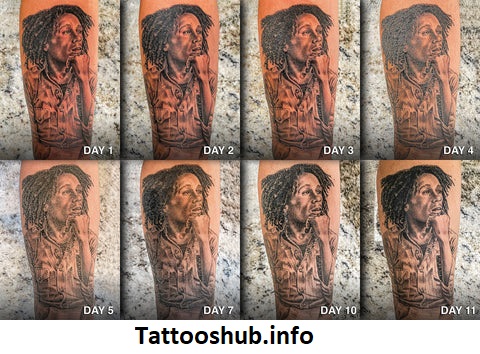
Let’s walk through exactly what happens each day of your tattoo healing journey. Bookmark this section and refer back to it as you heal.
Day 1: Fresh and Wrapped
- What Your Tattoo Artist Did:
After completing your tattoo, your artist cleaned the area and applied a bandage. This might be plastic wrap, sterile gauze, or a second skin product like Saniderm, Tegaderm, or Dermalize.
The bandage serves multiple purposes: it protects the open wound from bacteria, keeps clothing from rubbing, and allows initial healing to begin in a sterile environment.
- What’s Happening:
Your tattoo is essentially an open wound. The top layer of your epidermis has been penetrated thousands of times. Blood and plasma are seeping from the area, mixed with excess ink that didn’t embed in the dermis.
Your body immediately begins the inflammatory response. White blood cells rush to the wound site. Your tattoo looks incredibly vibrant and bright—this is the most colorful it will look during the entire healing process.
- What to Do:
Leave the bandage on for exactly as long as your artist instructed, typically 2-6 hours. If you have second skin applied, follow the specific instructions for that product (often 3-5 days).
Take your first shower with the bandage still on if possible. The moisture helps during removal.
When removing the bandage, do it slowly in the shower under lukewarm water. If it sticks, don’t rip it—let water help loosen it.
After removal, wash gently with clean hands using fragrance-free antibacterial soap like Dial Gold or Dr. Bronner’s Baby Unscented. Use lukewarm water, never hot.
Pat completely dry with a clean paper towel. Let the tattoo air dry for 10-15 minutes, then apply the thinnest layer of Aquaphor or A+D ointment.
- What You’ll Feel:
Burning, stinging, and tenderness—completely normal. Your tattoo might feel like a moderate sunburn. Some people describe it as a hot, tight sensation.
Pro Tip: Sleep on clean sheets tonight, preferably ones you don’t mind getting stained. Some ink and plasma will likely transfer overnight.
Days 2-3: The Oozing Phase
- What’s Happening:
Plasma continues oozing from your tattoo, appearing as a clear or slightly yellowish fluid. When mixed with excess ink, it might look colorful. This is your body’s way of cleaning the wound and pushing out what doesn’t belong.
The oozing should be minimal—just a slight wetness, not heavy leaking. Your tattoo continues looking bright and vibrant, though you might notice slight swelling.
- What to Do:
Wash 2-3 times daily with the same gentle routine. Morning, midday, and before bed works well.
Gently dab away any oozing with a clean paper towel. Don’t rub or scrub.
Continue applying thin layers of ointment after each washing. Remember: you want a barely-there layer, not a thick coating.
Wear loose, breathable clothing. Cotton is ideal. Avoid anything tight or synthetic that traps moisture.
- What You’ll Feel:
The tenderness continues, similar to day one. Some people feel increased sensitivity on days 2-3 as the inflammation peaks.
- What’s Normal:
Seeing ink on your paper towels, sheets, or clothes is totally normal. You’re not losing your design—this is just excess ink that was deposited too close to the surface.
Some people worry about the clear or yellowish fluid, thinking it’s pus. It’s not. Plasma is a normal part of healing and should be clear to slightly yellow. Actual pus is thick, white, green, or yellow and appears later if infection occurs.
Pro Tip: Keep paper towels handy everywhere—bedside table, bathroom, living room. You’ll use them constantly for gentle dabbing.
Days 4-7: Scab Formation Begins
- What’s Happening:
Your body begins forming light scabs over the tattoo. These scabs should be thin and flaky, not thick and crusty like a scraped knee.
The oozing decreases significantly or stops completely. Your tattoo starts feeling less wet and more dry. Color may begin looking slightly less vibrant as the scabbing layer forms.
What to Do:
- Continue washing 2-3 times daily. Even though oozing has decreased, consistent cleaning prevents bacterial buildup.
- Your scabs should be thin enough that you barely notice them. If you’re developing thick, crusty scabs, you might be using too much ointment (suffocating the skin) or not cleaning enough.
- Don’t pick at any scabs forming, no matter how tempting. Picking guarantees patchy healing and possible scarring.
- Avoid submerging in water. Quick showers are fine, but absolutely no baths, swimming pools, hot tubs, lakes, or oceans.
- Don’t wear tight clothing or anything that rubs the tattoo. A backpack strap rubbing against a shoulder tattoo, tight jeans on a thigh tattoo, or bra straps on a chest tattoo can all disrupt healing.
What You’ll Feel:
Tenderness decreases notably. By day 7, most people describe the feeling as more “sensitive” than painful. The burning sensation should be mostly or completely gone.
Pro Tip: If you notice thick scab formation, reduce ointment frequency or amount. Let your tattoo breathe more between applications.
Days 8-10: Peak Itching Arrives
- What’s Happening:
Welcome to the itchiest phase of tattoo healing. As your epidermis closes and new skin cells form, nerve endings regenerate. Your brain interprets this cellular activity as itching.
Scabs become more pronounced and start lifting at the edges. You’ll notice the tattoo surface looks bumpy or textured from the scabbing.
- What to Do:
Switch from thick ointment to fragrance-free lotion. Products like Lubriderm, Cetaphil, or Aveeno work well. The lighter formula moisturizes without suffocating.
Apply lotion 2-3 times daily, or whenever skin feels tight or itchy. You can be more generous with lotion than you were with ointment.
When itching strikes, try these relief methods:
- Slap or firmly pat the area (breaks up the itch signal)
- Apply cold compress for 10 minutes
- Add extra moisturizer
- Take an antihistamine if itching disrupts sleep
Absolutely do not scratch, no matter how intense the urge. Keep your nails short during healing to avoid accidental scratching while sleeping.
- What You’ll Feel:
Maddening itching that seems to come in waves. Some people describe sharp, prickly sensations. The itching often feels worse at night.
Pro Tip: If you’re losing sleep due to itching, take an over-the-counter antihistamine like Benadryl before bed. It reduces itching and helps you sleep.
Days 11-14: Heavy Scabbing and Flaking
- What’s Happening:
Scabs reach their maximum coverage. Your entire tattoo likely has a thin, dry, flaky layer over it.
Dead skin cells begin shedding, often taking small specks of ink with them. You’ll see colored flakes in the shower, on your clothes, or on your bedding.
The tattoo looks noticeably duller now as the scab layer obscures the ink below.
- What to Do:
Continue the lotion routine 2-3 times daily. Keeping skin moisturized helps scabs come off naturally and smoothly.
Let all scabs and flakes fall off on their own. They’ll shed during showers, while getting dressed, or spontaneously throughout the day.
Never pull at scabs, even ones barely hanging on. Premature removal takes ink with it, creating light spots or patchiness.
Itching continues but typically decreases from the peak. Stay strong—you’re past the worst part.
- What You’ll Feel:
Less intense itching than days 8-10, but still present. The skin feels tight and dry, especially if you skip moisturizing.
- What’s Normal:
Your shower might look like a crime scene with colored flakes everywhere. Your tattoo might look terrible—dull, patchy, uneven. Don’t panic. This is the ugly duckling phase that everyone experiences.
Pro Tip: Wear clothing you don’t love during this phase. Ink-colored flakes will get on everything.
Days 15-21: Major Peeling Phase
- What’s Happening:
The final scabs shed, often in larger pieces. Skin peels like a healing sunburn, coming off in sheets rather than tiny flakes.
A fresh, new layer of epidermis appears underneath. This new skin is thin and delicate, making your tattoo look significantly faded or milky.
Redness around the tattoo decreases substantially. Itching becomes minimal or stops completely.
- What to Do:
Moisturize 1-2 times daily. Your skin isn’t as thirsty now, but continued hydration helps the new skin layer develop properly.
Let peeling skin fall off naturally during washing or on its own. The temptation to peel is strong, but resist.
You can resume light exercise if you want, but avoid excessive sweating or activities where the tattoo rubs against equipment.
- What You’ll Feel:
Minimal to no discomfort. Most people forget about their tattoo during this phase because it no longer demands attention.
- What’s Normal:
The dull, faded appearance is completely normal and temporary. Many people freak out thinking their tattoo is ruined. It’s not—the color returns over the next few weeks.
Days 22-30: Surface Healed
- What’s Happening:
By the end of week four, your tattoo is surface healed. All scabs and peeling are complete. The skin texture matches the surrounding area.
However, deep healing continues in the dermis. Your tattoo still needs protection even though it looks and feels healed.
- What to Do:
Reduce washing to your normal shower routine. No more special cleaning necessary.
Keep moisturizing once daily. Well-moisturized skin brings color back faster.
You can begin using sunscreen on the tattoo (SPF 30 minimum). Apply it every time you’ll be in the sun.
Avoid prolonged direct sunlight exposure. Even with sunscreen, excessive UV exposure during this phase can permanently affect color.
You can swim now if necessary, but it’s better to wait another week or two if possible.
- What You’ll Feel:
Completely normal. The tattoo shouldn’t itch, hurt, or feel different from your regular skin.
- What’s Normal:
Your tattoo still looks duller than when you first got it. This continues for another 2-4 weeks before colors fully return.
Months 2-6: Deep Healing and Color Return
- What’s Happening:
The dermis completes its healing process. Collagen rebuilds. Ink particles become permanently encapsulated in the dermal layer.
Your tattoo colors gradually brighten week by week. The milky appearance disappears as the epidermis reaches its normal thickness.
By month 4-6, your tattoo achieves its final appearance—this is how it will look long-term with proper care.
- What to Do:
Continue daily moisturizing and sun protection. These become lifelong habits for tattoo longevity.
Evaluate your tattoo at the 6-month mark. If you notice any fading, light spots, or areas needing improvement, schedule a touch-up consultation with your artist.
- What You’ll Feel:
Nothing different. Your tattoo is now a permanent part of your skin with no special sensation.
Factors That Affect Healing Time
Not all tattoos heal at the same rate. Several variables influence how quickly your specific tattoo recovers. Understanding these factors helps set realistic expectations.
Tattoo Size and Coverage
- Small Tattoos (Under 2 inches):
Small designs create less skin trauma. Your body can focus healing resources on a concentrated area.
- Expected healing time: 2-3 weeks for surface healing
- Examples: Small symbols, dates, names, tiny images, minimalist designs
Medium Tattoos (2-6 inches):
- Medium-sized tattoos represent the “standard” healing timeline most information references.
- Expected healing time: 3-4 weeks for surface healing
- Examples: Medium-sized images, quotes, standard forearm pieces, hand-sized designs
Large Tattoos (6+ inches or extensive coverage):
- Large tattoos mean more skin damage. Your immune system must work harder over a bigger area. Some sections might heal faster than others, creating uneven healing patterns.
- Expected healing time: 4-6 weeks for surface healing, sometimes longer
- Examples: Full sleeves, back pieces, chest panels, thigh pieces, large florals or animals
- Full Body Areas:
Tattoos covering entire body parts (full sleeve, full back, full leg) heal in sections. The last sections completed heal while earlier sections are already in later healing stages.
Expected healing time: 6-8 weeks for complete surface healing
Tattoo Color and Style Complexity
- Black and Gray Tattoos:
Black ink is the easiest for skin to process. Single-pass application creates less trauma.
Expected healing time: Standard timeline (3-4 weeks)
Benefits: Fewer complications, less inflammation, cleaner healing
- Colored Tattoos:
Colored ink requires multiple passes for saturation. Each color is applied separately, multiplying skin trauma.
Some colored inks (especially reds and yellows) contain metal compounds that can cause additional inflammation or allergic reactions in sensitive individuals.
Expected healing time: Add 1-2 weeks to standard timeline (4-6 weeks)
- Simple Line Work:
Tattoos with only black outlines and no shading or color heal fastest. Minimal skin penetration means minimal healing time.
Expected healing time: 2-3 weeks
- Heavy Shading and Color Saturation:
Solid black sections, heavy shading, and fully saturated colors require more needle passes and deeper ink placement.
Expected healing time: 4-6 weeks
- White Ink and Light Colors:
These require the most passes to show up properly. White ink tattoos often experience the longest healing times and highest complication rates.
Expected healing time: 4-8 weeks, with higher touch-up likelihood
Body Location Healing Guide
Where you place your tattoo dramatically affects healing time. Areas with constant movement, high friction, or thin skin heal slower than protected areas with thicker skin.
Fastest Healing Locations (2-3 weeks)
Upper Arms and Shoulders:
- Thick skin with good blood flow
- Protected from friction
- Easy to keep clean
- Minimal movement interference
Outer Forearms:
- Good circulation
- Low friction
- Easy aftercare access
- Protected during daily activities
Upper Back:
- Thick skin
- Limited movement
- Protected from sun and friction
- Easy to keep clean
Outer Thighs:
- Thick skin layer
- Good blood supply
- Low friction from clothing
- Easy to protect during healing
Calves:
- Good circulation
- Easy to cover and protect
- Minimal friction
- Accessible for aftercare
Moderate Healing Locations (3-4 weeks)
Inner Forearms:
- Thinner skin than outer arms
- More friction from resting on surfaces
- Exposed to more elements
Chest (Upper):
- Good circulation
- Can be irritated by bra straps or shirts
- More sensitive skin
Upper Legs:
- Generally heal well
- Can experience friction from sitting
Lower Back:
- Thicker skin
- Can be irritated by waistbands
- Sometimes difficult to reach for aftercare
Slower Healing Locations (4-6 weeks)
Ankles:
- Thin skin with less fat padding
- Constant movement when walking
- Friction from socks and shoes
- Swelling pools in this area
Wrists:
- Very thin skin
- Constant movement
- High exposure to elements
- Difficult to protect from water and soap during hand washing
Hands:
- Constant use and movement
- Frequent washing required for hygiene
- Thin skin
- High friction exposure
- Increased fading over time
Feet and Toes:
- Thin skin
- Constant pressure from shoes
- Sweat and friction
- Limited blood flow compared to other areas
- Difficult to keep clean
Elbows:
- Constant bending movement
- Thick, dry skin that cracks easily
- Hard to keep moisturized
- Scabs can crack with movement
Knees:
- Constant bending
- Thin skin over bone
- High movement area
- Scabs crack easily
Ribs:
- Very thin skin
- High sensitivity
- Constant movement from breathing
- More prone to irritation
Neck:
- Thin, delicate skin
- Constant movement
- High sun exposure
- Difficult to protect from elements
Slowest Healing Locations (6-8 weeks)
Fingers:
- Constant use
- Thin skin
- Difficult to protect
- Frequent washing
- High fading rate
- Often require multiple touch-ups
Inner Bicep:
- Thin, sensitive skin
- Rubs against body
- Tends to stay moist
- Friction from arm movement
Armpits (if applicable):
- Constant moisture
- High friction
- Difficult to keep clean and dry
- Very thin skin
Behind Ears:
- Thin skin
- Difficult to protect
- High movement from jaw/head
- Hard to access for aftercare
Scalp:
- Difficult to clean properly
- Hair growth interferes
- High sun exposure
- Requires special aftercare
Why Size Matters for Healing
- Immune System Load: Your body has a finite amount of resources for healing at any given time. A small tattoo requires minimal immune response. A full sleeve demands significant resources, potentially slowing the overall healing process.
- Inflammation Spread: Larger tattoos create more widespread inflammation. Swelling and redness affect a bigger area, taking longer to resolve completely.
- Scab Coverage: More surface area means more scabbing. Large scab areas increase the risk of premature removal through accidental bumping or clothing friction.
- Aftercare Difficulty: Caring for a small wrist tattoo is simple. Caring for a full back piece requires help, mirrors, and significant time investment. Inconsistent aftercare on large tattoos leads to uneven healing.
Color Impact Details
Black Ink Only:
- Single pigment, one pass
- Body processes most efficiently
- Least allergic reaction risk
- Fastest healing: Standard timeline
- Most predictable results
Black with Gray Shading:
- Still primarily black ink (diluted for grays)
- Minimal additional trauma
- Healing time: Standard timeline
- Very stable during healing
Single Color (Red, Blue, Green, etc.):
- One color requires multiple passes for saturation
- Metal compounds in pigments may cause extra inflammation
- Healing time: Add 3-7 days to standard timeline
- Watch for allergic reactions (especially red ink)
Multiple Colors:
- Each color applied separately
- Cumulative skin trauma
- Different pigments may heal at different rates
- Healing time: Add 1-2 weeks to standard timeline
- Higher complication risk
Full Color Saturation:
- Vibrant, solid color areas
- Maximum needle passes required
- Most skin trauma
- Healing time: 4-6 weeks minimum
- Highest scabbing and peeling
- Most dramatic dull phase
Pastel or Watercolor Style:
- Lighter color application
- Multiple color layers
- Healing time: 3-5 weeks
- Colors may appear to blend differently during healing
- Final appearance emerges slowly
Specific Color Healing Characteristics
Red Ink:
- Most common allergen in tattoo ink
- Can cause raised, itchy reactions even years later
- May stay inflamed longer during healing
- Watch for excessive redness, bumps, or hives
Yellow Ink:
- Second most common allergen
- Contains cadmium compounds in some formulations
- Can cause prolonged inflammation
- Takes longest to show true color
White Ink:
- Requires most passes (low contrast with skin)
- Highest touch-up rate
- Often stays raised longer
- Can look pink or yellow during healing before settling
Black Ink:
- Most stable and predictable
- Lowest allergy risk
- Heals cleanly
- True color appears quickly after healing
Blue and Green:
- Generally stable
- Moderate healing time
- Lower allergy risk than red/yellow
- Color remains consistent during healing
Color Allergies and Reactions
Some people develop allergic reactions to specific ink colors, most commonly:
Immediate Reactions (During healing):
- Excessive itching beyond normal healing itch
- Raised bumps or hives in colored areas only
- Persistent redness that doesn’t fade
- Weeping or oozing after first week
Delayed Reactions (Months or years later):
- Tattoo becomes raised and itchy
- Seasonal flare-ups (more common in summer)
- One color area reacting while others are fine
- Persistent irritation in colored sections
If you experience allergic reactions, consult both your tattoo artist and a dermatologist. Some reactions resolve with topical steroids, while severe cases may require ink removal.
Seasonal and Climate Factors (Content Gap Covered)
Your healing environment significantly impacts recovery time. This is a factor most guides overlook, but it can add days or weeks to your healing timeline.
Summer Healing Challenges
Heat and Humidity:
Hot weather increases sweating, which irritates healing tattoos. Sweat carries bacteria and salt that can infect the open wound or sting the sensitive area.
Humidity keeps your tattoo moist longer than ideal. While some moisture is good, excessive dampness prevents scab formation and extends the oozing phase.
Solution:
- Stay in air conditioning when possible during the first week
- Wear loose, breathable cotton clothing
- Shower more frequently to rinse away sweat
- Use a fan to keep the area dry
- Apply moisturizer more sparingly (skin stays moist naturally)
Sun Exposure:
Summer means more sun exposure. UV rays are your tattoo’s worst enemy during healing.
Direct sunlight on a healing tattoo causes:
- Severe pain and burning
- Blistering
- Permanent ink damage and fading
- Extended healing time
- Increased scarring risk
Solution:
- Cover your tattoo completely when outside
- Wear UPF clothing over the tattoo
- Avoid outdoor activities during peak sun (10am-4pm)
- NO sunscreen on healing tattoos (wait until surface healed at week 3-4)
- Stay in shade whenever possible
Swimming Pools and Beaches:
Summer is swimming season, but you must avoid all swimming for 3-4 weeks.
Chlorine irritates healing skin and can cause chemical burns on fresh tattoos. Salt water stings and introduces bacteria. Lakes and rivers contain bacteria that cause serious infections.
Solution:
- Schedule tattoos in early fall or late winter instead
- Wait until late summer if you want spring/early summer swimming
- Plan for 4 full weeks without swimming
- Avoid pool parties, beach trips, and water parks
Insect Bites:
Mosquitoes and other insects can bite your tattoo area. A bite on a healing tattoo can introduce infection and damage the design.
Solution:
- Use insect repellent around (not on) the tattoo
- Cover with loose clothing outdoors
- Sleep under mosquito netting if necessary
Winter Healing Advantages and Challenges
Advantages:
Winter is actually ideal for tattoo healing in many ways:
- Less sun exposure naturally
- Easier to cover and protect tattoos
- Lower infection risk (fewer bacteria in cold)
- Less sweating
- More clothing layering options
Challenges:
Dry Air:
Indoor heating creates extremely dry air. This causes:
- Excessive skin dryness
- More intense itching
- Cracked, painful scabs
- Slower healing
Solution:
- Use a humidifier in your bedroom
- Moisturize more frequently (3-4 times daily)
- Drink extra water to combat dehydration
- Apply heavier moisturizers if needed
Tight, Warm Clothing:
Winter clothes are often tight and heavy. Turtlenecks rub neck tattoos. Tight jeans irritate leg tattoos. Boots create friction on ankle and foot tattoos.
Solution:
- Choose loose-fitting layers
- Wear soft, breathable base layers
- Avoid wool directly on healing tattoos (too itchy)
- Plan tattoo location around your winter wardrobe
Reduced Vitamin D:
Less sunlight means lower vitamin D production. Vitamin D supports immune function and skin healing.
Solution:
- Take vitamin D supplements (consult doctor for dosage)
- Eat vitamin D-rich foods (fatty fish, fortified milk, eggs)
- Spend time near windows for indirect light
Spring and Fall: Ideal Healing Seasons
Why These Seasons Are Best:
Moderate temperatures make clothing choices easier. Less sweating than summer, less dryness than winter. Natural humidity levels support healthy healing. Easier to avoid sun exposure without being cold.
Spring Considerations:
- Allergy season may affect immune system slightly
- Rain and moisture are generally fine (just pat dry)
- Increasing sun exposure as summer approaches (stay vigilant)
Fall Considerations:
- Perfect temperature for healing
- Can cover tattoos comfortably
- Decreased sun intensity
- Lower infection risk
Climate-Specific Advice
Hot, Dry Climates (Desert regions):
Extreme dryness is your biggest enemy. Your tattoo will require more frequent moisturizing (3-4 times daily). Drink extra water. Use a thicker moisturizer than typically recommended. Cover your tattoo from sun and wind.
Hot, Humid Climates (Tropical regions):
Excessive moisture requires vigilance. Your tattoo may stay damp, increasing infection risk. Use lighter moisturizers less frequently. Keep the area dry between applications. Change clothing if you sweat excessively. Use fans or AC generously.
Cold, Dry Climates (Northern regions, high altitude):
Combat dryness aggressively with frequent moisturizing and humidifiers. The cold itself isn’t problematic, but the dry air is. Protect from wind, which dries skin rapidly. Drink plenty of water despite not feeling thirsty.
Moderate Climates (Coastal, temperate):
You have the easiest healing conditions. Follow standard aftercare without significant adjustments. Watch for seasonal changes that might require minor modifications.
Seasonal Healing Timeline Adjustments
Add 3-5 days to healing time for:
- Summer healing in hot, humid climates
- Winter healing in very dry climates
- Healing during extreme temperature periods
Subtract 2-3 days from healing time for:
- Spring or fall healing in moderate climates
- Ideal temperature and humidity conditions
- Controlled indoor environment throughout healing
Age and Health Considerations (Content Gap Covered)
Your personal health status dramatically affects healing time. Two people with identical tattoos can have vastly different healing experiences based on these factors.
Age Impact on Healing
Teens and Early 20s (18-25 years):
- Healing Speed: Fastest natural healing Timeline: Standard or slightly faster (2-3 weeks)
- Why: Peak cellular regeneration, robust immune system, excellent circulation, high collagen production, optimal skin elasticity
Considerations:
- May be less diligent with aftercare (youth overconfidence)
- Need reminders to follow instructions consistently
- Skin changes are still occurring (tattoos may shift with final growth)
Late 20s to 30s:
- Healing Speed: Optimal healing Timeline: Standard timeline (3-4 weeks)
- Why: Still excellent healing capacity, better aftercare compliance, stable skin structure, good immune function
Considerations:
- Most predictable healing outcomes
- Best age for large-scale tattoo projects
- Minimal complications if healthy
40s to 50s:
- Healing Speed: Slightly slower Timeline: Add 3-7 days to standard timeline
- Why: Decreased collagen production, slower cell turnover, reduced skin elasticity, slightly diminished circulation
Considerations:
- May need more moisturizer due to naturally drier skin
- Colors may not appear as vibrant long-term
- Higher attention to nutrition and hydration needed
60s and Beyond:
- Healing Speed: Slower Timeline: Add 1-2 weeks to standard timeline
- Why: Significantly reduced cell regeneration, thinner skin, decreased immune response, reduced circulation, medications may interfere
Considerations:
- Consult doctor before getting tattooed
- Choose simpler designs (heal more predictably)
- May require longer between tattoo sessions
- More prone to complications
- Extra vigilance for infection signs needed
Health Conditions That Affect Healing
Diabetes:
- Impact: Significantly slower healing, higher infection risk
- Why: High blood sugar impairs immune function and reduces circulation, especially to extremities. White blood cells don’t function optimally, making infection more likely and harder to fight.
- Healing Time: Add 1-3 weeks to standard timeline
Precautions:
- Get approval from your endocrinologist first
- Only get tattooed when blood sugar is well-controlled (A1C under 7%)
- Monitor the tattoo closely for infection signs
- Avoid extremity tattoos (feet, lower legs, hands)
- Consider smaller tattoos that heal faster
- May need prophylactic antibiotics (doctor’s discretion)
Autoimmune Conditions:
- Conditions Include: Lupus, rheumatoid arthritis, psoriasis, Crohn’s disease, ulcerative colitis, multiple sclerosis
- Impact: Unpredictable healing, risk of flare-ups
- Why: Immune system attacks your own tissue, including healing tattoo. Immunosuppressant medications further complicate healing.
- Healing Time: Varies widely; can be standard or significantly extended
Precautions:
- Discuss with your rheumatologist or specialist
- Time tattoos during remission periods, never during flares
- Avoid tattoos if on high-dose immunosuppressants
- Be prepared for possible poor healing or rejection
- Some people with autoimmune conditions heal normally, others struggle
Psoriasis:
- Impact: Can trigger Koebner phenomenon (psoriasis appearing in tattoo)
- Healing Time: Normal to extended, depending on individual response
Precautions:
- Never tattoo over active psoriasis plaques
- Test with small tattoo first
- Expect possible psoriasis activation in tattooed area
- May affect tattoo appearance long-term
Eczema:
- Impact: Higher irritation risk, may flare in tattoo area
- Healing Time: Slightly extended if flares occur
Precautions:
- Tattoo during clear skin periods
- Use fragrance-free, eczema-safe products
- May itch more intensely than normal healing
- Avoid common eczema trigger areas if possible
Blood Disorders:
Conditions Include: Hemophilia, clotting disorders, anemia
Impact: Excessive bleeding, slower healing, bruising
Precautions:
- Medical clearance absolutely required
- May need clotting factor infusions before tattoo
- Choose experienced artist who works slowly and carefully
- Expect more bruising and longer oozing phase
HIV/AIDS:
Impact: Depends on viral load and CD4 count
Why: Compromised immune system struggles with healing and infection prevention
Precautions:
- Medical approval required
- Only proceed if undetectable viral load and healthy CD4 count
- Reputable artist who follows strict safety protocols
- Close monitoring for infection
- May heal normally if well-controlled
Heart Conditions:
Impact: Potentially slower healing due to circulation issues
Precautions:
- Doctor approval needed
- Avoid blood-thinning medication conflicts (discuss timing)
- May need antibiotic prophylaxis if history of endocarditis
- Monitor for unusual swelling (could indicate circulation problems)
Skin Conditions:
- Keloid Scarring: High risk of keloid formation in tattoo. May need to avoid tattoos entirely or test with tiny tattoo first.
- Excessive Scarring: Tends to scar more than heal. Tattoos may become raised and distorted.
- Very Sensitive Skin: Higher allergy risk, more inflammation, potentially prolonged healing.
Medications That Affect Healing
Blood Thinners (Warfarin, aspirin, clopidogrel):
- Impact: Excessive bleeding during tattoo, prolonged oozing, increased bruising
- Action: Consult doctor about temporarily stopping (if safe). Never stop blood thinners without medical approval.
Immunosuppressants (Prednisone, methotrexate, biologics):
- Impact: Severely impaired healing, very high infection risk
- Action: Many tattoo artists refuse to work on clients taking these. If approved, requires medical supervision and possibly prophylactic antibiotics.
Accutane (Isotretinoin):
- Impact: Extremely thin, fragile skin that doesn’t heal well
- Action: Wait at least 6-12 months after finishing Accutane before getting tattooed. Skin needs time to recover normal thickness and function.
Retinoids (Tretinoin, retinol):
- Impact: Thinner, more sensitive skin
- Action: Stop topical retinoids on tattoo area 2 weeks before and during healing. Can resume after fully healed.
Antibiotics:
- Impact: Generally positive—may reduce infection risk
- Consideration: If you’re on antibiotics for an active infection, wait until treatment is complete and you’re fully healthy before getting tattooed.
Lifestyle Factors
Smoking:
- Impact: Reduces blood flow by up to 50%, significantly slowing healing
- Why: Nicotine constricts blood vessels. Less blood flow means less oxygen and nutrients reaching the healing tattoo. Slower healing increases infection risk and complication likelihood.
- Healing Time: Add 1-2 weeks to standard timeline
- Action: Quit or significantly reduce smoking 2 weeks before tattoo and during healing. Every cigarette delays healing further.
Alcohol Consumption:
- Impact: Thins blood, causes excessive bleeding, impairs immune function, dehydrates skin
- Why: Alcohol dilates blood vessels and interferes with clotting. It also suppresses immune response and prevents deep sleep needed for healing.
Action:
- No alcohol 24-48 hours before tattoo
- Avoid completely during first week of healing
- Limit consumption during entire healing period
- Drink extra water to compensate for dehydration
Nutrition:
Poor Nutrition Impact: Slower healing, higher infection risk, poor color retention
Optimal Nutrition:
- High protein (supports tissue repair): lean meats, fish, eggs, legumes
- Vitamin C (collagen production): citrus, berries, bell peppers
- Zinc (immune function): nuts, seeds, whole grains
- Vitamin A (skin health): sweet potatoes, carrots, leafy greens
- Omega-3 fatty acids (inflammation control): fatty fish, flaxseed, walnuts
Hydration:
- Dehydration Impact: Dry, cracked skin, slower healing, more painful itching
- Optimal Hydration: Drink 8-10 glasses of water daily during healing. Hydrated skin heals faster and retains color better.
Sleep:
- Sleep Deprivation Impact: Slower healing, compromised immune function
- Why: Your body does most healing during deep sleep. Growth hormone released during sleep drives tissue repair.
- Optimal Sleep: 7-9 hours nightly, especially during first 2 weeks of healing.
Stress:
- High Stress Impact: Suppressed immune function, slower healing, increased inflammation
- Why: Cortisol (stress hormone) impairs healing and immune response.
- Action: Practice stress management during healing—meditation, gentle exercise, adequate rest.
Exercise Level:
Very Active Lifestyle: May need longer healing time due to sweating and movement
Action:
- Rest from intense exercise for 48-72 hours
- Resume gradually, watching for irritation
- Avoid gym equipment contacting tattoo
- Shower immediately after sweating
Sedentary Lifestyle: May heal slightly slower due to reduced circulation
Action: Light walking promotes circulation and healing. Don’t become a couch potato during healing.
How to Speed Up Tattoo Healing
While you cannot force your body to heal faster than its natural pace, you can optimize conditions for efficient, complication-free healing. Here are evidence-based strategies to support your body’s healing process.
1. Perfect Your Aftercare Routine
The Golden Standard:
Days 1-7:
- Wash 2-3 times daily with lukewarm water and fragrance-free antibacterial soap
- Pat dry completely with clean paper towels
- Apply thin layer of Aquaphor or A+D ointment
- Let tattoo breathe between applications (no rebandaging)
Days 8-14:
- Wash 1-2 times daily
- Switch to fragrance-free lotion (Lubriderm, Cetaphil, Aveeno)
- Apply lotion 2-3 times daily, more if skin feels tight
- Never pick or scratch, no matter how itchy
Days 15-30:
- Wash during normal showers
- Continue moisturizing 1-2 times daily
- Let peeling skin fall off naturally
- Begin sun protection after week 3-4
Months 2-6:
- Daily moisturizing
- Consistent SPF 30+ sunscreen use
- Normal skincare routine
Key Principles:
- Consistency matters more than frequency
- Thin layers prevent suffocation
- Clean hands before every touch
- Less is often more with products
2. Optimize Your Immune System
Your immune system drives healing. Support it with:
Hydration:
- Drink 8-10 glasses of water daily minimum
- Hydrated cells function and heal better
- Dehydration slows every healing process
- Add electrolytes if exercising or in hot weather
Protein Intake:
- Aim for 0.8-1g protein per pound of body weight
- Protein provides building blocks for new skin tissue
- Best sources: chicken, fish, eggs, Greek yogurt, legumes, tofu
- Spread protein throughout the day for consistent supply
Vitamin C:
- 500-1000mg daily during healing
- Essential for collagen production
- Supports immune function
- Food sources: citrus, strawberries, bell peppers, broccoli
Zinc:
- 15-30mg daily
- Crucial for wound healing and immune function
- Food sources: oysters, beef, pumpkin seeds, chickpeas
- Consider supplement if diet is deficient
Sleep:
- 7-9 hours nightly, especially first 2 weeks
- Body releases growth hormone during deep sleep
- Cellular repair peaks during sleep
- Poor sleep can extend healing by days or weeks
Stress Management:
- Chronic stress suppresses immune function
- Practice relaxation: meditation, deep breathing, gentle yoga
- Avoid major stressors during healing if possible
- Cortisol (stress hormone) impairs wound healing
Avoid Immune Suppressors:
- No alcohol for first week, limit during healing period
- Don’t smoke (reduces healing by up to 50%)
- Avoid excessive sugar (promotes inflammation)
- Limit caffeine (can dehydrate)
3. Protect Your Tattoo from Damage
From Physical Friction:
Friction is one of the biggest healing disruptors. It removes scabs prematurely, introduces bacteria, and extends healing time.
Prevention strategies:
- Wear loose, breathable cotton clothing
- Avoid tight jeans, compression wear, restrictive clothing
- Don’t let backpack straps rub shoulder/back tattoos
- Keep bra straps away from chest/shoulder tattoos
- Use soft fabrics that don’t cling or irritate
- Sleep in positions that don’t pressure the tattoo
- Avoid activities that cause repetitive rubbing
From Water Exposure:
✅ Safe water exposure:
- Quick lukewarm showers (5-10 minutes)
- Gentle water flow, not direct high-pressure spray
- Pat dry immediately after
❌ Unsafe water exposure:
- Baths, hot tubs, jacuzzis (bacteria breeding grounds)
- Swimming pools (chlorine irritates, chemicals damage)
- Lakes, rivers, oceans (bacteria, parasites)
- Saunas, steam rooms (excessive moisture)
- Prolonged showers (over softens scabs)
From Sun Damage:
UV rays are catastrophic for healing tattoos and cause permanent damage:
During healing (weeks 1-4):
- Cover completely with clothing when outside
- NO sunscreen yet (can clog healing pores)
- Avoid direct sunlight completely
- UV penetrates thin clouds—protect even on overcast days
- Consider UPF (UV Protection Factor) clothing
After surface healing (week 4+):
- Apply SPF 30+ sunscreen every time exposed
- Reapply every 2 hours
- Choose mineral sunscreen (zinc oxide/titanium dioxide)
- Make sun protection a lifelong habit
Why sun protection matters:
- UV fades ink colors permanently
- Causes premature aging of tattooed skin
- Can cause burning and blistering on healing tattoos
- Increases scarring risk
- Leads to faster tattoo deterioration
From Heat:
Excessive heat impairs healing:
❌ Avoid:
- Hot showers directly on tattoo
- Heating pads
- Saunas and steam rooms
- Hot yoga classes
- Direct heater vents
- Sitting near fireplaces
✅ Use instead:
- Lukewarm water
- Room temperature environments
- Cool compresses for swelling/itching
4. Choose the Right Aftercare Products
Not all products are created equal. Using the right ones speeds healing; using wrong ones causes problems.
Best Ointments (Week 1):
Aquaphor Healing Ointment
- Most recommended by tattoo artists
- Creates protective barrier without suffocating
- Petroleum-free formula
- Non-comedogenic
- Apply thin layers 3-5 times daily
A+D Original Ointment
- Classic choice for tattoo healing
- Contains vitamins A and D for skin repair
- Thin consistency, easy to apply
- Affordable and widely available
- Some artists prefer over Aquaphor
Hustle Butter Deluxe
- Vegan formula
- Contains shea butter, mango, aloe
- Smells pleasant (but fragrance-free versions exist)
- More expensive but long-lasting
- Good for sensitive skin
Best Lotions (Week 2+):
Lubriderm Daily Moisture (Fragrance-Free)
- Dermatologist recommended
- Absorbs quickly, non-greasy
- Won’t clog pores
- Affordable
- Perfect consistency for healing tattoos
Cetaphil Moisturizing Lotion
- Extremely gentle formula
- Great for sensitive skin
- Fragrance-free
- Hypoallergenic
- Non-comedogenic
Aveeno Daily Moisturizing Lotion (Fragrance-Free)
- Contains colloidal oatmeal (soothes itching)
- Excellent for dry skin
- Gentle enough for eczema-prone skin
- Absorbs well
CeraVe Moisturizing Lotion
- Contains ceramides (skin barrier repair)
- Fragrance-free
- Developed with dermatologists
- Good for all skin types
Best Cleansers:
Dr. Bronner’s Baby Unscented Castile Soap
- Gentle, pure soap
- Completely unscented
- Natural formula
- Concentrated (little goes long way)
- Vegan
Dial Gold Antibacterial Soap
- Classic tattoo shop recommendation
- Antibacterial without being harsh
- Affordable
- Widely available
- Rinses clean
Dove Sensitive Skin Beauty Bar
- Fragrance-free
- Mild cleansing
- Doesn’t strip skin
- Contains moisturizers
- Good for dry skin
Products to AVOID:
❌ Petroleum Jelly (Vaseline)
- Too thick, suffocates tattoo
- Prevents breathing and proper healing
- Traps bacteria and moisture
❌ Neosporin or Triple Antibiotic Ointment
- Common allergen
- Can pull out ink colors (especially reds)
- Creates excessive scabbing
- Not recommended by most professionals
❌ Scented Lotions or Soaps
- Fragrances irritate healing skin
- Can cause allergic reactions
- Slow healing process
❌ Alcohol-Based Products
- Dry out skin excessively
- Damage healing tissue
- Cause stinging and pain
- Remove natural oils needed for healing
❌ Hydrogen Peroxide
- Too harsh for healing tattoos
- Damages new skin cells
- Can cause excessive scarring
- Fades ink
❌ Coconut Oil (During early healing)
- Too thick for initial healing stages
- Can trap bacteria
- Better for maintenance after fully healed
5. Use Temperature Therapy
Cold Therapy (Days 2-14):
Cold helps with swelling, inflammation, and itching:
How to use:
- Wrap ice pack or frozen vegetables in clean cloth
- Apply to tattoo for 10-15 minutes
- Remove for 30 minutes before reapplying
- Repeat as needed for relief
- Especially helpful for intense itching
Benefits:
- Reduces swelling and inflammation
- Numbs itching sensation
- Constricts blood vessels (reduces oozing)
- Provides immediate relief
Never:
- Apply ice directly to skin (causes ice burn)
- Use for extended periods (can damage tissue)
- Use if you have circulation problems
Avoid Heat:
Heat worsens inflammation and slows healing:
- No hot showers on tattoo
- No heating pads
- No saunas/steam rooms
- Use lukewarm water only
6. Support Healing Position During Sleep
Sleep Positioning Matters:
How you sleep affects healing significantly:
First 3-7 Days:
- Avoid sleeping directly on fresh tattoo
- Use extra pillows to prop yourself
- Sleep on opposite side if possible
- Consider travel pillow for awkward positions
Specific Position Tips:
- Arm tattoos: Sleep on opposite arm or back
- Back tattoos: Sleep on side or stomach
- Chest tattoos: Sleep on back only
- Leg tattoos: Sleep on opposite side
- Rib tattoos: Sleep on opposite side (most challenging)
- Shoulder tattoos: Sleep on opposite shoulder or back
Sleep Surface Protection:
Use old sheets you don’t mind staining:
- Ink and oozing will transfer
- Scabs might stick to fabric
- Change sheets every 2-3 days during healing
- Consider waterproof mattress protector underneath
If Tattoo Sticks to Sheets:
- Don’t rip it off
- Get in shower with sheet if necessary
- Let warm water loosen the connection
- Never pull stuck fabric off forcefully
7. Time Your Tattoo Strategically
Best Times to Get Tattooed:
Fall (September-November):
- Moderate temperatures
- Easy to cover with clothing
- Less sun exposure
- Lower sweating
- Ideal healing conditions
Early Winter (December-January):
- Can easily keep covered
- Less sun damage risk
- Cooler temperatures comfortable
- Fully healed before summer
Early Spring (March-April):
- Moderate weather
- Heals before summer heat
- Can still cover comfortably
- Good balance
Worst Times:
Mid-Summer (June-August):
- Excessive heat and sweating
- Difficult to protect from sun
- Swimming season (must avoid)
- Uncomfortable healing with heat
Life Event Timing:
Avoid getting tattooed:
- 2 weeks before vacation (especially beach/swimming destinations)
- Before major physical events (marathons, competitions)
- During known stressful periods (finals, work deadlines)
- Before outdoor weddings or events
- When sick or run-down
Ideal timing:
- At beginning of low-stress period
- When you can rest and focus on aftercare
- When you have time for proper cleaning routine
- During moderate weather
- When you’re in good health
Signs Your Tattoo Isn’t Healing Properly
Knowing the difference between normal healing and problematic healing can prevent serious complications. Here’s what to watch for:
Normal Healing vs. Infection
Normal Healing Symptoms:
✅ Mild redness around tattoo (fades by day 5-7)
✅ Clear or slightly yellowish fluid (plasma) first 2-3 days
✅ Warmth to touch (not hot) first 2-3 days
✅ Mild swelling immediately after tattoo
✅ Tenderness and sensitivity first week
✅ Thin, flaky scabs week 2
✅ Intense itching days 8-14
✅ Dull, faded appearance weeks 2-4
✅ Skin peeling like sunburn week 3
Infection Warning Signs:
1. Excessive or Spreading Redness
⚠️ Concerning signs:
- Bright red color after day 7
- Redness spreading beyond tattoo borders
- Red streaks extending from tattoo (lymphangitis—serious!)
- Redness increasing rather than decreasing
What it means: Bacterial infection spreading through tissue
Action: See doctor within 24 hours. Red streaks require immediate emergency care.
2. Fever and Systemic Symptoms
⚠️ Concerning signs:
- Body temperature over 100.4°F (38°C)
- Chills or sweating
- Flu-like symptoms (body aches, fatigue)
- Nausea or vomiting
- Swollen lymph nodes near tattoo
What it means: Systemic infection that has entered bloodstream
Action: Seek immediate medical care. This is a medical emergency requiring antibiotics or hospitalization.
3. Pus or Abnormal Discharge
⚠️ Concerning signs:
- Thick, white, yellow, or green pus
- Cloudy discharge after day 3
- Foul-smelling drainage
- Crusted yellow or green scabs
- Discharge that increases rather than decreases
What it means: Bacterial infection producing pus
Normal vs. concerning:
- ✅ Normal: Clear or slightly yellow plasma (looks like water)
- ⚠️ Infection: Thick, opaque, colored, smelly discharge
Action: Contact doctor same day. Photograph the discharge to show your doctor.
4. Severe or Worsening Swelling
⚠️ Concerning signs:
- Swelling that increases after day 2-3
- Puffy, tight skin extending beyond tattoo
- Swelling with throbbing pain
- One side significantly more swollen than other (if symmetrical tattoo)
- Red, hot, and swollen combination
What it means: Inflammation from infection or allergic reaction
Normal vs. concerning:
- ✅ Normal: Slight puffiness days 1-3, gradually decreasing
- ⚠️ Concerning: Increasing swelling after day 3, severe puffiness, tightness
Action: See doctor if swelling worsens or doesn’t improve by day 5.
5. Intense Itching with Hives or Raised Bumps
⚠️ Concerning signs:
- Severe itching that prevents sleep
- Raised bumps or hives in tattooed area
- Blisters forming
- Itching accompanied by burning sensation
- Only specific colors reacting (especially reds)
What it means: Allergic reaction to ink, particularly metal compounds in colored inks
Normal vs. concerning:
- ✅ Normal: Intense but manageable itching week 2
- ⚠️ Allergic: Unbearable itching, raised welts, blistering
Action: Take antihistamine for relief. Contact doctor if severe. May require topical or oral steroids.
6. Thick, Crusty Scabs or Scarring
⚠️ Concerning signs:
- Thick scabs like a deep scrape
- Scabs that won’t fall off after 3 weeks
- Raised, puffy areas that don’t flatten
- Shiny, tight scar tissue forming
- Pitted or indented areas
- Color completely missing in sections
What it means: Over-scabbing from infection, picking, or poor healing. Possible keloid formation.
Normal vs. concerning:
- ✅ Normal: Thin, papery scabs that flake off easily
- ⚠️ Problematic: Thick crusts, raised scars, permanent texture changes
Action: Contact tattoo artist and dermatologist. Scarring may be permanent but can sometimes be improved.
7. Persistent or Increasing Pain
⚠️ Concerning signs:
- Pain that worsens after 48 hours
- Sharp, stabbing pain
- Throbbing pain that disrupts sleep
- Pain preventing normal movement or activities
- Burning pain with other infection signs
What it means: Possible infection, nerve irritation, or complication
Normal vs. concerning:
- ✅ Normal: Soreness days 1-3, steadily improving
- ⚠️ Concerning: Increasing pain, sharp pain, pain after week 1
Action: Contact doctor if pain increases or persists beyond day 5.
8. Delayed Healing or Non-Healing Wounds
⚠️ Concerning signs:
- Still oozing after 7 days
- No scab formation by day 10
- Open sores or wounds at week 3
- Raw, wet appearance continuing
- No healing progress week after week
What it means: Immune system struggling, possible infection, underlying health issue
Action: See doctor promptly. May need antibiotics or investigation of underlying health conditions.
9. Ink Rejection or Blowout
⚠️ Concerning signs:
- Ink pushing out of skin repeatedly
- Tattoo becoming increasingly blurry or spreading
- Colors completely disappearing
- Raised tattoo that won’t flatten
- Body physically pushing out ink
What it means: Body rejecting ink (rare) or artist went too deep (blowout)
Action: Consult tattoo artist first, then dermatologist if needed. May require cover-up or removal.
When to Call Your Doctor (Not Your Tattoo Artist)
Call doctor same day:
- Any signs of infection
- Severe allergic reaction
- Excessive swelling after day 5
- Persistent pain after 5 days
- Thick pus or foul odor
Go to emergency room:
- Fever over 100.4°F
- Red streaks extending from tattoo
- Difficulty breathing (severe allergy)
- Severe swelling affecting movement
- Signs of sepsis (confusion, rapid heart rate, extreme weakness)
Your tattoo artist can help with:
- Normal healing questions
- Aftercare product recommendations
- Concerns about color or appearance
- Touch-up needs
- General healing guidance
Your doctor should handle:
- All medical complications
- Infections
- Allergic reactions
- Prescription medications
- Underlying health issues affecting healing
Tattoo Aftercare Best Practices
Follow these proven aftercare practices for optimal healing results:
The Complete Do’s List
✅ DO wash your hands thoroughly before touching your tattoo, every single time without exception
✅ DO clean your tattoo 2-3 times daily with lukewarm water and fragrance-free antibacterial soap
✅ DO pat dry gently with clean paper towels, never regular bathroom towels that harbor bacteria
✅ DO apply thin layers of ointment (week 1) or lotion (week 2+) that you can barely see
✅ DO let it breathe after removing the initial bandage—no rewrapping unless artist specifically instructs
✅ DO wear loose, breathable clothing made from soft cotton that won’t cling or irritate
✅ DO sleep on clean sheets and change them every 2-3 days during the oozing phase
✅ DO stay hydrated by drinking 8-10 glasses of water daily
✅ DO get adequate sleep (7-9 hours) to support your body’s natural healing
✅ DO eat protein-rich foods to provide building blocks for tissue repair
✅ DO follow your artist’s specific instructions as they know your particular tattoo best
✅ DO take progress photos to track healing and catch any problems early
✅ DO protect from sun by covering completely for first 4 weeks
✅ DO use SPF 30+ sunscreen on healed tattoo whenever exposed to sunlight
✅ DO keep the tattoo dry between cleanings by avoiding excessive moisture
The Complete Don’ts List
❌ DON’T pick, scratch, or peel scabs or flaking skin under any circumstances
❌ DON’T submerge in water for 3-4 weeks—no pools, hot tubs, baths, lakes, or oceans
❌ DON’T exercise heavily for first 48-72 hours (sweating irritates healing wounds)
❌ DON’T expose to direct sunlight for the first 2-4 weeks
❌ DON’T apply sunscreen until surface healed (week 3-4 minimum)
❌ DON’T use scented products including soaps, lotions, or body wash
❌ DON’T apply too much product which suffocates the tattoo and prevents proper healing
❌ DON’T re-bandage after the initial bandage removal (tattoo needs air circulation)
❌ DON’T let pets lick or touch your healing tattoo
❌ DON’T shave over the area until completely healed
❌ DON’T use petroleum jelly (Vaseline)—it’s too thick and traps bacteria
❌ DON’T touch with dirty hands at any time
❌ DON’T drink alcohol heavily during first week (thins blood, impairs immune function)
❌ DON’T smoke if possible (reduces healing speed by up to 50%)
❌ DON’T take aspirin or ibuprofen first 24 hours if possible (increases bleeding)
❌ DON’T wear tight or synthetic clothing over healing tattoo
❌ DON’T panic over normal healing symptoms like itching, dulling, or flaking
Daily Aftercare Schedule
Days 1-7 Routine:
Morning:
- Wash hands thoroughly
- Wash tattoo with lukewarm water and gentle soap
- Pat completely dry with paper towel
- Apply thin layer of Aquaphor or A+D
- Wear loose, clean clothing
Midday:
- Wash hands
- Quick rinse with lukewarm water (if very active)
- Pat dry
- Reapply thin ointment layer
Evening:
- Shower with lukewarm water
- Wash tattoo gently
- Pat dry thoroughly
- Apply ointment
- Sleep on clean sheets
Days 8-21 Routine:
Morning:
- Shower with normal routine
- Wash tattoo gently
- Pat dry
- Apply fragrance-free lotion
Afternoon (if needed):
- Apply more lotion if skin feels tight or itchy
Evening:
- Wash during evening shower
- Pat dry
- Apply lotion before bed
Days 22-30 Routine:
Daily:
- Normal shower washing
- Moisturize once daily
- Apply sunscreen if going outside
Months 2+:
- Daily moisturizing
- Consistent sun protection
- Normal skincare routine
Common Healing Mistakes to Avoid
Even well-intentioned people make these mistakes. Learn from others’ errors:
Mistake 1: Over-Moisturizing
The Problem: Applying thick layers of ointment or lotion too frequently suffocates the tattoo. Skin can’t breathe, healing slows, and bacteria can breed underneath.
Signs you’re over-moisturizing:
- Tattoo looks wet or shiny constantly
- Thick, heavy scabs forming
- Prolonged oozing beyond day 3
- Clogged pores around tattoo
The Fix: Use tiny amounts—you should barely see product on skin. Less is more. Let tattoo breathe between applications.
Mistake 2: Under-Moisturizing
The Problem: Letting skin get too dry causes painful cracking, excessive scabbing, and premature scab removal from tightness.
Signs you’re under-moisturizing:
- Extremely tight, uncomfortable skin
- Thick, cracked scabs
- Excessive bleeding when scabs crack
- Very intense itching
The Fix: Moisturize consistently 2-3 times daily during weeks 2-3. Don’t skip applications just because you’re busy.
Mistake 3: Using Hot Water
The Problem: Hot water opens pores excessively, softens scabs too much, and can pull out ink. It also dries skin severely.
The Fix: Always use lukewarm water. It should feel comfortable, not hot. If you like hot showers, keep water lukewarm on tattoo area.
Mistake 4: Picking or Scratching
The Problem: This is the #1 way people ruin their tattoos. Picking removes ink, creates scarring, causes patchy color, and introduces infection.
Why we do it: The itching is intense, and seeing loose scabs is tempting. Our brains say “help it along.”
The Fix:
- Keep nails trimmed short
- Slap or pat instead of scratching
- Use cold compress for relief
- Apply more lotion when itchy
- Wear gloves at night if you scratch while sleeping
- Remember: temporary itch vs. permanent tattoo damage
Mistake 5: Swimming Too Soon
The Problem: Submersion in water (pools, hot tubs, lakes, oceans) before 3-4 weeks causes:
- Bacterial infections
- Ink leaching out
- Prolonged healing
- Color loss
- Scarring
Why people do it: Vacation timing, wanting to enjoy summer, thinking “it looks healed”
The Fix: Wait minimum 3 weeks, preferably 4. Plan tattoos around swimming season. Cover opportunity cost of few weeks vs. lifetime of tattoo.
Mistake 6: Sun Exposure
The Problem: UV rays on healing tattoos cause:
- Severe pain and blistering
- Permanent ink fading
- Increased scarring
- Extended healing time
Even “it looks healed” tattoos are vulnerable for months.
The Fix:
- Cover completely first 4 weeks
- No sunscreen until week 3-4 (clogs healing pores)
- After healing: SPF 30+ every time
- Make sun protection a lifetime habit
Mistake 7: Wearing Tight Clothing
The Problem: Friction removes scabs prematurely, introduces bacteria, causes uneven healing, and extends timeline.
Common culprits:
- Tight jeans on leg tattoos
- Bras on chest/shoulder tattoos
- Compression wear on any tattoo
- Backpack straps on shoulder/back tattoos
- Shoes/boots on ankle/foot tattoos
The Fix: Plan your wardrobe around healing. Wear loose cotton for 2-3 weeks. Consider tattoo placement relative to your typical clothing.
Mistake 8: Inconsistent Aftercare
- The Problem: Being diligent some days and lazy others creates uneven healing, prolongs timeline, and increases complications.
- Why it happens: Life gets busy, we feel better and forget, travel interrupts routine
The Fix:
- Set phone reminders for cleaning/moisturizing
- Prep aftercare supplies before getting tattooed
- Keep travel-size products in bag/car
- Commit to consistency for just 2-3 weeks
Mistake 9: Trusting Bad Advice
The Problem: Everyone has tattoo opinions. Friends, family, internet strangers give conflicting (often wrong) advice.
Common bad advice:
- “Use Neosporin” (causes reactions, pulls ink)
- “Let it dry out completely” (causes excessive scabbing)
- “Coconut oil cures everything” (too thick during early healing)
- “Wrap it in plastic wrap every night” (breeds bacteria)
- “You can swim after 1 week” (way too soon)
The Fix: Follow your tattoo artist’s specific instructions. When in doubt, call your artist. Use reputable sources for information.
Mistake 10: Ignoring Warning Signs
- The Problem: Dismissing infection symptoms as “probably normal” until it’s serious.
- Why it happens: Not wanting to seem paranoid, hoping it resolves itself, not knowing what’s normal
- The Fix: When in doubt, check with your artist or doctor. It’s better to ask and be wrong than ignore a real problem. Trust your instincts.
Tattoo Size and Color Impact on Healing
Let’s dive deeper into how size and color specifically affect your healing timeline.
Size Impact Details
Micro Tattoos (Under 1 inch):
- Minimal trauma
- Body heals almost as quickly as a small cut
- Healing time: 10-14 days for surface healing
- Lower infection risk due to small wound area
Small Tattoos (1-2 inches):
- Quick healing
- Most people return to normal activities within 2 weeks
- Healing time: 2-3 weeks
- Easy to protect and care for
Medium Tattoos (3-6 inches):
- Standard healing timeline
- Represents what most tattoo advice discusses
- Healing time: 3-4 weeks
- Manageable aftercare requirements
Large Tattoos (7-12 inches):
- Extended healing period
- May heal unevenly (some sections faster than others)
- Healing time: 4-6 weeks
- Requires consistent aftercare over larger area
Extra Large / Full Coverage (12+ inches or full body sections):
- Longest healing time
- Often completed in multiple sessions weeks apart
- Healing time: 6-8 weeks or more
- Each session creates new healing timeline
- Most challenging aftercare due to size
Why
- Friction: Areas that rub against clothing, accessories, or body parts heal slower. Constant irritation disrupts the healing process and can remove scabs prematurely.
- Movement: Joints and flexible areas experience constant stretching and bending. This movement can crack scabs, reopen wounds, and extend healing time.
- Blood Flow: Areas with better circulation heal faster. Extremities like fingers, toes, and feet have less robust blood flow compared to the torso and upper arms.
- Thickness: Skin thickness varies dramatically across your body. Thick skin (back, outer thigh) provides better cushioning and heals predictably. Thin skin (ribs, wrist) is more fragile and prone to complications.
- Moisture and Sweat: Areas that stay moist or sweaty create breeding grounds for bacteria. Armpits, feet, and between skin folds require extra diligence to keep clean and dry.
- Sun Exposure: Body parts frequently exposed to sunlight need more protection during healing. UV rays can damage healing skin and cause permanent ink fading.
- Ease of Care: If you can’t easily see or reach your tattoo, you’ll struggle with proper aftercare. This extends healing time and increases complication risk.
FAQs About Tattoo Healing
Q1: Can a tattoo heal in 2 weeks?
A: The surface of a small, simple tattoo may look healed in 2 weeks, but it’s not fully healed. The outer epidermis takes 2-3 weeks to close, but complete healing of all skin layers takes 4-6 months.
Even though it looks good at 2 weeks, continue aftercare and avoid swimming, prolonged sun exposure, and submerging in water for at least 3-4 weeks total.
Q2: How do I know when my tattoo is fully healed?
A: Your tattoo is fully healed when:
✅ All scabs have fallen off naturally
✅ No more flaking or peeling skin
✅ No redness, itching, tenderness, or sensitivity
✅ Skin texture matches surrounding area exactly
✅ Colors look vibrant (not dull or milky)
✅ You’ve passed the 3-4 week mark minimum
However, remember that deep dermal healing continues for 4-6 months. Surface healed ≠ completely healed.
Q3: Why does my tattoo look faded or dull during healing?
A: This is completely normal and temporary! During weeks 2-4, a new layer of epidermis forms over your tattoo, making it appear dull, cloudy, faded, or even milky.
This new skin layer is thin and acts like a translucent film. As it thickens and matures over the next 2-4 weeks, your colors will gradually return to full vibrancy.
Never try to exfoliate or scrub to “reveal” the color faster. Let this process happen naturally.
Q4: Can I shower with a new tattoo?
A: Yes! You should shower with your new tattoo. Use lukewarm (not hot) water and let it run gently over the tattoo. Don’t spray it directly with high pressure.
Use fragrance-free soap and pat dry immediately after. Quick showers (5-10 minutes) are ideal.
What you CAN’T do: take baths, swim, soak in hot tubs, or stay in the shower for extended periods. No submerging in water for 2-4 weeks.
Q5: When can I swim after getting a tattoo?
A: Wait at least 3-4 weeks before swimming. The exact timeline depends on healing progress:
- Pools/hot tubs: 3-4 weeks minimum (chlorine and chemicals irritate)
- Ocean/lakes: 3-4 weeks minimum (bacteria and parasites risk)
- Baths: 2-3 weeks minimum
- Showers: Immediately fine
Swimming too soon causes infection, ink loss, prolonged healing, and potential scarring. Your tattoo is an open wound for weeks.
Q6: When can I work out or exercise after a tattoo?
A: Activity recommendations:
- Light activity (walking): Immediately fine
- Moderate exercise: After 48-72 hours
- Heavy exercise/weightlifting: After 1 week (if no rubbing on tattoo)
- Contact sports: After 2 weeks
- Swimming/water activities: After 3-4 weeks
Avoid excessive sweating in the first week. Sweat irritates the healing wound and introduces bacteria. Shower immediately after any exercise that makes you sweat.
Q7: How long does a small finger tattoo take to heal?
A: Finger tattoos take longer than average—typically 4-6 weeks for surface healing, sometimes longer.
Why fingers heal slowly:
- Constant use and movement
- Harder to keep clean (frequent hand washing)
- Thin skin with less fat padding
- Friction from daily activities
Finger tattoos also fade faster over time and often require touch-ups. The constant skin regeneration on hands causes faster ink degradation.
Q8: How long does a large colored tattoo take to heal?
A: Large colored tattoos take 4-6 weeks for surface healing and up to 6 months for complete deep healing.
Why they take longer:
- Larger size = more skin trauma
- Colored ink requires multiple passes (more inflammation)
- Different color areas may heal at different rates
- Body must work harder over bigger area
Full sleeves, back pieces, or large thigh pieces may have some sections that heal while others are still in earlier stages.
Q9: Can I sleep on my new tattoo?
A: Avoid sleeping directly on your fresh tattoo for at least 3-7 days, longer for large tattoos.
Why this matters:
- Pressure causes sticking to sheets (painful removal)
- Restricts air circulation
- Causes excess oozing
- Can damage the design
After week 1, most people can sleep normally as long as scabs aren’t actively sticking. Use old sheets you don’t mind staining during the first week.
Q10: What should I do if my tattoo gets infected?
A: If you suspect infection:
- Don’t panic—early intervention prevents serious problems
- Stop all aftercare products temporarily
- Keep area clean with mild soap and water only
- Contact your doctor immediately (not just your artist)
- Don’t self-medicate with antibiotics without doctor approval
- Take photos to show your doctor
- Follow medical treatment exactly as prescribed
Most infections are easily treatable with antibiotics if caught early. Never ignore infection signs hoping they’ll resolve.
Q11: Should I use coconut oil on my healing tattoo?
A: Wait until after week 2-3 before using coconut oil.
While coconut oil is natural and moisturizing, it’s too thick during early healing stages. It can suffocate the tattoo and trap bacteria.
Stick with recommended products first:
- Week 1: Aquaphor or A+D ointment
- Weeks 2-4: Fragrance-free lotion (Lubriderm, Cetaphil)
- After fully healed: Coconut oil is fine for long-term maintenance
Q12: How often should I moisturize my healing tattoo?
A: Moisturizing frequency by healing stage:
- Week 1: Apply ointment 3-5 times daily (thin layers)
- Weeks 2-3: Apply lotion 2-3 times daily
- Week 4+: 1-2 times daily or as needed
The key is thin layers that absorb fully. If skin feels tight, dry, or looks flaky, add another application. Don’t overdo it—too much product suffocates the tattoo.
Q13: Can I use Neosporin on my tattoo?
A: Most tattoo artists advise against Neosporin and triple antibiotic ointments.
Why to avoid:
- Common allergen (causes reactions in many people)
- Too thick (prevents proper breathing)
- Can pull out ink colors (especially reds and yellows)
- Creates excessive scabbing
- Not formulated for large surface areas
Stick with A+D Original Ointment, Aquaphor, or whatever your artist specifically recommends.
Q14: Is it normal for my tattoo to feel raised?
A: Slight raising is normal during the first week due to swelling and inflammation. It should gradually flatten.
✅ Normal: Slightly raised for 2-3 days, steadily decreasing
⚠️ Concerning: Still raised after week 1, increasing after day 3, permanently raised and bumpy
Persistent raising could indicate:
- Allergic reaction to ink
- Keloid scarring
- Infection
- Over-worked skin (too many needle passes)
If your tattoo doesn’t flatten by day 7-10, consult your artist and consider seeing a dermatologist.
Q15: How does tattoo healing differ by skin type?
A: Healing times are similar across skin types, with some nuances:
Oily Skin:
- May produce more oozing initially
- Requires less frequent moisturizing
- Generally heals well
- Lower dryness risk
Dry Skin:
- Needs more frequent moisturizing
- Higher risk of cracking and excessive scabbing
- May itch more intensely
- Requires consistent hydration
Sensitive Skin:
- Higher allergic reaction risk (especially to colored inks)
- More prone to irritation
- May require gentler products
- Fragrance-free everything is essential
Dark Skin Tones:
- Slightly higher keloid scarring risk
- Redness less visible (which can mask infections)
- Generally heals beautifully with proper care
- May experience more pronounced hyperpigmentation during healing
Mature Skin (40+):
- May heal slightly slower
- Requires extra moisturizing
- Thinner skin needs gentler care
- Still heals excellently with proper aftercare
All skin types should follow the same basic aftercare routine with minor adjustments based on individual needs.
Conclusion: Your Tattoo Healing Journey
Healing a tattoo properly requires patience, consistency, and knowledge. While the process takes 2-3 weeks for surface healing and up to 6 months for complete healing, the effort you invest in these weeks determines how your tattoo looks for life.
Remember These Key Points:
⏱️ Timeline: 2-3 weeks for outer layer, 4-6 months for complete deep healing
🧼 Aftercare: Consistency beats intensity—follow the routine daily without skipping
🩺 Know the signs: Understand what’s normal healing vs. what requires medical attention
☀️ Protect from sun: UV damage is permanent—make sun protection a lifelong habit
💧 Stay hydrated: Your skin heals best when your whole body is well-hydrated
🚫 Don’t pick: Resist the urge to help scabs along—let them fall naturally
Your Tattoo Is an Investment
You’ve invested time, money, and likely endured discomfort for your tattoo. Spending 3-4 weeks caring for it properly ensures it looks amazing for decades to come.
When in Doubt
- Contact your tattoo artist for aftercare questions, concerns about appearance, or touch-up needs.
- Contact your doctor for signs of infection, allergic reactions, or any medical complications.
- Trust your body—it knows how to heal when you provide the right conditions.
Next Steps
✅ Download a tattoo aftercare checklist
✅ Set phone reminders for cleaning and moisturizing
✅ Take progress photos weekly to track healing
✅ Schedule a 6-month check-in with your artist for touch-up evaluation if needed
Your tattoo tells your story. Take care of it properly so it can tell that story beautifully for the rest of your life.