
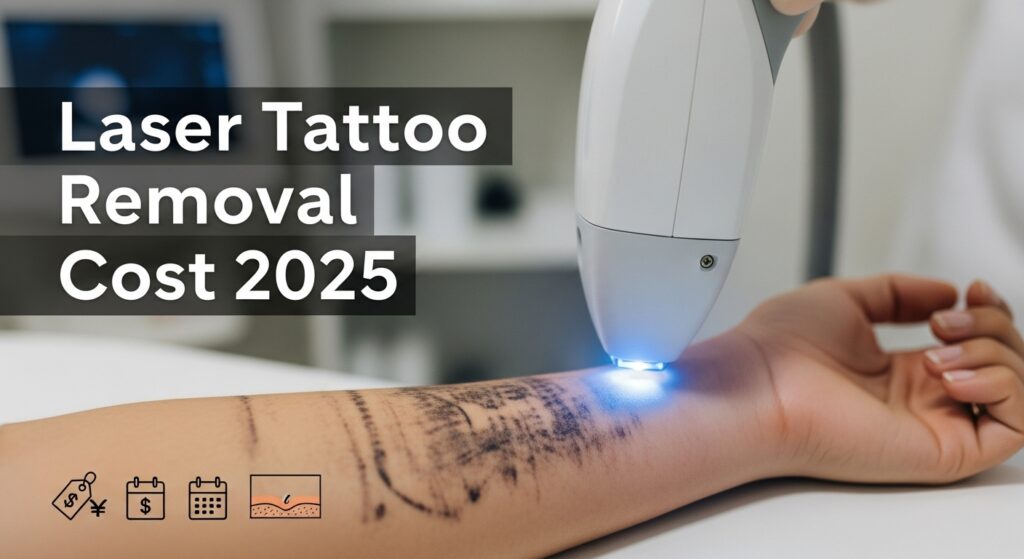
That small tattoo ideas for first timers seemed perfect at 18, but now it’s a daily reminder of a decision you’d rather forget. Or maybe that traditional American tattoo style piece just doesn’t fit your current lifestyle. Whatever your reason for considering removal, you’re probably wondering: how much is this going to cost me?laser tattoo removal cost
The honest answer? Laser tattoo removal cost varies dramatically—from $200 to $10,000+ for complete removal. But don’t let that range scare you. In this comprehensive guide, I’ll break down exactly what you’ll pay based on your specific situation, reveal hidden costs competitors don’t mention, and show you how to save thousands on your removal journey.
Table of Contents
Average Laser Tattoo Removal Cost in 2025
Let’s start with the numbers everyone wants to know. According to the latest 2025 data from the American Society of Plastic Surgeons, the national average cost for a single laser tattoo removal session is $697. However, this figure tells only part of the story.
Most people need multiple sessions to completely remove a tattoo. Here’s what you’re actually looking at:
Per-Session Pricing:
- Small tattoos (2×2 inches): $200-$350 per session
- Medium tattoos (4×4 inches): $300-$500 per session
- Large tattoos (6×6 inches): $450-$800 per session
- Extra-large tattoos (full sleeve): $800-$1,500+ per session
Total Removal Cost Estimates:
- Small tattoos: $1,600-$4,200 (8-12 sessions)
- Medium tattoos: $2,400-$6,000 (8-12 sessions)
- Large tattoos: $3,600-$9,600 (8-12 sessions)
- Full sleeves: $6,400-$18,000+ (8-12+ sessions)
These estimates assume the average person needs 8-12 treatment sessions for complete removal, though some tattoos may require fewer or more sessions depending on various factors we’ll discuss shortly.
Understanding Why Laser Tattoo Removal Cost Varies So Much
Unlike getting a tattoo where you often know the exact price upfront, removal pricing depends on numerous variables. Let’s break down each cost factor so you can estimate your personal investment.
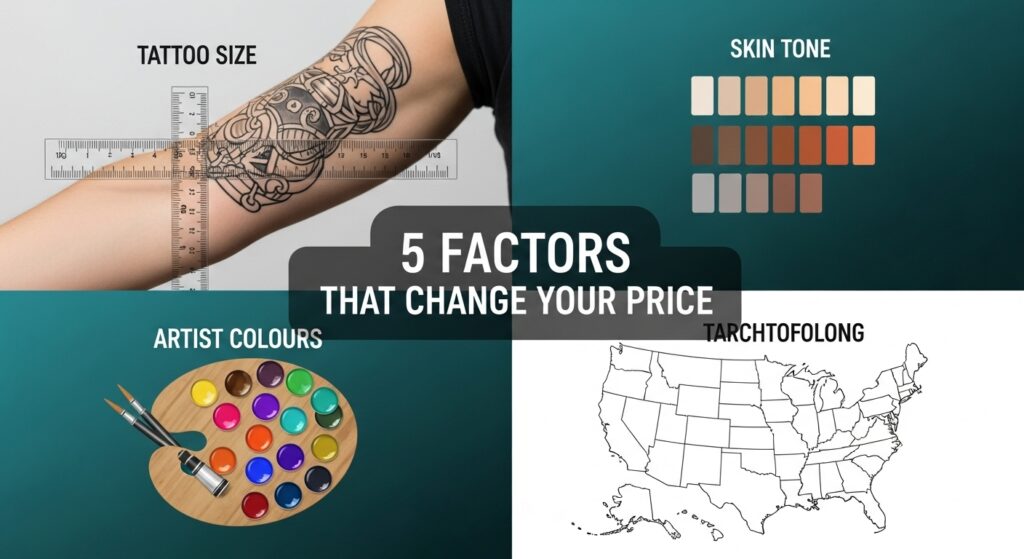
Tattoo Size and Measurement Methods
Size is the single biggest factor affecting laser tattoo removal cost. Most clinics measure tattoos in square inches using one of these methods:
- Grid Measurement System: Reputable clinics like Removery use a 1-inch by 1-inch grid system, measuring only the visible ink and subtracting negative space within the design. This means you’re not paying to laser blank skin between design elements.
- Dimensional Measurement: Some providers multiply length by width to get square inches, which can overcharge you if your tattoo has significant negative space.
Size Categories: Many clinics group tattoos into size brackets:
- XXS: 0-2 square inches
- XS: 2-4 square inches
- S: 4-8 square inches
- M: 8-16 square inches
- L: 16-32 square inches
- XL: 32-64 square inches
- XXL: 64+ square inches
- Custom: Extremely large pieces requiring special pricing
Pro Tip: Before your consultation, measure your tattoo at home. Take photos with a ruler nearby to verify the clinic’s measurement is accurate. This simple step prevents overcharging.
Number of Sessions Required
The number of laser treatments you’ll need depends on multiple factors:
Tattoo Age:
- Fresh tattoos (less than 1 year old): 10-15 sessions
- Mature tattoos (1-5 years old): 8-12 sessions
- Old tattoos (5+ years old): 6-10 sessions
Older tattoos are generally easier to remove because your body has already been naturally breaking down the ink for years. The longer you’ve had a tattoo, the more pigment has already migrated through your lymphatic system.
- Ink Depth: Professional tattoos penetrate deeper into the dermis than amateur tattoos. A professional piece typically requires 8-12 sessions, while a stick-and-poke or homemade tattoo might only need 4-6 sessions due to shallower ink placement.
- Skin Tone: Darker skin tones require more careful laser calibration and often need more sessions at lower intensities to prevent scarring or hypopigmentation. Lighter skin tones typically achieve faster results with fewer treatments.
- Your Immune System: Your body’s lymphatic system does the actual work of removing broken-down ink particles. People with strong immune systems, who exercise regularly, stay hydrated, and maintain healthy lifestyles often need fewer sessions than those with compromised immune systems.
- Treatment Intervals: Most clinics space sessions 6-8 weeks apart to allow proper healing and ink elimination. Some newer protocols space treatments 12 weeks apart, which may require fewer total sessions due to better ink clearance between treatments.
Ink Colors and Complexity
Black and dark blue inks absorb laser wavelengths most effectively, making them the easiest and cheapest colors to remove. Here’s the color difficulty hierarchy:
Easy to Remove (fewer sessions needed):
- Black ink
- Dark blue
- Dark green
Moderate Difficulty:
- Red
- Orange
- Purple
- Brown
Difficult to Remove (more sessions needed):
- Yellow
- Light blue
- Light green
- Turquoise
- Pink
- White
Multicolored tattoos require different laser wavelengths for different pigments, which means:
- You’ll need more total sessions
- Each session takes longer
- You might need treatment at facilities with multiple laser types
- Overall laser tattoo removal cost increases by 20-40%
Fluorescent and UV Inks: These specialty inks are notoriously difficult to remove and may never fully disappear. If you have glow-in-the-dark or UV-reactive ink, expect 15+ sessions with uncertain results.
Geographic Location Pricing
Where you live significantly impacts laser tattoo removal pricing. Here’s the state-by-state breakdown for 2025:
Most Expensive States:
- Hawaii: $562 per session (highest in nation)
- District of Columbia: $478 per session
- California: $437 per session
- Alaska: $430 per session
- Maryland: $416 per session
Least Expensive States:
- Alabama: $287 per session (lowest in nation)
- Mississippi: $307 per session
- West Virginia: $310 per session
- Iowa: $312 per session
- New Mexico: $313 per session
Mid-Range States:
- Texas: $326 per session
- Florida: $349 per session
- Illinois: $349 per session
- New York: $389 per session
- Washington: $387 per session
Major Metropolitan Areas: Within states, major cities typically charge 15-30% more than suburban or rural areas:
- San Francisco: $500-$850 per session
- New York City: $450-$750 per session
- Los Angeles: $400-$700 per session
- Chicago: $380-$650 per session
- Miami: $400-$680 per session
Why the price difference? Higher costs of living, commercial rent, staff salaries, and demand all contribute to geographic pricing variations. However, traveling to a cheaper location rarely makes financial sense once you factor in travel costs across multiple sessions.
Provider Qualifications and Technology
Not all laser tattoo removal is equal. Your provider’s qualifications and equipment directly affect both safety and results:
Board-Certified Dermatologists:
- Average cost: $500-$900 per session
- Highest medical training
- Best equipped to handle complications
- Often have most advanced technology
Board-Certified Plastic Surgeons:
- Average cost: $450-$800 per session
- Excellent surgical training
- Can perform surgical excision if needed
- Usually have quality laser equipment
Licensed Medical Aestheticians (under physician supervision):
- Average cost: $300-$600 per session
- Specialized training in laser treatments
- Work under physician protocols
- Good option for straightforward cases
Tattoo Removal Specialists (non-medical):
- Average cost: $200-$450 per session
- Variable training and certification
- May not be equipped for complications
- Regulations vary by state
Laser Technology Types:
Q-Switched Lasers (older technology):
- Lower cost: $200-$400 per session
- Slower results (more sessions needed)
- Higher risk of scarring
- Still effective for black ink
Picosecond Lasers (newer technology):
- Higher cost: $400-$800 per session
- Faster results (fewer sessions needed)
- Lower risk of scarring
- Effective on all colors including stubborn ones
The picosecond laser’s ultra-short pulse duration shatters ink into smaller particles than Q-switched lasers, allowing your body to eliminate them more efficiently. While each session costs more, you typically need 30-40% fewer total sessions, potentially saving money overall.
Cost-Benefit Analysis:
- Q-Switched: 12 sessions × $300 = $3,600
- Picosecond: 8 sessions × $500 = $4,000
The picosecond laser costs slightly more but achieves results faster with less scarring risk—often worth the premium.
Tattoo Placement on Your Body
Location on your body affects both the number of sessions needed and price per session:
Fastest Removal (better circulation):
- Neck and face: 6-8 sessions
- Chest and upper arms: 7-10 sessions
- Forearms: 8-10 sessions
Moderate Removal:
- Abdomen: 8-12 sessions
- Upper back: 8-12 sessions
- Thighs: 9-12 sessions
Slowest Removal (poor circulation):
- Lower legs and ankles: 10-15 sessions
- Feet and hands: 12-18 sessions
- Fingers: 15-20 sessions
Areas with better blood flow and lymphatic drainage remove ink more efficiently. Extremities with poorer circulation take longer, increasing overall laser tattoo removal cost.
Some providers charge extra for difficult-to-treat areas:
- Hands/feet: Additional $50-$100 per session
- Face/neck: Additional $75-$150 per session (due to higher risk)
- Intimate areas: Additional $100-$200 per session
Hidden Costs Nobody Tells You About
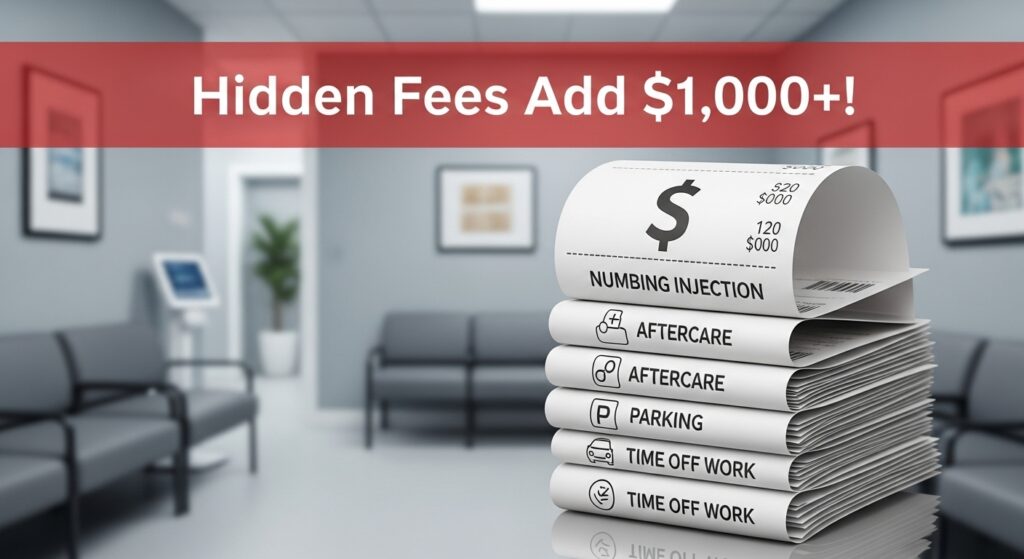
Most online cost guides stop at per-session pricing. But there are several additional expenses that can add hundreds or thousands to your total investment:
Initial Consultation Fees
Many clinics offer free consultations, but some charge:
- $50-$150 for initial assessment
- $100-$200 if consultation includes test spot treatment
- $0 if applied toward first session
What to ask: “Is the consultation fee waived if I book treatment?” Many providers credit consultation fees toward your first session.
Numbing and Anesthesia Costs
Laser tattoo removal hurts—most describe it as more painful than getting the tattoo. Pain management options include:
Topical Numbing Cream:
- $25-$50 per session
- Applied 30-45 minutes before treatment
- Reduces pain by 30-50%
- Some clinics include this free
Injectable Lidocaine:
- $75-$150 per session
- Injected around tattoo before lasering
- Reduces pain by 70-80%
- Usually optional/additional cost
Cooling Devices:
- Often included in session price
- Zimmer cooler or similar technology
- Reduces pain and inflammation
- Ask if included before booking
Pro-Nox Nitrous Oxide:
- $50-$100 per session
- Self-administered laughing gas
- Reduces anxiety and pain perception
- Not available at all facilities
Over 12 sessions, numbing costs can add $300-$1,800 to your total investment. Factor this in if you have low pain tolerance.
Aftercare Products
Proper aftercare between laser sessions prevents infection and improves results:
Essential Aftercare:
- Antibacterial ointment: $15-$30
- Non-stick bandages: $10-$20
- Medical-grade sunscreen (SPF 50+): $20-$40
- Gentle cleanser: $15-$25
Per-Session Aftercare Cost: $60-$115
Total Aftercare Cost (12 sessions): $720-$1,380
Some clinics include aftercare kits with each session, potentially saving you hundreds. Always ask what’s included.
Treatment of Complications
While rare with qualified providers, complications can occur:
Common Issues:
- Hyperpigmentation treatment: $150-$400
- Hypopigmentation treatment: $200-$500
- Scarring treatment: $300-$1,200
- Infection treatment: $100-$500
Insurance Note: Medical complications may be partially covered by health insurance, unlike the cosmetic procedure itself. Keep all receipts and documentation.
Parking and Transportation
This seems minor, but consider:
- 12 sessions × $10 parking = $120
- 12 sessions × $30 rideshare = $360
- Time off work for appointments: potential lost wages
If you’re traveling to a different city for treatment, factor in gas, tolls, and travel time across all sessions.
Touch-Up Sessions Beyond Initial Estimate
About 30% of patients need additional sessions beyond the initial estimate:
- 2-3 extra sessions: $600-$2,400 additional cost
- Particularly common with colorful or professionally done tattoos
Ask if your provider offers:
- Package pricing that includes extra sessions
- Guaranteed complete removal packages
- Discounted rates if you need more sessions than quoted
Pricing Models: How to Pay for Tattoo Removal
Clinics offer various payment structures, each with pros and cons:
Per-Session Payment
How it works: Pay for each treatment individually at the time of service.
Typical cost: $200-$800 per session depending on size
Pros:
- No large upfront payment
- Flexibility to stop treatment anytime
- Can switch providers if unsatisfied
- No long-term commitment
Cons:
- Highest total cost (up to 40% more expensive)
- No bulk discount
- Unpredictable final cost
- Temptation to skip sessions to save money
Best for: Very small tattoos, test sessions, or those with financial flexibility who prefer spreading costs.
Package Pricing
How it works: Buy a bundle of sessions upfront at a discounted rate.
Common packages:
- 6-session package: 10-15% discount
- 10-session package: 20-25% discount
- 12-session package: 25-30% discount
Example pricing (medium tattoo):
- Single session: $400 each
- 6-session package: $2,040 ($340/session – 15% savings)
- 10-session package: $3,200 ($320/session – 20% savings)
Pros:
- Significant cost savings
- Predictable payment
- Committed treatment schedule
- Often includes aftercare products
Cons:
- Large upfront payment
- May pay for unused sessions if removal completes early
- Harder to switch providers mid-treatment
- Some packages are non-refundable
What to verify:
- Can unused sessions be refunded?
- Can you transfer remaining sessions to another tattoo?
- What happens if you move or need to stop treatment?
- Is there an expiration date on the package?
Complete Removal Packages
How it works: Pay one price for unlimited sessions until complete removal (as clinically possible).
Typical cost:
- Small tattoos: $1,500-$3,000
- Medium tattoos: $2,500-$5,000
- Large tattoos: $4,000-$8,000
Pros:
- True cost certainty
- No surprise additional charges
- Incentive alignment—provider wants efficient results
- Best value if you need many sessions
- Often includes all aftercare
Cons:
- Highest upfront cost
- “Complete removal” may still leave slight ghosting
- Usually non-refundable
- May have time limits (complete within 3 years, etc.)
Best for: Large tattoos, colorful pieces, or deep professional work likely needing 12+ sessions.
Cost comparison example (12 sessions needed):
- Per session: 12 × $450 = $5,400
- Package deal: $3,600 (10-session package + 2 additional)
- Complete removal: $3,500 (unlimited sessions)
The complete removal package saves $1,900 in this scenario.
Monthly Payment Plans
How it works: Finance your removal through medical financing companies.
Common options:
- CareCredit: Medical credit card with 0% APR promotional periods
- Cherry: Healthcare financing with approval for most credit scores
- PatientFi: Medical loans with fixed monthly payments
- In-house financing: Some clinics offer their own payment plans
Example financing:
- Total cost: $4,000
- 12-month payment plan at 0% APR: $333/month
- 24-month plan at 9.99% APR: $184/month (total cost $4,427)
Pros:
- Access to treatment without large upfront payment
- 0% APR options available (6-24 months typically)
- 100% approval rate programs available
- Budget-friendly monthly payments
Cons:
- Interest charges if not paid during promotional period
- Credit check may be required
- Deferred interest can be steep (often 26.99%)
- May need to complete treatment before financing ends
Important: Read the fine print carefully. Many medical financing plans have deferred interest, meaning if you don’t pay the full balance before the promotional period ends, you’ll be charged interest retroactively on the entire original amount.
Insurance Coverage for Tattoo Removal
Here’s the unfortunate truth: insurance almost never covers laser tattoo removal cost.
Why insurance doesn’t cover it: Tattoo removal is classified as a cosmetic procedure, which insurance companies explicitly exclude from coverage.
Rare exceptions: Insurance may provide partial coverage if:
- Tattoo was traumatic (assault, human trafficking)
- Tattoo causes medical problems (chronic infection, severe allergic reaction)
- Tattoo prevents employment in your field (healthcare workers with hand/neck tattoos)
- Removal is part of reconstructive surgery after trauma
Even in these cases, expect to jump through hoops with documentation, letters from employers or therapists, and appeals.
HSA and FSA funds: Health Savings Accounts and Flexible Spending Accounts generally don’t cover cosmetic procedures either. However, if removal is for the medical reasons above, you may be able to use these funds. Consult your account administrator.
Military coverage: Active duty military members may get coverage for tattoo removal if:
- Tattoos violate military appearance regulations
- Removal is required for continued service
Check with your branch’s medical services for specific policies.
How to Save Money on Laser Tattoo Removal

Tattoo removal is expensive, but these strategies can reduce your total cost by hundreds or thousands:
1. Compare Multiple Providers
Get consultations from at least 3-5 providers:
- Differences of $100-$300 per session are common
- Over 12 sessions, that’s $1,200-$3,600 in savings
What to compare:
- Per-session pricing
- Package discounts
- Technology used (Q-switched vs. picosecond)
- Provider qualifications
- Included aftercare
- Consultation fees (and if waived)
Don’t automatically choose the cheapest—factor in technology and qualifications. A skilled provider with better equipment may achieve results in fewer sessions, saving money despite higher per-session costs.
2. Buy Packages Instead of Per-Session
We’ve covered this, but it bears repeating: package pricing typically saves 20-30% compared to per-session payment. If you’re committed to complete removal, this is one of the easiest ways to reduce laser tattoo removal cost.
3. Negotiate Complete Removal Packages
Many clinics have flexibility in their pricing. Try:
- “Competitor X quoted me $3,200 for a complete removal package. Can you match that?”
- “I’m ready to start today if we can work out a better price.”
- “If I bring a friend for removal too, can we get a discount?”
Success rate varies, but you might save 10-15% simply by asking.
4. Look for Promotional Offers
Tattoo removal clinics regularly run specials:
- First-time client discounts: 20-30% off first session
- Seasonal promotions: “Summer skin refresh” or “New Year, New You”
- Referral bonuses: $50-$200 off for referring friends
- Social media deals: Follow their pages for exclusive offers
Sign up for email lists from multiple clinics and wait for the best promotion before committing.
5. Consider Timing Your Treatment
Some clinics have slower periods with better deals:
- Late fall and winter (people aren’t worried about beach season)
- Early January (using holiday cash)
- Back-to-school season (September-October)
6. Optimize Your Health for Faster Results
The healthier you are, the faster your body eliminates ink:
- Exercise regularly: Improves circulation and lymphatic drainage—potentially reducing sessions needed by 1-2
- Stay hydrated: Drink 8-10 glasses of water daily—helps flush broken-down ink particles
- Quit smoking: Smoking impairs healing and ink elimination—smokers need 20-30% more sessions
- Maintain healthy immune system: Get enough sleep, manage stress, eat nutritious foods
- Massage the area: Gentle lymphatic massage between sessions helps eliminate ink
One or two fewer sessions translates to $400-$1,600 in savings.
7. Space Sessions Optimally
While most clinics recommend 6-8 weeks between sessions, research suggests 12-week intervals may produce:
- Better ink clearance per session
- Fewer total sessions needed
- Less cumulative skin damage
Ask your provider about extended spacing—the longer timeline might save you money overall.
8. Consider Partial Removal for Cover-Ups
If your goal is a cover-up rather than complete removal, you can stop after 3-6 sessions:
- Partial removal cost: $900-$3,600
- Complete removal cost: $2,400-$9,600
- Savings: $1,500-$6,000+
Many tattoo artists prefer working over lightened tattoos rather than starting from scratch. This approach gives you a fresh Tattoo Ideas and Inspiration opportunity without the full removal cost.
9. Ask About Student or Military Discounts
Many providers offer:
- Student discounts: 10-15% off with valid ID
- Military discounts: 10-20% off for active duty, veterans
- First responder discounts: 10-15% off for police, fire, EMS
- Healthcare worker discounts: 10% off
These discounts can save $300-$1,200 on a complete removal package.
10. Use Medical Tourism Cautiously
Laser tattoo removal abroad can cost 50-70% less:
- Mexico: $100-$200 per session
- Thailand: $80-$150 per session
- Turkey: $90-$180 per session
However, risks include:
- Unknown provider qualifications
- Different safety standards
- Difficulty with follow-up care
- Complications after returning home
- Travel costs across multiple sessions
Medical tourism for tattoo removal rarely makes financial sense unless you already live abroad or need only 1-2 sessions.
Alternative Tattoo Removal Methods and Their Costs
Laser removal isn’t the only option. Here’s how alternatives compare:
Surgical Excision
How it works: A surgeon cuts out the tattooed skin and stitches the remaining skin together.
Cost: $1,500-$6,000 per procedure
Pros:
- Immediate results in one session
- Guaranteed complete removal
- Covered by insurance in rare medical cases
- Best for very small tattoos
Cons:
- Leaves a scar (potentially worse than the tattoo)
- Only viable for small tattoos (<2 inches)
- Longer recovery time (2-4 weeks)
- Potential complications (infection, poor healing)
- May require skin grafts for larger pieces
Best for: Tiny tattoos in non-visible areas where scarring isn’t a concern.
Cost comparison:
- Small tattoo laser removal (8 sessions): $1,600-$4,200
- Small tattoo surgical excision: $1,500-$3,000
Excision is cheaper but leaves a scar. Only choose this if scarring is acceptable to you.
Dermabrasion
How it works: A rotating abrasive device sands away skin layers containing tattoo ink.
Cost: $1,000-$4,000 per procedure (may need multiple)
Pros:
- Faster than laser (fewer sessions)
- Can be combined with other methods
- Works on all ink colors
Cons:
- Very painful (requires anesthesia)
- High scarring risk
- Long healing time (4-6 weeks)
- Infection risk
- Rarely achieves complete removal
- Largely replaced by lasers
Best for: Almost no one—outdated method with worse results and more side effects than laser removal.
Chemical Peels (TCA)
How it works: Trichloroacetic acid penetrates skin to break down and expel ink.
Cost: $500-$1,500 per treatment (need multiple)
Pros:
- Less expensive per session than laser
- Can treat small areas
- No expensive equipment needed
Cons:
- Severe chemical burns possible
- High scarring risk
- Very painful
- Inconsistent results
- May worsen tattoo appearance
- Not FDA-approved for tattoo removal
Best for: No one—the risks far outweigh the modest cost savings.
Saline or Glycolic Acid Removal
How it works: Solution injected under skin to bring ink to surface, where it scabs off.
Cost: $200-$500 per session (need many sessions)
Pros:
- Popular for cosmetic tattoos (eyebrows, eyeliner)
- Works on all ink colors
- Less painful than laser
Cons:
- Not effective on body tattoos
- Multiple sessions needed
- Scarring possible
- Inconsistent results
- Best suited for permanent makeup only
Best for: Removing microblading or cosmetic tattoos, not regular body art.
Cover-Up Tattoos
How it works: A new, usually larger and darker tattoo covers the old one.
Cost: $200-$2,000+ depending on size and artist
Pros:
- Much cheaper than removal
- Immediate results in one session
- Transform regret into something you love
- No medical procedure needed
Cons:
- Doesn’t actually remove the tattoo
- Requires larger, usually darker design
- Limits your options
- May eventually want to remove the cover-up too
Best for: People who want different body art rather than blank skin.
Cost comparison:
- Complete laser removal (medium tattoo): $2,400-$6,000
- Partial removal + cover-up: $1,800-$4,500 (removal) + $500-$1,500 (new tattoo) = $2,300-$6,000
- Cover-up only: $500-$2,000
If you want new art, cover-up is the most cost-effective solution.
At-Home Removal Creams
How it works: Topical creams claim to fade tattoos over time.
Cost: $20-$100 per product
Reality check: These products don’t work. Save your money.
Why they fail:
- Tattoo ink sits in the dermis (deep skin layer)
- Topical creams only reach the epidermis (surface)
- No cream can penetrate deep enough to affect tattoo ink
- FDA has not approved any tattoo removal cream
Many contain harsh acids that damage skin without affecting the tattoo. Some before/after photos you see are:
- Natural fading over years attributed to the cream
- Photo manipulation
- Fake testimonials
Verdict: Don’t waste money on removal creams. If they worked, dermatologists would use them instead of expensive lasers.
Understanding the Laser Tattoo Removal Process
Knowing what happens during removal helps you make informed decisions and set realistic expectations:
How Laser Tattoo Removal Works
The science is fascinating: High-intensity laser pulses target tattoo pigment beneath your skin’s surface. The laser energy gets absorbed by ink particles, causing them to shatter into smaller fragments through photoacoustic impact.
Your body then treats these tiny ink particles as foreign material, mobilizing immune cells to capture and transport them through your lymphatic system to your liver and kidneys for elimination.
Different laser wavelengths target different ink colors:
- 1064 nm wavelength: Black, blue, dark green
- 532 nm wavelength: Red, orange, yellow
- 755 nm wavelength: Blue, green
- 694 nm wavelength: Difficult greens, blues
Quality clinics use Q-switched or picosecond lasers with multiple wavelength capabilities to effectively target all colors in your tattoo.
What Happens During Your First Consultation
Your initial consultation typically includes:
Visual Assessment (10 minutes): The provider examines your tattoo under good lighting, noting:
- Size and placement
- Ink colors present
- Age and quality of the tattoo
- Skin tone and condition
- Any scarring or texture issues
Medical History Review (10 minutes): You’ll discuss:
- Current medications
- Skin conditions or sensitivities
- History of keloid scarring
- Immune system health
- Pregnancy or breastfeeding status
- Smoking habits
Treatment Planning (15 minutes): Your provider explains:
- Estimated number of sessions
- Realistic outcome expectations
- Recommended laser type
- Treatment schedule and spacing
- Pre and post-treatment care
Pricing Discussion (10 minutes): You’ll receive:
- Per-session cost estimates
- Package pricing options
- Payment plans available
- Total investment projection
Optional Test Spot (5 minutes): Some clinics perform a small test treatment to:
- Assess your skin’s reaction
- Demonstrate the sensation
- Show immediate ink response
- Identify any adverse reactions
Total consultation time: 45-60 minutes
Questions to ask:
- “What type of laser do you use, and why is it appropriate for my tattoo?”
- “How many similar tattoos have you treated?”
- “Can I see before/after photos of your work?”
- “What’s your complication rate?”
- “What happens if I’m not satisfied with results?”
- “Are there any reasons I might not be a good candidate?”
Never feel pressured to book immediately. Take your consultation notes home and compare multiple providers.
What to Expect During Treatment Sessions
Here’s what happens during a typical laser tattoo removal session:
Arrival and Prep (10-15 minutes):
- Check in and update any medical information
- Change into a gown if tattoo location requires it
- Provider examines healing from last session
- Photos taken to document progress
- Numbing cream applied (if using)
The Actual Treatment (5-30 minutes depending on size):
- Protective eyewear placed on you
- Provider tests laser settings on small area
- Systematic lasering of entire tattoo
- You’ll hear snapping sounds and smell burning
- Pain level varies (most describe it as rubber bands snapping)
- Cooling device used between laser passes
Immediate Aftercare (5-10 minutes):
- Ice pack applied to reduce swelling
- Antibacterial ointment and bandage applied
- Aftercare instructions reviewed
- Next appointment scheduled
- Any questions answered
Sensations during treatment:
- Sharp snapping or stinging
- Heat or burning sensation
- Metallic smell from ink being vaporized
- Skin may feel hot for several hours after
Immediate visual changes:
- Frosting: White or gray appearance (normal, fades in 20 minutes)
- Redness and swelling (normal, subsides in 24-48 hours)
- Possible pinpoint bleeding (normal for first few minutes)
- Temporary darkening of ink (normal, fades in 1-2 weeks)
Total appointment time: 30-60 minutes
Tattoo Aftercare and Healing Between Sessions
Proper Tattoo Aftercare and Healing between laser sessions is crucial for optimal results and preventing complications:
First 24 Hours:
- Keep bandage on for 24 hours
- No showering directly on treated area
- Apply ice packs (20 minutes on, 20 minutes off)
- Take over-the-counter pain relievers if needed
- Elevate the area if possible to reduce swelling
Days 2-7:
- Remove bandage and gently clean with mild soap
- Pat dry, don’t rub
- Apply antibiotic ointment (Aquaphor or bacitracin) 2-3 times daily
- Keep covered with non-stick bandages during this period
- Expect blistering (normal healing response, don’t pop)
- Some areas may weep or ooze clear fluid (normal)
Days 8-14:
- Scabbing begins as healing progresses
- DO NOT pick at scabs (causes scarring)
- Keep area moisturized
- Itching is normal and indicates healing
Weeks 2-6 (until next session):
- Scabs fall off naturally (don’t force them)
- Some ink will appear lighter as inflammation subsides
- Continue gentle moisturizing
- Avoid sun exposure or use SPF 50+ sunscreen
- Resume normal activities gradually
Critical Don’ts During Healing:
- No picking, scratching, or peeling scabs
- No swimming pools, hot tubs, or soaking baths
- No direct sun exposure on treated area
- No tanning beds (ever during removal process)
- No harsh chemicals or fragranced lotions
- No tight clothing rubbing the area
- No strenuous exercise for 48 hours
When to Contact Your Provider:
- Signs of infection (increased redness, warmth, pus, fever)
- Severe pain not controlled by over-the-counter medication
- Blistering covering more than 50% of treated area
- Unusual scarring or texture changes
- Allergic reaction symptoms
Following these aftercare guidelines reduces complications and maximizes ink clearance, potentially saving you from needing extra sessions.
Realistic Timeline for Complete Removal
Understanding the time commitment helps you plan both logistically and financially:
Minimum Timeline:
- 6 sessions × 8 weeks apart = 48 weeks (nearly 1 year)
- Add initial consultation: ~13 months total
Average Timeline:
- 10 sessions × 8 weeks apart = 80 weeks (1.5 years)
- Add initial consultation: ~20 months total
Extended Timeline:
- 15 sessions × 8 weeks apart = 120 weeks (2.3 years)
- Add initial consultation: ~2.5 years total
With 12-Week Spacing (increasingly recommended):
- 10 sessions × 12 weeks apart = 120 weeks (2.3 years)
- Add initial consultation: ~2.5 years total
Factors that extend timelines:
- Missed appointments (illness, financial constraints, life events)
- Extended healing periods between sessions
- Slower than expected ink clearance
- Provider scheduling availability
- Your own schedule conflicts
Pro Tip: If you have a deadline (wedding, job requirement, vacation), start removal at least 2 years in advance to allow for unexpected delays.
Factors That Make Tattoos Harder (and More Expensive) to Remove
Some tattoos present unique challenges that increase both session count and laser tattoo removal cost:
Professional vs. Amateur Tattoos
Professional Tattoos:
- Done by experienced artists for those thinking about how to become a tattoo artist
- Ink placed at consistent depth (1.5-2mm into dermis)
- High-quality, concentrated inks
- Dense, thorough coverage
- Typical sessions needed: 10-15
Amateur Tattoos:
- Stick-and-poke or homemade
- Inconsistent depth (some surface, some deep)
- Lower quality inks (often easier to break down)
- Patchy coverage
- Typical sessions needed: 4-8
Paradox: Professional tattoos often cost more to remove despite being “better” tattoos because the ink is more systematically and deeply embedded.
Age and Fading Status
Fresh Tattoos (0-12 months):
- Ink particles still large and concentrated
- Body hasn’t begun natural breakdown
- Removal sessions needed: 12-18
- Higher cost: $3,600-$10,800
Mature Tattoos (1-5 years):
- Some natural fading occurred
- Ink particles slightly broken down
- Removal sessions needed: 8-12
- Moderate cost: $2,400-$7,200
Old Tattoos (5+ years):
- Significant natural fading
- Ink already partially eliminated by body
- Removal sessions needed: 6-10
- Lower cost: $1,800-$6,000
Sun-Faded Tattoos: If your tattoo has significant sun exposure and fading, it may remove 20-30% faster, saving you several sessions.
Cover-Up Tattoos (Layered Ink)
Cover-ups present special challenges:
- Multiple layers of ink at different depths
- Often darker and denser ink to cover original
- May mix colors that respond differently to laser
- Difficult to determine what ink is where
Removal sessions needed: 15-20+ (sometimes double a single tattoo)
Cost: $4,500-$12,000+
If you have a cover-up and want it removed, expect it to be one of your most expensive and time-consuming removals.
Scarred Tattoos
Tattoos with existing scarring (from initial tattooing or trauma) present complications:
- Scar tissue doesn’t respond to laser like normal skin
- Ink trapped in scar tissue is harder to eliminate
- Risk of worsening scarring with laser treatment
- May never achieve complete removal
Removal sessions needed: 12-20+, with partial removal often the best outcome
Cost: $3,600-$12,000+ for incomplete results
If your tattoo has significant scarring, discuss realistic expectations with your provider during consultation.
Tattoos on Extremities
Hands, feet, fingers, and lower legs have:
- Poor circulation compared to core body areas
- Less robust lymphatic drainage
- Slower immune response
- Thinner skin with different healing properties
Removal sessions needed: 15-20+ (often 30-50% more than average)
Cost: $4,500-$12,000+
Finger tattoos are among the most difficult and expensive to remove relative to their tiny size.
Special Cases: Cosmetic and Medical Tattoos
Not all tattoos are decorative body art. Permanent makeup and medical tattoos have unique considerations:
Microblading and Eyebrow Tattoos
Cost: $400-$600 per session
Sessions needed: 4-8 typically
Total cost: $1,600-$4,800
Special considerations:
- Requires extreme precision (eyebrow area)
- Different laser settings than body tattoos
- Ink often contains iron oxide (can darken with wrong laser)
- Must protect eyes during treatment
- Longer healing time due to facial location
Many regular tattoo removal clinics don’t treat eyebrows—you may need a specialist, which increases costs.
Alternative: Saline removal works better for eyebrows than laser in many cases, though it still requires multiple sessions at similar costs.
Eyeliner Tattoos
Cost: $500-$800 per session
Sessions needed: 6-10
Total cost: $3,000-$8,000
Extreme caution required:
- Laser near eyes carries vision risk
- Requires specialized eye protection
- Must be performed by experienced specialist
- Limited provider availability
- Higher complication rates
Some providers refuse to remove eyeliner tattoos due to liability concerns. Those who do charge premium prices for the added risk.
Lip Liner and Full Lip Color
Cost: $400-$700 per session
Sessions needed: 6-12
Total cost: $2,400-$8,400
Challenges:
- Lips heal slower than other areas
- More painful than most body locations
- Possible temporary swelling interfering with eating/speaking
- Color changes as ink breaks down
- Some lip pigments don’t respond well to laser
Areola Tattoos (Post-Mastectomy)
Cost: Usually covered by insurance as reconstructive
Sessions needed: 4-8
Special considerations:
- Often covered by insurance when part of breast reconstruction
- Requires sensitive treatment approach
- Emotional significance for many patients
- Usually performed by medical providers, not tattoo removal clinics
If you have reconstructive medical tattoos you want removed, work with your plastic surgeon and insurance company—this is one rare case where coverage may apply.
Radiation Tattoos (Cancer Treatment Markers)
Cost: May be covered by insurance
Sessions needed: 2-4 (these are usually small dots)
Total cost: $400-$1,600 out of pocket if not covered
These tiny tattoos mark radiation treatment areas. Many cancer survivors want them removed after treatment completion. Some insurance plans cover removal as part of cancer aftercare.
Is Laser Tattoo Removal Worth the Cost?
This is ultimately a personal decision, but here’s how to evaluate it:
Calculate Your Cost Per Day
Example calculation:
- Total removal cost: $4,000
- Time with tattoo before removal: 5 years (1,825 days)
- Cost per day you had the tattoo: $2.19
Perspective shift: Many people spend more on daily coffee ($5/day) than the “daily cost” of tattoo removal spread over the years they’ve disliked their ink.
Consider the Emotional and Professional Value
Emotional benefits:
- Relief from daily regret
- Increased confidence
- No more explaining/covering the tattoo
- Mental closure from past chapter of life
- Reduced anxiety in social situations
Professional benefits:
- Job opportunities in conservative fields
- Military promotion eligibility
- Healthcare career advancement
- Corporate appearance compliance
- Modeling or acting opportunities
How to quantify: If your tattoo costs you even one job opportunity worth $5,000 more annually, it pays for itself in 1-2 years:
- $5,000 additional annual income × 20 years = $100,000
- Removal cost: $4,000
- ROI: $96,000 over career
Compare to Other Appearance Investments
Common cosmetic procedures:
- Botox: $300-$600 every 3-4 months = $1,200-$2,400/year ongoing
- Lip fillers: $500-$1,000 every 6-12 months ongoing
- Laser hair removal: $1,500-$4,000 for multiple areas (one-time)
- Teeth whitening: $300-$1,000 annually for maintenance
- Quality skincare routine: $500-$2,000 annually
Tattoo removal:
- One-time investment: $2,000-$8,000
- Results are permanent
- No ongoing maintenance costs
Viewed this way, tattoo removal is a mid-range cosmetic investment with permanent results.
When Removal May Not Be Worth the Cost
Consider alternatives if:
Financial hardship: If $4,000+ would create genuine financial stress, explore:
- Cover-up tattoos (much cheaper)
- Living with it while saving money slowly
- Waiting for more affordable technology
Minimal regret: If you’re only occasionally bothered:
- The financial investment might outweigh your discomfort
- Consider whether you can accept the tattoo
- Sometimes placement in non-visible areas makes removal unnecessary
Medical risk factors: If you have:
- Keloid scarring tendency (removal could make it worse)
- Active skin conditions in tattooed area
- Compromised immune system
- Very dark skin (higher complication risk)
Unrealistic expectations: If you expect:
- Perfect skin with zero trace of tattoo (rarely achievable)
- Complete removal in 2-3 sessions (almost never happens)
- Pain-free treatment (it hurts, though manageable)
- Instant results (it’s a 1-2 year process minimum)
Financial Planning: Can You Afford It?
Budget checkpoints:
Ideal scenario:
- Removal cost represents <5% of annual income
- You have emergency fund in place
- No high-interest debt
- Money is in savings, not charged to credit card
Acceptable scenario:
- Removal cost represents 5-10% of annual income
- 0% APR financing available
- Can pay off within promotional period
- Modest impact on other savings goals
Problematic scenario:
- Removal cost >10% of annual income
- Would require high-interest credit card debt
- No emergency fund exists
- Would prevent essential savings
Rule of thumb: If you can’t comfortably afford the removal within 12-18 months without going into debt, consider waiting until your financial situation improves.
The Future of Tattoo Removal: New Technologies
Staying informed about emerging technologies might influence your timing:
Current Technology (2025)
Picosecond Lasers:
- Current gold standard
- Ultra-short pulse duration (picoseconds = trillionths of a second)
- Better ink shattering than older Q-switched lasers
- Fewer sessions needed
- Less skin damage
- Available now at most modern clinics
Emerging Technologies (Next 2-5 Years)
Rapid Pulsing Protocols: Research shows multiple laser passes in single session (R20 or R0 protocols) might:
- Reduce total sessions needed by 30-40%
- Complete removal in 6-8 months vs. 18-24 months
- Similar safety profile to traditional spacing
- Not yet widely available
Perfluorodecalin (PFD): An FDA-approved skin optical clearing agent that:
- Temporarily makes skin more transparent to laser light
- Allows laser to reach deeper ink more effectively
- May reduce sessions by 20-30%
- Currently in clinical trials, not commercially available
Topical Agents Post-Laser: New formulations applied after laser treatment that:
- Enhance ink particle elimination
- Reduce inflammation
- Improve healing
- Several in development, none FDA-approved yet
Revolutionary Technologies (5-10+ Years Out)
Nanotechnology Approaches:
- Engineered nanoparticles that bind to ink
- Facilitate faster elimination through lymphatic system
- Early research phase
Enzymatic Degradation:
- Enzymes that specifically break down tattoo ink
- Would work topically or via injection
- Years away from human trials
Should you wait for new technology?
Probably not if:
- You’re significantly bothered by your tattoo now
- Current picosecond technology is available near you
- You can afford treatment now
- Your tattoo is affecting your life/career
Maybe wait if:
- Your tattoo is in a hidden location and doesn’t bother you much
- You’re very price-sensitive and can save more over 2-3 years
- You’re considering removal for a planned event 3+ years away
- R20 protocol clinics are opening near you soon
Reality check: Medical technology advances slower than we hope. What’s “2-3 years away” often becomes 5-7 years in practice. The technology available today (picosecond lasers) is highly effective—waiting might not provide significant advantages.
Common Mistakes That Increase Tattoo Removal Cost
Avoid these pitfalls that can add thousands to your final bill:
1. Choosing Provider Based Only on Price
The temptation: Save $100-$200 per session with the cheapest provider.
The reality:
- Outdated technology requires 30-50% more sessions
- Inexperienced providers cause complications requiring treatment
- Poor technique increases scarring risk
- You end up paying more overall
Smart approach:
- Compare providers in similar quality tiers
- Choose the best value, not just lowest price
- Verify laser technology and provider qualifications
- Check reviews and before/after portfolios
2. Skipping or Delaying Sessions
The temptation: Skip a session when money is tight or you’re busy.
The reality:
- Interrupting treatment resets some progress
- Your body may begin re-establishing ink
- Total sessions needed may increase
- Treatment timeline extends significantly
Smart approach:
- Choose a payment plan you can sustain
- Schedule all appointments in advance
- Treat removal like any important medical treatment
- Only commit if you can follow through
3. Ignoring Aftercare Instructions
The temptation: Skip aftercare products or sun protection to save money.
The reality:
- Complications require expensive treatment
- Poor healing reduces ink clearance effectiveness
- You may need extra sessions due to suboptimal results
- Scarring can be permanent
Smart approach:
- Factor aftercare costs into budget upfront
- Follow all instructions meticulously
- Invest in quality sunscreen and healing products
- Think of aftercare as protecting your investment
4. Not Researching Package vs. Per-Session Pricing
The mistake: Paying per session because you don’t have cash for a package.
The reality:
- Per-session pricing costs 30-40% more overall
- Many providers offer payment plans for packages
- You lose negotiating leverage with per-session payment
Smart approach:
- Always ask about package pricing
- Inquire about payment plans for packages
- Calculate total cost under each payment model
- Choose package with financing if available
5. Getting Removal During Peak Sun Season
The mistake: Starting removal in spring/summer when you want clear skin for beach season.
The reality:
- Must avoid sun exposure during treatment
- Higher risk of hyperpigmentation
- More difficult healing in heat
- You’ll spend summer covered up anyway
Smart approach:
- Start removal in fall/winter
- By following summer, you’ll have more progress
- Easier to stay covered in cold weather
- Better healing conditions
6. Not Asking About Hidden Fees
The mistake: Booking based on advertised session price only.
The reality:
- Consultation fees ($50-$150)
- Numbing costs ($25-$150 per session)
- Aftercare products ($60-$115 per session)
- Parking or facility fees
- True cost is 20-30% higher than quoted
Smart approach:
- Ask: “What is the total out-of-pocket cost per session including all fees?”
- Get written pricing confirmation
- Clarify what’s included vs. additional
- Compare total costs, not just session prices
7. Treating Too Soon After Getting Tattooed
The mistake: Getting laser removal within weeks or months of getting the tattoo.
The reality:
- Fresh tattoos need 6-12 months to fully heal
- Treating too early increases complication risk
- Results are worse than waiting
- You waste money on ineffective early sessions
Smart approach:
- Wait minimum 6 months, ideally 12+ months
- Let tattoo fully heal and settle
- Some natural fading occurs during this time
- Initial sessions will be more effective
Frequently Asked Questions About Laser Tattoo Removal Cost
Does tattoo removal hurt more than getting the tattoo?
Most people report that laser tattoo removal hurts more than getting the original tattoo, but sessions are much shorter. A tattoo that took 3 hours to apply might only take 15 minutes to laser. The pain is intense but brief.
Pain level: 7-8/10 (vs. 4-6/10 for getting tattooed)
Numbing options significantly reduce discomfort. With topical numbing cream and cooling devices, most people tolerate treatment well.
Can any tattoo be completely removed?
Most tattoos can be removed to the point where they’re no longer visible from normal conversational distance (3-5 feet). However, truly “ghost-free” skin is not guaranteed. Factors affecting complete removal:
- Very high success: Black ink on light skin
- High success: Black/blue ink on medium skin tones
- Moderate success: Multicolored tattoos
- Lower success: Fluorescent inks, light colors on dark skin
About 95% of people achieve removal they’re satisfied with, even if trace evidence remains under close inspection.
Will my insurance cover any of the cost?
Insurance covers tattoo removal in rare cases:
- Traumatic tattoos (assault, trafficking)
- Medical necessity (chronic infection, allergic reaction)
- Employment requirement (military regulations)
Otherwise, laser tattoo removal cost is 100% out-of-pocket as a cosmetic procedure.
How much does it cost to remove a small tattoo?
Small tattoos (2×2 inches or smaller):
- Per session: $200-$350
- Total removal (8-12 sessions): $1,600-$4,200
- With package pricing: $1,200-$3,000
The smallest tattoos are the most affordable to remove but still require the same number of sessions as larger pieces.
Is tattoo removal more expensive in big cities?
Yes, significantly. Urban areas charge 20-40% more than suburban or rural locations:
- New York City: $450-$750 per session
- Rural New York: $300-$450 per session
However, traveling to cheaper areas rarely makes financial sense once you factor in travel costs across 10+ sessions.
Can I negotiate the price?
Many clinics have flexibility, especially for:
- Complete removal packages
- Multiple tattoos
- Referrals (bring friends)
- Paying cash upfront
Typical negotiation savings: 10-20%
Always ask: “Is there any flexibility on pricing?” or “Can you match this competitor’s quote?” You might be surprised.
What happens if I can’t afford to continue treatment midway through?
This is a real concern for many people. Options if you can’t continue:
Package holders:
- May get partial refunds (check contract)
- Some clinics let you pause for 6-12 months
- Might transfer to different tattoo
Per-session payers:
- Simply stop attending (no penalty)
- Partial removal is better than none
- Can resume later when finances allow
Abandoning treatment: Your partially removed tattoo will remain in its current state. It won’t worsen, but won’t improve either. Many people live with partially removed tattoos without issues.
Are there tax deductions for tattoo removal?
Generally no, since it’s cosmetic. Exceptions:
Possible deductions:
- Required for employment (document this thoroughly)
- Part of medical/mental health treatment (get doctor documentation)
- Business expense (actors, models with legitimate career need)
Consult a tax professional for your specific situation, but most people cannot deduct laser tattoo removal cost.
Does laser removal work on all skin tones?
Modern picosecond lasers can safely treat all skin tones, though results vary:
Light skin (Fitzpatrick I-III):
- Fastest, most complete removal
- Lowest complication risk
- Full range of laser settings available
Medium skin (Fitzpatrick IV):
- Excellent results with proper laser settings
- Slightly higher pigmentation change risk
- Experienced provider essential
Dark skin (Fitzpatrick V-VI):
- Good results possible with appropriate lasers
- Higher risk of hypopigmentation
- Requires specialist experienced with darker skin
- May need more sessions at lower settings
Critical: Choose a provider experienced with your specific skin tone. Ask to see their portfolio of results on similar skin colors.
How much does it cost to remove a tattoo I got for free or cheap?
The removal cost isn’t related to what you paid for the tattoo. Factors that matter:
- Size
- Colors
- Age
- Location on body
- Your skin tone
A “free” stick-and-poke from a friend might cost $1,500-$3,000 to remove. A $50 cheap professional tattoo might cost $3,000-$6,000 to remove.
Ironically, cheap amateur tattoos often cost less to remove because the ink is shallower and lower quality.
Can I remove just part of a tattoo to reduce cost?
Yes! Partial removal or tattoo modification is possible:
Common partial removal scenarios:
- Remove name/text only: $800-$2,500
- Lighten for cover-up: $1,200-$3,600 (fewer sessions needed)
- Remove portion that’s visible in professional attire: Varies
- Modify design by removing specific elements: Varies
Partial removal requires 3-6 sessions typically, costing 30-50% of complete removal. This is a smart cost-saving strategy if you don’t need complete removal.
Real Patient Cost Examples
Understanding real-world costs helps set realistic expectations:
Case Study 1: Small Black Ankle Tattoo
- Size: 2×3 inches (6 square inches)
- Colors: Black only
- Age: 4 years old
- Location: Ankle (poor circulation area)
- Provider: Mid-tier clinic, Q-switched laser
- Sessions needed: 10
- Cost per session: $250
- Total cost: $2,500
- Timeline: 20 months
Case Study 2: Medium Colorful Shoulder Piece
- Size: 5×6 inches (30 square inches)
- Colors: Black, red, yellow, blue, green
- Age: 7 years old
- Location: Shoulder (good circulation)
- Provider: High-end dermatology clinic, picosecond laser
- Sessions needed: 9
- Cost: $4,500 complete removal package
- Timeline: 18 months
Case Study 3: Large Black Tribal Sleeve
- Size: Full half-sleeve (80 square inches)
- Colors: Black and gray
- Age: 10 years old
- Location: Upper arm (excellent circulation)
- Provider: Tattoo removal specialist, picosecond laser
- Sessions needed: 8
- Cost: $6,400 complete removal package
- Timeline: 16 months (with 8-week spacing)
Case Study 4: Small Finger Tattoo
- Size: Tiny ring band (1 square inch)
- Colors: Black
- Age: 2 years old
- Location: Finger (extremely poor circulation)
- Provider: Dermatologist, picosecond laser
- Sessions needed: 15 (more due to location)
- Cost per session: $200
- Total cost: $3,000
- Timeline: 30 months
Lesson: The smallest tattoo was disproportionately expensive due to difficult location.
Case Study 5: Multicolor Cover-Up Tattoo
- Size: 6×8 inches (48 square inches)
- Colors: Two layers – original had black/red, cover-up added blue, purple, green, yellow
- Age: Cover-up 3 years old, original underneath 8 years old
- Location: Back (moderate circulation)
- Provider: Medical spa, combination Q-switched and picosecond
- Sessions needed: 18 (double normal due to layers)
- Cost per session: $550
- Total cost: $9,900
- Timeline: 36 months
Lesson: Cover-up tattoos are among the most expensive and time-consuming to remove.
Final Thoughts: Making Your Decision
Laser tattoo removal represents a significant financial and time investment. Here’s how to decide if it’s right for you:
Make a Decision Matrix
Rate each factor from 1-10:
Emotional factors:
- How much does the tattoo bother you daily? ____/10
- How much would removal improve your confidence? ____/10
- How much mental energy do you spend worrying about it? ____/10
Practical factors:
- How much is it affecting career opportunities? ____/10
- How manageable is the cost for your budget? ____/10
- How willing are you to commit to 1-2 year treatment? ____/10
Total score: ____/60
Scoring guide:
- 45-60: Strongly consider removal—high impact on your life
- 30-44: Moderate candidate—removal would help but isn’t critical
- 15-29: Consider cover-up or acceptance—removal might not be worth investment
Take Your Time
Unless you have an urgent deadline (military deployment, wedding, new job), don’t rush the decision:
6-month waiting period benefits:
- Consult 5+ providers and compare thoroughly
- Save more money to reduce financing needs
- Research evolves (new clinics, better technology)
- Gives perspective on whether you truly want removal
- Tattoo may fade naturally somewhat during this time
Trust Your Gut
After researching laser tattoo removal cost and logistics, trust your instincts:
Signs removal is right for you:
- You’ve consistently wanted it gone for 6+ months
- You’re willing to commit to the full process
- The cost won’t create financial hardship
- You have realistic expectations about results and timeline
- You’ve found a qualified provider you trust
Signs to reconsider:
- You’re making an impulsive decision
- Financial stress would be significant
- You’re hoping for perfection in 3 sessions
- You haven’t researched providers thoroughly
- Your feelings about the tattoo fluctuate
Getting Started: Your Next Steps
If you’ve decided laser tattoo removal is right for you, here’s your action plan:
Step 1: Research Providers (Week 1-2)
Create a shortlist:
- Find 5-7 providers in your area
- Check their websites for technology used
- Read Google and Yelp reviews carefully
- Look at before/after galleries
- Verify provider qualifications
Red flags to avoid:
- No before/after photos available
- Reviews mentioning surprise fees
- Providers who won’t disclose laser type
- Unrealistic promises (“remove any tattoo in 3 sessions!”)
- Pushy sales tactics
Step 2: Schedule Consultations (Week 3-4)
Book with top 3-5 providers:
- Confirm consultation is free (or get fee waived)
- Bring photos of your tattoo (multiple angles, good lighting)
- Prepare your list of questions
- Bring notebook to take notes
Questions to ask every provider:
- What type of laser do you use?
- How many similar tattoos have you successfully removed?
- How many sessions do you estimate for my tattoo?
- What’s the total cost including all fees?
- What payment plans are available?
- What’s your complication rate?
- Can I see before/after photos of your work?
- What happens if I need more sessions than estimated?
- What’s your refund/cancellation policy?
- Who will perform my treatment? (the person consulting or someone else?)
Step 3: Compare and Decide (Week 5)
Create comparison spreadsheet:
- Provider name
- Laser technology
- Estimated sessions
- Cost per session
- Total estimated cost
- Payment options
- Your comfort level with provider
- Online review rating
Decision factors beyond cost:
- Technology quality (favor picosecond over Q-switched)
- Provider experience (years in business, number of tattoos removed)
- Your gut feeling about the person/clinic
- Convenience (location, hours, parking)
- Transparency (clear pricing, thorough answers)
Step 4: Book Your First Session (Week 6)
Before you commit:
- Read the contract thoroughly
- Understand payment terms
- Clarify refund policy
- Get all pricing in writing
- Ask about package deals vs. per-session
First session prep:
- Schedule when you can rest afterward
- Arrange transportation if using strong numbing
- Wear comfortable, loose clothing
- Avoid alcohol 24 hours before
- Stay well-hydrated
Step 5: Set Yourself Up for Success
Financial preparation:
- Set up dedicated savings account for removal if paying per session
- Enroll in payment plan if using one
- Budget for aftercare products
- Save emergency fund for potential complications
Mental preparation:
- Accept this is a 1-2 year journey
- Prepare for pain (it’s manageable but real)
- Set realistic expectations about results
- Plan for temporary appearance during treatment (may look worse before better)
Physical preparation:
- Quit smoking if you smoke (seriously, it adds sessions)
- Improve your overall health and fitness
- Stay well-hydrated
- Avoid sun exposure on tattoo
Conclusion: Investing in Your Fresh Start
Laser tattoo removal cost ranges from $1,500 to $10,000+ depending on your specific tattoo, but this investment offers something priceless: a fresh start and the freedom to move forward without a permanent reminder of a past decision.
Whether you’re removing that impulsive small tattoo ideas for first timers design from your youth, clearing space for new Tattoo Ideas and Inspiration, or eliminating a traditional American tattoo style piece that no longer represents who you are, the cost reflects the advanced medical technology, professional expertise, and time required to safely and effectively remove ink from your body.
Remember these key points:
- Average cost: $353-$697 per session, $2,400-$6,000 for complete removal
- Main factors: Size, colors, age, location, and provider quality
- Hidden costs: Consultation, numbing, aftercare, potential complications
- Best savings: Package pricing (20-30% cheaper than per-session)
- Timeline: Plan for 1-2 years minimum with 8-12 sessions
- Technology matters: Picosecond lasers cost more but save sessions
- Provider matters: Qualified professionals prevent complications that cost more to fix
The decision to remove a tattoo is deeply personal. Take your time, research thoroughly, choose a qualified provider, and commit to the full process. Your skin—and your confidence—are worth the investment.
Whether you’re ready to book your first consultation or still considering your options, I hope this comprehensive guide has given you the information needed to make an informed decision about laser tattoo removal cost and whether it’s the right choice for you.
Last Updated: October 2025
Ready to start your removal journey? Use this guide’s comparison framework to evaluate providers in your area. Remember: the cheapest option isn’t always the best value, and the best investment is in a qualified provider who will deliver safe, effective results.
Your fresh start is waiting.