
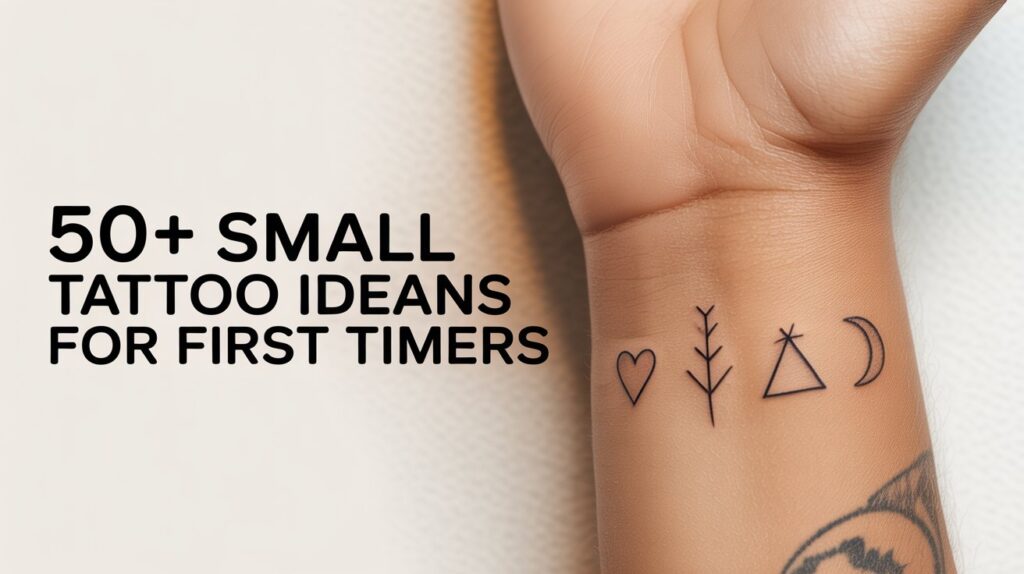
Getting your first tattoo is scary as hell.
I get it.
You’re probably scrolling through Pinterest at 2 AM, wondering if that tiny heart on your wrist will make you look like a rebel or if your mom will disown you.
Here’s the thing – I’ve been where you are.
That mix of excitement and pure terror when you’re about to make a permanent decision about your body.
But here’s what nobody tells you about small tattoo ideas for first timers: the biggest mistake isn’t picking the “wrong” design.
It’s going in unprepared.
Most guides just throw 100 cute designs at you and call it a day.
This isn’t that.
I’m going to walk you through everything – from the designs that won’t make you cringe in 5 years to exactly how much pain you’re signing up for.
No fluff.
No sugarcoating.
Just real talk from someone who’s been through it.
Table of Contents
Why Small Tattoos Are Perfect for First Timers
Let’s start with why you’re probably here in the first place.
Small tattoos aren’t just trendy – they’re smart.
Here’s why every tattoo artist recommends starting small:
- Lower commitment = less anxiety about permanent decisions
- Shorter sessions = less time in the chair feeling uncomfortable
- Easier to hide = you control who sees it
- Cost-effective = won’t blow your entire paycheck
- Less painful = most small tattoos take 30-60 minutes max According to National Institutes of Health (NIH)
- Room to grow = you can always add more later
But here’s what most people don’t think about: small tattoos are actually harder to design well.
Every line matters.
Every detail has to be perfect.
There’s nowhere to hide mistakes.
That’s why choosing the right design and artist is crucial.
The Real Talk About First Tattoo Pain
Nobody wants to hear this, but I’m going to say it anyway.
Getting a tattoo hurts.
But not nearly as much as you think.
I spent weeks psyching myself out, imagining some medieval torture device.
The reality?
It feels like a cat scratching you repeatedly in the same spot.
Annoying, but totally manageable.
Here’s the pain breakdown by placement:
Low Pain Areas (Perfect for First Timers):
- Outer forearm – barely noticeable
- Upper arm/shoulder – feels like a pinch
- Thigh – lots of muscle to cushion
- Calf – surprisingly gentle
- Upper back – minimal nerve endings
Medium Pain Areas:
- Wrist – bony but quick
- Ankle – tender but popular for a reason
- Behind the ear – sensitive but tiny area
- Finger – sharp but over fast •
- Neck – depends on exact placement
High Pain Areas (Save for Later):
- Ribs – every breath amplifies it
- Spine – nerve central
- Feet – surprisingly brutal
- Inner arm – thin skin, lots of nerves
- Sternum – bone on bone contact
Pro tip: Your first tattoo will hurt less than you expect, but more than you remember.
That’s why starting small is genius.
50+ Small Tattoo Ideas That Actually Age Well
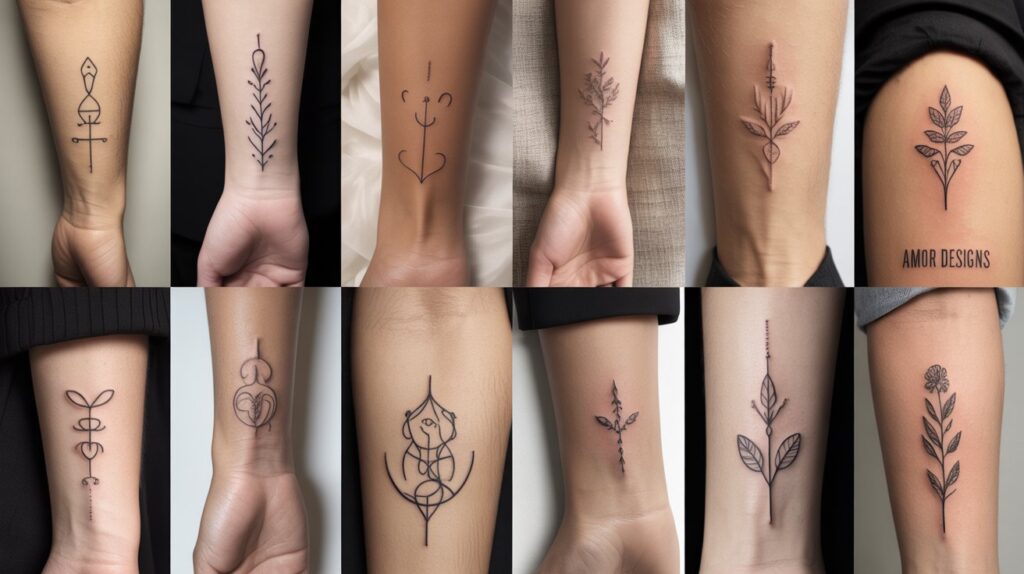
Alright, let’s get to what you came for.
I’ve grouped these by style so you can find your vibe.
Each design comes with real talk about why it works for beginners.
Minimalist Symbol Tattoos
These are the holy grail of first tattoos.
Simple lines.
Clear meaning.
Age beautifully.
1. Small Heart Outline
- Placement: Wrist, ankle, behind ear
- Why it works: Universal symbol, easy to execute
- Pain level: 3/10
- Time: 15-30 minutes
2. Infinity Symbol
- Placement: Finger, wrist, collarbone
- Why it works: Mathematical precision looks intentional
- Pain level: 4/10 (depending on placement)
- Time: 20-40 minutes
3. Arrow
- Placement: Forearm, ankle, shoulder blade
- Why it works: Represents direction and purpose
- Pain level: 3/10
- Time: 30-45 minutes
4. Triangle
- Placement: Wrist, shoulder, ankle
- Why it works: Geometric shapes never go out of style
- Pain level: 2/10
- Time: 15-25 minutes
5. Circle/Ring
- Placement: Finger, wrist, ankle
- Why it works: Represents wholeness and eternity
- Pain level: 3/10
- Time: 20-35 minutes
Nature-Inspired Small Tattoos
Nature tattoos connect us to something bigger.
They’re timeless because, well, nature isn’t going anywhere.
6. Small Mountain Range
- Placement: Forearm, shoulder, ankle
- Why it works: Represents adventure and stability
- Pain level: 3/10
- Time: 45-60 minutes
7. Single Leaf
- Placement: Wrist, shoulder blade, ankle
- Why it works: Simple, seasonal symbolism
- Pain level: 2/10
- Time: 20-30 minutes
8. Small Tree
- Placement: Forearm, shoulder, back
- Why it works: Growth, roots, branches = life metaphor
- Pain level: 3/10
- Time: 30-45 minutes
9. Moon Phases
- Placement: Forearm, spine, shoulder blade
- Why it works: Feminine energy, change, cycles
- Pain level: 4/10 (depending on placement)
- Time: 45-75 minutes
10. Sun
- Placement: Shoulder, wrist, ankle
- Why it works: Positivity, energy, warmth
- Pain level: 2/10
- Time: 20-35 minutes
11. Small Wave
- Placement: Wrist, ankle, ribs
- Why it works: Fluidity, ocean connection
- Pain level: 3/10
- Time: 25-40 minutes
12. Lightning Bolt
- Placement: Finger, wrist, ankle
- Why it works: Power, energy, quick execution
- Pain level: 4/10
- Time: 15-25 minutes
Animal Small Tattoos
Animals represent traits we admire.
Choose one that speaks to your personality.
13. Small Bird
- Placement: Wrist, shoulder, ankle
- Why it works: Freedom, flight, simplicity
- Pain level: 3/10
- Time: 30-45 minutes
14. Butterfly Outline
- Placement: Shoulder, ankle, wrist
- Why it works: Transformation, beauty, classic choice
- Pain level: 2/10
- Time: 25-40 minutes
15. Cat Silhouette
- Placement: Ankle, shoulder blade, wrist
- Why it works: Independence, mystery, cat people unite
- Pain level: 2/10
- Time: 20-30 minutes
16. Small Elephant
- Placement: Wrist, ankle, shoulder
- Why it works: Memory, wisdom, good luck
- Pain level: 3/10
- Time: 40-60 minutes
17. Bee
- Placement: Wrist, shoulder, ankle
- Why it works: Hard work, community, small but mighty
- Pain level: 3/10
- Time: 30-45 minutes
18. Whale
- Placement: Forearm, shoulder blade, ankle
- Why it works: Wisdom, depth, ocean connection
- Pain level: 3/10
- Time: 45-60 minutes
Text and Quote Tattoos
Words have power.
Choose them carefully because you’ll read them every day.
19. Single Word
- Examples: “Breathe,” “Love,” “Create,” “Grow”
- Placement: Wrist, forearm, ribs
- Why it works: Personal mantras, daily reminders
- Pain level: 2/10
- Time: 20-30 minutes
20. Roman Numerals
- Examples: Important dates, coordinates
- Placement: Wrist, forearm, ribs
- Why it works: Meaningful dates in elegant format
- Pain level: 3/10
- Time: 30-45 minutes
21. Small Quote (3-5 words)
- Examples: “This too shall pass,” “Be here now”
- Placement: Ribs, forearm, shoulder blade
- Why it works: Inspiration without overwhelming space
- Pain level: 4/10
- Time: 45-75 minutes
22. Initials
- Placement: Finger, wrist, behind ear
- Why it works: Personal, meaningful, subtle
- Pain level: 3/10
- Time: 15-20 minutes
Geometric Small Tattoos
Geometry is satisfying.
Clean lines.
Perfect angles.
Timeless appeal.
23. Small Diamond
- Placement: Finger, wrist, ankle
- Why it works: Strength, clarity, precision
- Pain level: 3/10
- Time: 20-30 minutes
24. Hexagon
- Placement: Shoulder, wrist, ankle
- Why it works: Nature’s perfect shape (honeycomb structure)
- Pain level: 2/10
- Time: 25-35 minutes
25. Dot Work Pattern
- Placement: Wrist, shoulder, ankle
- Why it works: Meditative, precise, modern
- Pain level: 2/10
- Time: 30-60 minutes
26. Small Mandala
- Placement: Wrist, shoulder, ankle
- Why it works: Balance, spirituality, intricate but small
- Pain level: 3/10
- Time: 60-90 minutes
Celestial Small Tattoos
Stars, moons, and planets never go out of style.
They represent dreams, guidance, and wonder.
27. Single Star
- Placement: Wrist, ankle, behind ear
- Why it works: Hope, guidance, wishes
- Pain level: 2/10
- Time: 10-15 minutes
28. Constellation
- Examples: Your zodiac sign, Big Dipper
- Placement: Shoulder blade, forearm, ankle
- Why it works: Personal astronomy, navigation
- Pain level: 3/10
- Time: 30-45 minutes
29. Crescent Moon
- Placement: Wrist, ankle, shoulder
- Why it works: Feminine energy, change, mystery
- Pain level: 2/10
- Time: 15-25 minutes
30. Solar System
- Placement: Forearm, shoulder blade
- Why it works: Science, wonder, perspective
- Pain level: 4/10
- Time: 60-90 minutes
Music and Art Small Tattoos
For the creatives.
For the music lovers.
For those who see art in everything.
31. Music Note
- Placement: Wrist, ankle, behind ear
- Why it works: Passion for music, simple execution
- Pain level: 2/10
- Time: 15-20 minutes
32. Treble Clef
- Placement: Wrist, ankle, shoulder
- Why it works: Musical identity, elegant curves
- Pain level: 3/10
- Time: 20-30 minutes
33. Paint Brush
- Placement: Forearm, shoulder, ankle
- Why it works: Artistic identity, tool of creation
- Pain level: 3/10
- Time: 25-35 minutes
34. Camera
- Placement: Wrist, shoulder, ankle
- Why it works: Capturing memories, creative passion
- Pain level: 3/10
- Time: 30-45 minutes
Travel and Adventure Small Tattoos
For the wanderers.
The adventurers.
The dreamers planning their next escape.
35. Paper Airplane
- Placement: Wrist, ankle, shoulder
- Why it works: Adventure, childhood memories, flight
- Pain level: 2/10
- Time: 20-30 minutes
36. Compass
- Placement: Forearm, shoulder, ankle
- Why it works: Direction, guidance, exploration
- Pain level: 4/10
- Time: 45-60 minutes
37. Globe
- Placement: Wrist, shoulder, ankle
- Why it works: World traveler, global perspective
- Pain level: 3/10
- Time: 30-45 minutes
38. Coordinates
- Example: Your birthplace, where you met your partner
- Placement: Forearm, ribs, shoulder blade
- Why it works: Specific location, mathematical precision
- Pain level: 3/10
- Time: 30-45 minutes
Floral Small Tattoos
Flowers represent growth, beauty, and resilience.
They work on everyone.
39. Single Rose
- Placement: Shoulder, ankle, wrist
- Why it works: Classic, beautiful, represents love
- Pain level: 3/10
- Time: 45-60 minutes
40. Sunflower
- Placement: Shoulder, ankle, forearm
- Why it works: Positivity, following the light
- Pain level: 3/10
- Time: 40-55 minutes
41. Lotus
- Placement: Ankle, wrist, shoulder
- Why it works: Rising above adversity, spiritual growth
- Pain level: 3/10
- Time: 35-50 minutes
42. Daisy
- Placement: Ankle, wrist, shoulder
- Why it works: Innocence, purity, simple beauty
- Pain level: 2/10
- Time: 25-35 minutes
Symbolic Small Tattoos
Symbols carry deep meaning.
Choose ones that resonate with your values.
43. Anchor
- Placement: Forearm, ankle, shoulder
- Why it works: Stability, strength, naval tradition
- Pain level: 3/10
- Time: 30-40 minutes
44. Key
- Placement: Wrist, ankle, ribs
- Why it works: Unlocking potential, secrets, access
- Pain level: 3/10
- Time: 25-35 minutes
45. Cross
- Placement: Wrist, ankle, behind ear
- Why it works: Faith, protection, spiritual connection
- Pain level: 2/10
- Time: 15-25 minutes
46. Feather
- Placement: Shoulder blade, forearm, ankle
- Why it works: Freedom, lightness, spiritual messages
- Pain level: 3/10
- Time: 30-45 minutes
Zodiac Small Tattoos
Your astrological sign.
Your celestial identity.
Your cosmic connection.
47. Aries Symbol
- Placement: Wrist, ankle, shoulder
- Why it works: Leadership, fire energy, ram horns
- Pain level: 2/10
- Time: 15-20 minutes
48. Leo Symbol
- Placement: Wrist, shoulder, ankle
- Why it works: Confidence, lion energy, fire sign
- Pain level: 2/10
- Time: 15-20 minutes
49. Scorpio Symbol
- Placement: Wrist, ankle, ribs
- Why it works: Mystery, transformation, water sign
- Pain level: 3/10
- Time: 20-25 minutes
50. Virgo Symbol
- Placement: Wrist, ankle, shoulder
- Why it works: Perfectionism, earth energy, maiden
- Pain level: 2/10
- Time: 15-20 minutes
Bonus Unique Ideas
51. Small Cactus
- Why it works: Resilience, desert beauty, low maintenance like you
- Placement: Ankle, wrist, shoulder
- Pain level: 2/10
52. Coffee Cup
- Why it works: Daily ritual, energy, warmth
- Placement: Wrist, ankle
- Pain level: 2/10
53. Book
- Why it works: Knowledge, stories, literature love
- Placement: Forearm, shoulder
- Pain level: 3/10
Choosing the Perfect Placement for Your First Tattoo
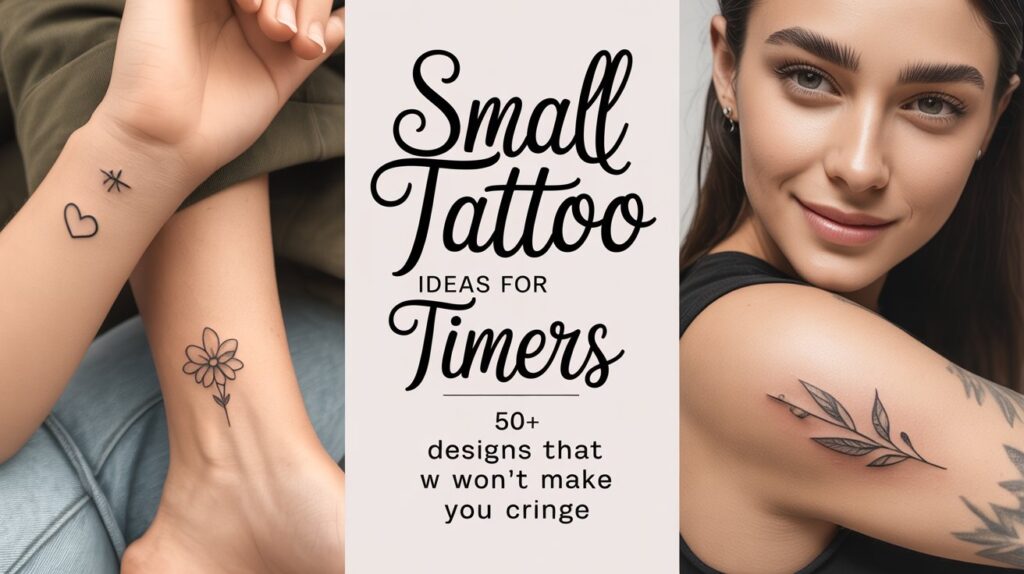
Location matters more than you think.
Not just for pain levels.
For lifestyle, career, and personal comfort.
Here’s what most people don’t consider:
Professional Considerations
Some careers still frown on visible tattoos.
Safe zones for conservative workplaces:
- Upper arm (easily covered by sleeves)
- Shoulder blade (hidden under shirts)
- Thigh (covered by pants)
- Ribs (completely hidden)
Proceed with caution:
- Wrist (visible with short sleeves)
- Ankle (visible with certain shoes)
- Behind ear (visible with short hair)
Lifestyle Factors
If you’re active/athletic:
- Avoid areas that rub against equipment
- • Consider how muscle movement affects design
- Think about lotion/sunscreen application
If you’re in the sun a lot:
- Tattoos fade faster with UV exposure
- Choose areas you can easily cover
- Invest in good sunscreen habits
Aging and Your Tattoo
Your body changes.
Your tattoo changes with it.
Areas that age best:
- Upper arm/shoulder
- Shoulder blade
- Thigh •
- Calf
Areas that might stretch/distort:
- Stomach (pregnancy, weight changes)
- Lower back
- Chest (for women especially)
The Real Cost of Small Tattoos (No Hidden Fees)
Let’s talk money.
Because nobody else will give you straight numbers.
Small tattoo pricing breakdown:
Shop Minimums
Most shops have a $100-150 minimum.
Even if your tattoo takes 15 minutes.
This covers:
- Setup time
- Needle preparation
- Cleaning supplies
- Artist expertise
Hourly Rates
Good artists charge $150-300+ per hour
Your location affects this:
- Major cities: $200-400/hour
- Small towns: $100-200/hour
- Tourist areas: Premium pricing
Size vs. Time Reality Check
- Tiny finger tattoo: $100-150 (shop minimum)
- Small wrist design: $150-250
- Detailed small piece: $200-400
- Simple shoulder tattoo: $150-300
Pro tip: Don’t shop on price alone.
Cheap tattoos aren’t good.
Good tattoos aren’t cheap.
That $50 special will cost you $500 to fix later.
Hidden Costs Nobody Mentions
- Touch-ups (usually free within 30 days)
- Aftercare products ($30-50)
- Time off work (if needed)
- Parking/travel to good shops
How to Choose the Right Tattoo Artist
This is where most first-timers mess up.
They pick based on convenience or price.
Wrong move.
Here’s what actually matters:
Portfolio Review
Look for:
- Consistent line quality – no shaky or blown-out lines
- Similar style to what you want
- Healed tattoo photos – not just fresh work
- Small tattoo experience – detail work is different
Red Flags
Run if you see:
- Dirty workspace
- Reused needles (should always be new)
- No portfolio of recent work
- Pressure to get tattooed same-day
- Prices way below local average
Questions to Ask
- “Can I see healed photos of similar work?”
- “What’s your experience with small, detailed pieces?”
- “What’s included in aftercare?”
- “Can you walk me through the process?”
- “What’s your touch-up policy?”
Booking Process
Good artists book weeks or months ahead.
If they can squeeze you in today, ask why.
Consultation is key:
- Discuss design modifications
- Talk placement options
- Review aftercare instructions
- Get accurate time/cost estimates
Pre-Tattoo Preparation (What They Don’t Tell You)
Most guides skip this part.
But preparation makes or breaks your experience.
24 Hours Before
- No alcohol – thins your blood, increases bleeding
- Good night’s sleep – helps with pain tolerance
- Eat well – stable blood sugar prevents fainting
- Stay hydrated – but don’t overdo it
- Avoid aspirin – also thins blood
Day Of
- Eat a solid meal 1-2 hours before
- Bring snacks – especially for longer sessions
- Wear comfortable clothes – easy access to tattoo area
- Bring entertainment – music, podcast, friend
- Show up early – don’t rush the process
What to Bring
- ID (obviously)
- Payment (cash preferred at many shops)
- Water bottle
- Phone charger
- Comfortable layers
Aftercare That Actually Works (No BS Guide)
This is where people mess up most.
You can have the perfect tattoo ruined by bad aftercare.
Here’s what actually works:
First 24 Hours
- Keep the bandage on for 2–24 hours (your artist will specify).
- Remove it gently—don’t rip it off.
- Wash the area gently with unscented antibacterial soap.
- Pat dry with a clean paper towel (avoid cloth towels).
- Apply a thin layer of the aftercare product your artist recommends.
Days 2–14
- Wash 2–3× daily with unscented antibacterial soap; pat dry.
- Apply a thin layer of aftercare product as needed.
- Keep it lightly moisturized—don’t let it fully dry out.
- Avoid over-moisturizing (no thick, goopy layer).
What to Avoid
- Soaking: no baths, pools, or hot tubs.
- Direct sun: cover or stay inside.
- Friction: tight clothing that rubs the tattoo.
- Picking/scratching: it will itch—hands off.
- Intense workouts for the first few days (sweat & abrasion slow healing).
Products That Work
- Aquaphor: classic, effective, inexpensive.
- Tattoo Goo: formulated specifically for tattoos.
- Unscented lotion: for the later healing phase (after the initial days).
- Gentle soap: e.g., Dial antibacterial (unscented).
Signs of Problems — Call Your Artist or a Doctor
- Excessive swelling after day 3.
- Red streaks extending from the tattoo.
- Pus or unusual discharge.
- Fever or feeling generally unwell.
- Excessive heat radiating from the area.
Common First-Tattoo Mistakes (Learn From Others’ Pain)
Design Mistakes
- Too trendy: what’s hot now can date fast.
- Too personal too soon: e.g., names of current relationships.
- Too small for detail: intricate designs need space.
- Poor font choices: script can become illegible when healed.
Placement Mistakes
- Too visible if you need a professional look at times.
- Stretch-prone areas (affected by normal body changes).
- High-pain spots for a first experience.
- Awkward sizing that fights your body’s proportions.
Process Mistakes
- Rushing the decision: sleep on it for weeks, minimum.
- Choosing the cheapest artist: quality costs.
- Ignoring aftercare: can ruin even a perfect tattoo.
- Not asking questions: speak up during the process.
Social Mistakes
Posting immediately before you see how it heals.
Oversharing: too many opinions = confusion.
Matching tattoos too quickly.
Not considering family reactions (if that matters to you).
The Psychology of Your First Tattoo
This isn’t just about ink on skin.
It’s about identity.
It’s about taking ownership of your body.
It’s about making a statement that says “this is who I am.”
What most people don’t expect:
The Addiction Factor
There’s something about that first tattoo.
The process.
The permanence.
The transformation.
Many people start planning their second before the first one heals.
This is normal.
But pace yourself.
Identity Shift
You’ll see yourself differently.
In mirrors.
In photos.
In your mind.
This tiny addition changes how you carry yourself.
How you view your own body.
It’s more powerful than you think.
Confidence Boost
There’s something empowering about choosing permanent body modification.
About making a decision that’s entirely yours.
About walking around with a secret (if it’s hidden) or statement (if it’s visible).
Most people report feeling more confident after their first tattoo.
Tattoo Trends to Avoid (2025 Reality Check)
Trends come and go.
Tattoos don’t.
Current trends that will age poorly:
What to Avoid for a First Tattoo
Overly trendy fonts
- Ultra-thin scripts — age poorly and get hard to read
- All-caps block lettering — looks harsh over time
- Highly stylized novelty fonts — date quickly
Social-media inspired
- “Influencer” signature logos
- Viral symbols that won’t last past next year
- Anything that screams a specific year (e.g., “2025”)
Over-detailed, too small
- Intricate mandalas crammed into tiny spaces
- Realistic portraits under ~3 inches
- Complex geometric patterns scaled down so far they blur with age
Safer classics to consider
- Simple, clean linework
- Readable text in timeless type
- Enduring symbols
- Nature elements (flora, fauna, celestial)
- Personal meaning over trend appeal
When Not to Get Your First Tattoo
Sometimes the best decision is waiting.
Life transitions
- Right before major life changes
- During relationship drama
- When you’re highly emotional
- In periods of major stress
Physical factors
- When you’re sick
- After drinking or using substances
- On medication that can affect healing
- During pregnancy or breastfeeding
Financial stress
- Don’t go into debt for a tattoo
- Don’t use rent/bill money
- Don’t compromise on artist quality to “save”
Pressure situations
Rebellion against parents—wait until you’re sure
Friends pushing you into it
Spur-of-the-moment impulses
Trying to fit in with a group
The First Tattoo Experience: Hour by Hour
Nobody tells you what actually happens.
Here’s the real timeline:
1) Arrival — 15–30 minutes early
- Check in at the front desk
- Review and finalize your design (size, placement, details)
- Handle any paperwork and deposit (if required)
- Get comfortable in the space
2) Setup — 10–15 minutes
- Artist prepares a clean, sterile workspace
- Stencil is applied
- Position is adjusted as needed
- Final size/placement is confirmed
3) Tattoo time — what it feels like
- First 5 minutes: sharp, surprising sensation; your body adjusts; adrenaline kicks in
- Minutes 5–20: you settle into a rhythm; sensation becomes manageable; sometimes even relaxing
- 20+ minutes: varies by pain tolerance; most small tattoos are finished by now; endorphins help with longer sessions
4) Completion
Final payment and optional tip
Bandage is applied
Aftercare instructions provided
Quick photo if you’d like
Building Your Tattoo Collection Strategy
Your first tattoo is just that – first.
Most people don’t stop at one.
Planning for the future:
Cohesive Style
- Pick a clear theme (traditional, neo-traditional, blackwork, realism)
- Commit to a color palette or black/grey approach
- Match line weights and shading styles across pieces
- Plan how designs flow with your body’s contours
- Leave intentional negative space for breathing room
- Keep the overall vibe consistent from piece to piece
Placement Strategy
- Map key body zones before you start
- Reserve prime real estate for large anchor pieces
- Avoid trapping future designs in tight corners or gaps
- Think in wraparound paths and sightlines (front/back, left/right)
- Balance placement for symmetry without being rigid
- Consider movement, aging, and visibility for work or family settings
Artist Relationships
- Revisit the plan annually to keep the collection cohesive
- Research portfolios and choose specialists you genuinely love
- Book consults and bring clear references and goals
- Build with a small, trusted roster for consistency
- Respect process: deposits, timelines, and aftercare
- Keep a shared mood board or reference folder
The Truth About Tattoo Regret
Let’s address the elephant in the room.
Will you regret your first tattoo?
The honest statistics:
- 25% of people regret at least one tattoo
- Most regrets are about poor quality, not the decision itself
- Regret usually stems from rushing the process
How to minimize regret:
- Wait at least 6 months between deciding and getting tattooed
- Choose classic designs over trends
- Invest in quality artists
- Start small (you’re already doing this right)
- Pick meaningful designs over impulse choices
What regret actually looks like: It’s rarely “I hate this tattoo.”
It’s more often “I wish I’d waited” or “I should have gone to a better artist.”
Quality matters more than the actual design choice.
Your Complete Action Plan: From Research to Tattoo Chair
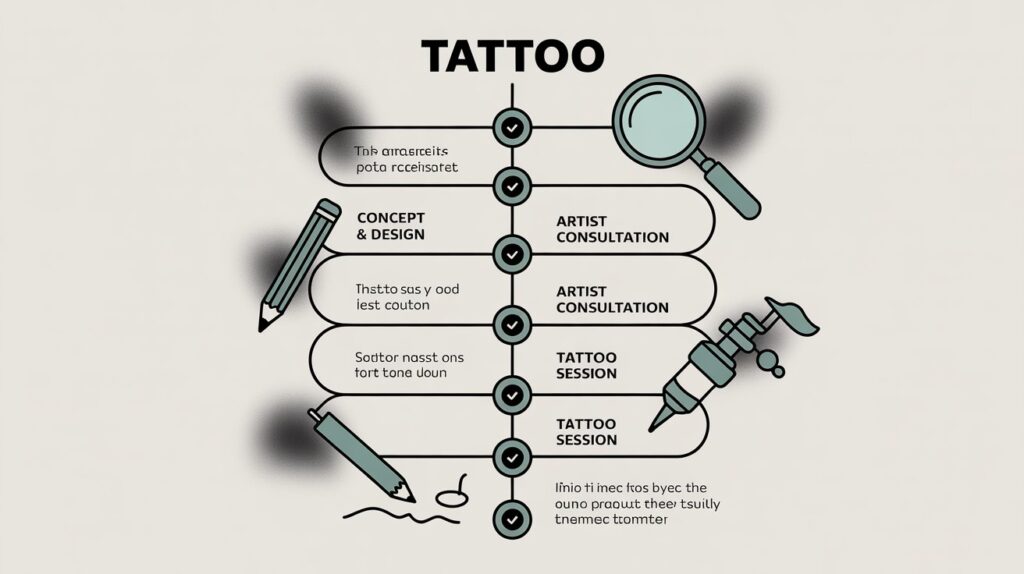
You made it through about small tattoo ideas for first timers.
That tells me you’re serious about this decision.
You’re not one of those people who walks into a shop on impulse.
You’re doing this right.
But here’s where most people mess up – they do all this research and then wing the actual process.
Don’t be that person.
Week 1: Deep Research Phase
Day 1-2: Design Collection
- Screenshot 15-20 designs that spoke to you from this guide
- Create a mood board on Pinterest or save to your phone
- Look for common themes in what attracted you
- Note which minimalist tattoo ideas keep catching your eye
Day 3-4: Artist Research Start hunting for the right artist, not just any artist.
Where to look:
- Instagram hashtags: #[yourcity]tattoo, #smalltattoos, #finelinetattoo
- Google reviews (read the bad ones too)
- Local tattoo shop websites
- Ask friends with tattoos you admire
What to look for:
- Portfolios with similar style to your vision
- Clean, professional shop photos
- Consistent line quality across different pieces
- Recent work (not just their greatest hits from 2015)
Red flags:
- No healed tattoo photos in portfolio
- Sketchy reviews about cleanliness
- Prices way below market rate
- High-pressure sales tactics in their content
Day 5-7: Deep Portfolio Dive Now you’re getting serious.
Pick 5-8 artists whose work genuinely excites you.
Study their portfolios like you’re buying a house:
- Do their small tattoos still look crisp?
- How do their flower tattoo ideas compare to others?
- Are their lines consistent or shaky?
- Do they specialize in what you want?
Follow them on social media.
Watch their stories.
Get a feel for their personality and professionalism.
Week 2: Consultation and Connection Phase
Day 8-10: Initial Contact Time to reach out to your top 3-5 artists.
When you contact them:
- Be specific about what you want
- Mention you’re a first-timer (good artists appreciate honesty)
- Ask about their experience with small, detailed work
- Request consultation availability
Sample message: “Hi! I’m looking to get my first tattoo – a small [design type] on my [placement]. I love your work on [specific piece from their portfolio]. Do you have consultation availability in the next few weeks? I’m particularly interested in discussing [specific aspect of their style].”
Day 11-14: Book Consultations Don’t just book one.
Book 2-3 consultations.
This isn’t about wasting people’s time.
It’s about making sure you find the right fit.
During consultations, discuss:
- Your design ideas and their suggestions
- Placement options and sizing
- Their approach to first-timers
- Pricing and timeline
- Aftercare process
- Touch-up policy
Questions that separate good from great artists:
- “Can you show me some healed photos of similar work?”
- “What modifications would you suggest for my design?”
- “How do you handle client nerves during first tattoos?”
- “What’s your process if I need to take breaks?”
Week 3: Decision and Design Refinement Phase
Day 15-17: Artist Selection Time to make the call.
Choose based on:
- Whose portfolio excited you most
- Who made you feel most comfortable
- Who gave the most thoughtful design feedback
- Who demonstrated genuine expertise in small tattoos
Not based on:
- Cheapest price
- Earliest availability
- Closest location
- Friend recommendations alone
Day 18-21: Design Finalization Work with your chosen artist to perfect the design.
This is where you discuss:
- Exact sizing and proportions
- Line thickness and shading details
- How it will age over time
- Any personal modifications
If you’re considering unique tattoo ideas for women or best tattoo ideas for men: Remember that good design transcends gender stereotypes.
Choose what speaks to you, not what society expects.
Week 4: Pre-Appointment Preparation Phase
Day 22-24: Logistics Planning
Schedule considerations:
- Book time off if needed for healing
- Plan around social events (your tattoo will be covered for a week+)
- Consider seasonal factors (summer = more sun exposure)
- Think about gym/workout disruption
Day 25-28: Physical and Mental Preparation
Physical prep:
- Start moisturizing the tattoo area daily
- Avoid sun exposure on the area
- Stay hydrated consistently
- Get good sleep (seriously affects pain tolerance)
Mental prep:
- Watch tattoo process videos to familiarize yourself
- Practice breathing techniques for pain management
- Plan your entertainment (music, podcasts, audiobooks)
- Set realistic expectations about discomfort
Week 5+: Final Preparation and Appointment
48 Hours Before:
- Confirm appointment details
- Gather payment (cash preferred at many shops)
- Plan your outfit (easy access to tattoo area)
- Charge all devices for entertainment
24 Hours Before:
- No alcohol (thins blood, increases bleeding)
- Good night’s sleep (8+ hours if possible)
- Eat nutritious meals
- Continue hydrating
- Avoid aspirin or blood-thinning medications
Day of Appointment:
2-3 Hours Before:
- Eat a substantial meal (protein + complex carbs)
- Shower and wear clean clothes
- Apply unscented moisturizer to tattoo area
- Bring snacks and water
What to bring:
- ID and payment
- Snacks (granola bars, crackers)
- Water bottle
- Entertainment (charged phone, headphones)
- Comfortable layers
- Someone for moral support (if shop allows)
During the Appointment: What to Expect
First 30 Minutes:
- Stencil placement and final adjustments
- Setup and sterilization
- Last-minute questions
- Payment processing
The Tattooing Process:
Minutes 1-5: The Reality Check
Your brain will scream “WHAT ARE YOU DOING?”
This is normal.
The sensation is sharp, surprising, different than you imagined.
Minutes 5-15: The Adjustment
Your body adapts faster than you think.
Endorphins kick in.
You might even start relaxing.
15+ Minutes: The Rhythm
Most small tattoo ideas for first timers are done by now.
If you’re still going, you’ve hit your groove.
Communication during the process:
- Tell your artist if you need breaks
- Speak up if you feel faint or nauseous
- Ask questions about what they’re doing
- It’s okay to be nervous – good artists expect it
Immediate Aftercare (First 24 Hours)
Right after completion:
- Artist will clean and bandage the tattoo
- They’ll explain their specific aftercare instructions
- Take photos if you want (before bandaging)
- Process payment and tip (15-20% standard)
First few hours:
- Keep bandage on as instructed (2-24 hours depending on artist)
- Avoid tight clothing over the area
- Don’t touch or show it off excessively
- Take over-the-counter pain relief if needed
Bandage removal:
- Remove carefully – don’t rip
- Wash hands thoroughly first
- Use lukewarm water and gentle soap
- Pat dry with clean paper towel
- Apply thin layer of aftercare product
Extended Healing Phase (Weeks 2-6)
Week 2: The Itchy Phase
Your tattoo will itch like crazy.
DO NOT SCRATCH.
Instead:
- Pat gently if it itches
- Apply aftercare lotion
- Wear loose clothing
- Keep it moisturized but not soggy
Week 3-4: The Peeling Phase
Skin will start flaking off.
This is normal and good.
Don’t pick at peeling skin:
- Let it fall off naturally
- Continue gentle washing
- Moisturize regularly
- Avoid direct sunlight
Week 5-6: Final Healing
Your tattoo should look settled and healed.
Colors will be true.
Lines will be crisp.
If something looks off, contact your artist.
Building Your Tattoo Journey
Planning future pieces:
If you’re already thinking about tattoo number two (most people are), consider how pieces will work together.
For matching couple tattoos:
Wait at least 6 months into the relationship.
Seriously.
I’ve seen too many cover-ups from rushed couple tattoos.
For family tattoo designs:
These tend to be more meaningful and less regrettable.
Consider symbols rather than names for broader family representation.
For tattoo ideas with meaning:
The meaning should be personal to you, not what looks good on Pinterest.
The stories behind your tattoos matter more than the designs themselves.
Advanced Design Considerations
If you’re drawn to animal tattoo inspiration:
Research the symbolism across cultures.
Make sure you understand what your chosen animal represents.
For tattoo quote designs:
Test the text in different fonts and sizes.
Read it backwards to check for spelling.
Consider how it will look as your skin ages.
Expanding your tattoo vocabulary:
- Flash tattoos: Pre-designed pieces available at shops
- Custom work: Designed specifically for you
- Traditional: Bold lines, limited colors, classic American style
- Fine line: Delicate, thin lines, modern aesthetic
- Blackwork: Solid black designs, bold and graphic
Red Flags During the Process
Stop everything if:
- Equipment doesn’t look sterile
- Artist seems intoxicated or unfocused
- Needles aren’t opened fresh in front of you
- Shop conditions are unsanitary
- You feel pressured to get work you’re unsure about
Trust your gut.
A good artist wants you to be completely comfortable.
Post-Tattoo Life Changes
What most people don’t expect:
The confidence boost:
Having a tattoo changes how you see yourself.
You’ll catch yourself looking at it in mirrors.
Feeling proud of the decision.
Carrying yourself differently.
The addiction factor:
There’s something addictive about the tattoo process.
The transformation.
The permanent decision.
The artistic collaboration.
Many people start planning their next piece before the first one heals.
Social dynamics:
People will comment.
Some positive, some negative.
Prepare responses that feel authentic to you.
Your tattoo is not up for public debate.
Long-term Tattoo Care
Protecting your investment:
Sun protection:
- Use SPF 30+ on tattoos always
- Reapply frequently
- Consider UV-protective clothing
- Avoid prolonged direct exposure
Skin health:
- Moisturize regularly (unscented lotion)
- Stay hydrated
- Maintain healthy weight (rapid changes can distort tattoos)
- Avoid harsh chemicals on tattoo area
Touch-ups: Even perfect tattoos may need touch-ups after 5-10 years.
This is normal wear, not poor quality.
Good artists often offer free touch-ups for the first year.
Building Relationships in the Tattoo Community
Your artist relationship:
Good artists become long-term collaborators.
They understand your style evolution.
They can plan cohesive pieces that work together.
Treat them with respect and they’ll take care of you.
Shop relationships:
Become a regular at shops you love.
Support their events.
Refer friends.
Good shops become community hubs.
Social media presence:
Follow and support artists whose work you admire.
Share photos of your healed tattoos (with credit).
Be part of the positive tattoo community online.
Final Reality Check
You’re about to join a community of people who’ve made permanent decisions about their bodies.
Who’ve chosen self-expression over societal expectations.
Who understand that our bodies are canvases for our stories.
This isn’t just about getting ink.
It’s about claiming ownership of your physical self.
It’s about making a statement that you’re confident in your choices.
It’s about starting a journey of self-expression that can last decades.
Your first tattoo won’t be perfect.
No one’s is.
But if you follow this process, it will be something you’re proud of.
Something that represents who you are right now.
Something that starts your personal tattoo story.
The best small tattoo ideas for first timers aren’t just about the design.
They’re about starting smart, choosing quality, and respecting the permanence of the decision.
You’ve done the research.
You understand the commitment.
You’re ready to make this choice with confidence.
Welcome to the tattoo world.
We’re excited to see what you choose.
FAQs About Small Tattoo Ideas for First Timers
How much does a small first tattoo typically cost?
Most small tattoos cost $100–300, with shop minimums usually around $100–150. Price depends on location, artist experience, and design complexity.
What’s the least painful spot for a first tattoo?
Outer forearm, upper arm, and shoulder are typically the least painful. These areas have more muscle and fewer nerve endings.
How long does a small tattoo take to heal?
Surface healing takes 7–14 days. Complete healing takes 4–6 weeks. Follow aftercare instructions religiously for best results.
Can I work out after getting a small tattoo?
Avoid intense workouts for 3–7 days. Light activity is fine, but avoid excessive sweating and tight clothing over the tattoo.
What if I don’t like my tattoo after it heals?
Good tattoos grow on you over time. If you still dislike it after 6 months, consult artists about cover-up options or laser removal.
Should I tip my tattoo artist?
Yes, 15–20% is standard for good service. Cash is preferred. Factor this into your budget.
Can I get a tattoo if I’m under 18?
Laws vary by state. Most require you to be 18. Some allow minors with parental consent. Check local regulations.
What’s the difference between a good tattoo and a great tattoo?
Line quality, consistency, and how well it ages. Great tattoos look crisp years later. Good artists create great tattoos.
How do I know if my tattoo is infected?
Signs include excessive redness spreading outward, pus, fever, or red streaks. Contact your artist or doctor immediately if concerned.
Can I swim with a new tattoo?
No swimming for 2–4 weeks. This includes pools, oceans, lakes, and hot tubs. Water exposure can cause infection and damage healing.
Final Thoughts
Your first tattoo is more than ink in skin.
It’s a declaration of independence.
A statement of personal autonomy.
A commitment to yourself.
Most people overthink the design and underthink the process.
You’ve done the opposite.
You’ve educated yourself.
You understand the commitment.
You’re ready to make a decision that reflects who you are, not who others think you should be.
The best small tattoo ideas for first timers aren’t just about size – they’re about starting a journey of self-expression that can last a lifetime.
Choose wisely.
Choose quality.
Choose something that makes you smile when you look at it years from now.
Your future self will thank you for taking the time to do this right.
Welcome to the tattoo community.
We’re glad you’re here.