

Tattoo Aftercare and Healing is literally the difference between a masterpiece and a disaster sitting on your skin.
I’ve watched too many people mess this up.
You spend hours in that chair, drop serious cash, and then completely blow it in the first 48 hours.
Most people think getting inked is just about surviving the needle.
Wrong.
The real work starts when you walk out that door.
Here’s what actually works when it comes to proper aftercare.
Table of Contents
🎨 Complete Tattoo Aftercare & Healing Reference Guide
📅 Healing Timeline & Care Instructions
| Time Period | Healing Phase | Care Instructions | What to Expect | Key Focus |
|---|---|---|---|---|
| Hours 1-4 | Initial Protection | Keep plastic wrap on for 3-4 hours OR adhesive film for 48 hours | Blood, ink, and lymph fluid oozing | Bacteria protection |
| Days 1-2 | Open Wound Phase | Clean with lukewarm water, pat dry technique, apply fresh covering | Swelling, redness, oozing continues | Infection prevention |
| Day 3 | Active Care Begins | Remove covering, wash 2-3x daily, start moisturizing routine | Scab formation starts, reduced oozing | Gentle cleaning |
| Days 4-7 | Early Healing | Continue routine, use best soap for tattoos, thin moisturizer layers | Itching sensation, light peeling begins | Consistency |
| Days 8-14 | Active Healing | Maintain routine, monitor tattoo peeling stages, no picking! | Tattoo scabbing normal, peak itching | Scab protection |
| Days 15-30 | Deep Healing | Reduce to daily care, watch for tattoo infection signs | Colors emerge, skin regeneration completes | Final healing |
✅❌ Essential Do’s and Don’ts
| Category | ✅ DO THIS | ❌ NEVER DO THIS | Why It Matters |
|---|---|---|---|
| Cleaning | Use lukewarm water and best soap for tattoos | Hot water, harsh soaps, scrubbing | Proper temperature prevents inflammation, gentle products protect healing skin |
| Drying | Pat dry with clean paper towels | Rubbing, dirty towels, air drying | Pat dry technique prevents tissue damage and bacteria introduction |
| Moisturizing | Thin layers of best tattoo ointments | Thick layers, petroleum products, coconut oil | Over-moisturizing blocks pores and slows wound healing |
| Activities | Light activities, proper rest | Swimming, heavy exercise, sun exposure | Physical stress and bacteria exposure delay healing process |
| Touching | Clean hands only, when necessary | Dirty hands, picking scabs, scratching | Contamination causes infection, picking damages final results |
🧴 Product Recommendations & Guidelines
| Product Type | Recommended Features | Avoid These Ingredients | When to Use | Resource Links |
|---|---|---|---|---|
| Soap | Fragrance-free, antibacterial, gentle pH | Fragrances, dyes, harsh sulfates | Days 3-30, 2-3 times daily | best soap for tattoos |
| Moisturizer | Antibacterial properties, light texture, skin regeneration support | Petroleum, coconut oil, heavy creams | Days 3-30, thin layers only | tattoo healing cream recommendations |
| Covering | Adhesive film (preferred), breathable plastic wrap | Non-sterile materials, fabric bandages | First 48 hours maximum | best tattoo ointments |
| Cleaning Supplies | Clean paper towels, sterile gauze | Washcloths, sponges, dirty towels | Throughout healing process | tattoo aftercare tips |
🚨 Warning Signs & When to Seek Help
| Symptom | Normal vs. Concerning | Action Required | Timeline | Professional Help |
|---|---|---|---|---|
| Redness | Days 1-3 normal | Increasing after day 3 | Monitor closely, maintain proper aftercare | Should decrease by day 5 | tattoo infection signs |
| Swelling | Mild days 1-5 | Severe or spreading | Cold compress (after day 3), elevation | Peak day 2-3, resolve by week 1 | Doctor if severe or persistent |
| Discharge | Clear lymph fluid | Pus, foul smell | Gentle cleaning, monitor changes | Normal first week | Immediate medical attention for pus |
| Scabbing | Light, natural shedding | Thick, premature removal | Hands off! Let tattoo scabbing normal process happen | Days 5-15 typically | tattoo touch up process if damaged |
| Fever | Rare, mild with large tattoos | High fever, chills | Rest, hydration, temperature monitoring | Should resolve in 24-48 hours | Emergency care for high fever |
❓ Quick FAQ Reference
| Common Question | Quick Answer | Detailed Timeline | Key Points | Learn More |
|---|---|---|---|---|
| Can I shower? | Yes, with precautions | After initial covering removal (3-48 hours) | Lukewarm water, quick showers, pat dry | can you shower with a new tattoo |
| How long to heal? | 2-6 weeks typically | Small: 2-3 weeks | Large: 4-6 weeks | Depends on size, location, aftercare quality | how long does it take a tattoo to heal |
| Exercise restrictions? | Wait 48-72 hours minimum | Light activity day 3, full workout after scabs fall off | Sweat contains bacteria, friction damages healing | tattoo aftercare tips |
| Sleep position? | After day 3, carefully | Avoid pressure first 72 hours, clean sheets always | No direct pressure during scab formation | tattoo peeling stages |
| Touch-ups needed? | Possibly, wait 4-6 weeks | Evaluate after complete healing only | Many artists offer free touch-ups within 60 days | tattoo touch up process |
🏪 Choosing Quality Artists & Shops
| Quality Indicator | What to Look For | Red Flags to Avoid | Questions to Ask | Resources |
|---|---|---|---|---|
| Cleanliness | Sterile equipment, autoclave, disposable needles | Dirty workspace, reused needles, poor hygiene | “Can I see your sterilization process?” | Tattoo Shops and Artists in the US |
| Experience | Portfolio variety, years in business, client reviews | No portfolio, new to style, negative reviews | “How long have you been doing this style?” | Tattoo Shops and Artists in the US |
| Aftercare Support | Detailed instructions, follow-up availability | Vague advice, no support after session | “What aftercare do you recommend?” | tattoo aftercare tips |
| Licensing | Valid permits, health department approval | No licenses displayed, unlicensed operators | “Can I see your current licenses?” | Local health department verification |
| Consultation | Thorough discussion, realistic expectations | Rushed consultation, overpromises results | “What should I expect during healing?” | Multiple shop consultations recommended |
🆘 When Things Go Wrong: Recovery Options
| Problem | Immediate Action | Professional Treatment | Prevention Tips | Long-term Solutions |
|---|---|---|---|---|
| Infection | See doctor immediately | Antibiotics, wound care, monitoring | Proper hygiene, quality shops | tattoo infection signs education |
| Poor Healing | Return to strict aftercare | Dermatologist consultation | Follow tattoo aftercare tips precisely | tattoo touch up process |
| Unsatisfactory Results | Wait for complete healing | Professional assessment after 6-8 weeks | Choose experienced Tattoo Shops and Artists in the US | Tattoo Removal and Cover-Ups |
| Allergic Reactions | Stop all products, see doctor | Antihistamines, steroid treatments | Patch test products, avoid known allergens | Hypoallergenic aftercare only |
| Regret | Allow full healing first | Consultation with removal/cover-up specialist | Thorough planning, experienced artists | Tattoo Removal and Cover-Ups options |
🎯 Remember: Proper tattoo aftercare is the difference between a lifetime masterpiece and expensive regret!
Your healing process determines your tattoo’s final appearance. Follow these guidelines religiously for best results.
The Brutal Truth About Why Your Tattoo Healing Process Makes or Breaks Everything
Look, I’m not going to sugarcoat this.
Your new tattoo care routine determines if your ink looks crisp for decades or turns into a blurry mess by next year.
The healing process isn’t just about avoiding infection (though that’s huge).
It’s about preserving every single detail your artist put into that piece.
Every line, every shade, every micro-detail that makes your tattoo unique.
Most people think the hard part is sitting through the session.
The hard part starts the moment that needle stops buzzing.
Your skin is essentially an open wound for the first week.
During this time, your body is working overtime on tissue repair and cellular regeneration.
Skin regeneration happens in layers.
- The top layer (epidermis) heals first, usually within 7-10 days.
- The deeper layer (dermis) where your ink sits takes 2-4 weeks.
This is why tattoo healing stages can’t be rushed.
You’re not just dealing with surface healing.
You’re managing a complex biological process that determines how your tattoo looks for life.
Understanding Tattoo Healing Time: What Nobody Tells You
Everyone asks “how long does a tattoo healing take?”
Here’s the truth: healing time depends on way more than you think.
Size matters big time.
- A small wrist tattoo? 2-3 weeks.
- A full sleeve? 6-8 weeks minimum.
Location matters even more.
- Elbows, knees, and areas with constant movement heal slower.
- Areas with thin skin (like ribs) are more sensitive during wound healing.
- Places that rub against clothing face more irritation during recovery.
Your age matters whether you like it or not.
- Sorry, but 40-year-old skin doesn’t bounce back like 20-year-old skin.
- Cellular repair slows down as we age.
- Younger skin produces collagen faster, supporting quicker tissue repair.
Your lifestyle matters most.
- If you’re hitting the gym hard and sweating buckets, you’re slowing down the process.
- Poor sleep disrupts skin regeneration.
- Bad diet lacks the nutrients needed for wound healing.
- Smoking reduces blood flow, starving your healing tattoo of oxygen.
Your immune system plays a huge role.
- People with autoimmune conditions heal differently.
- Medications can affect healing speed.
- Stress hormones interfere with inflammatory response.
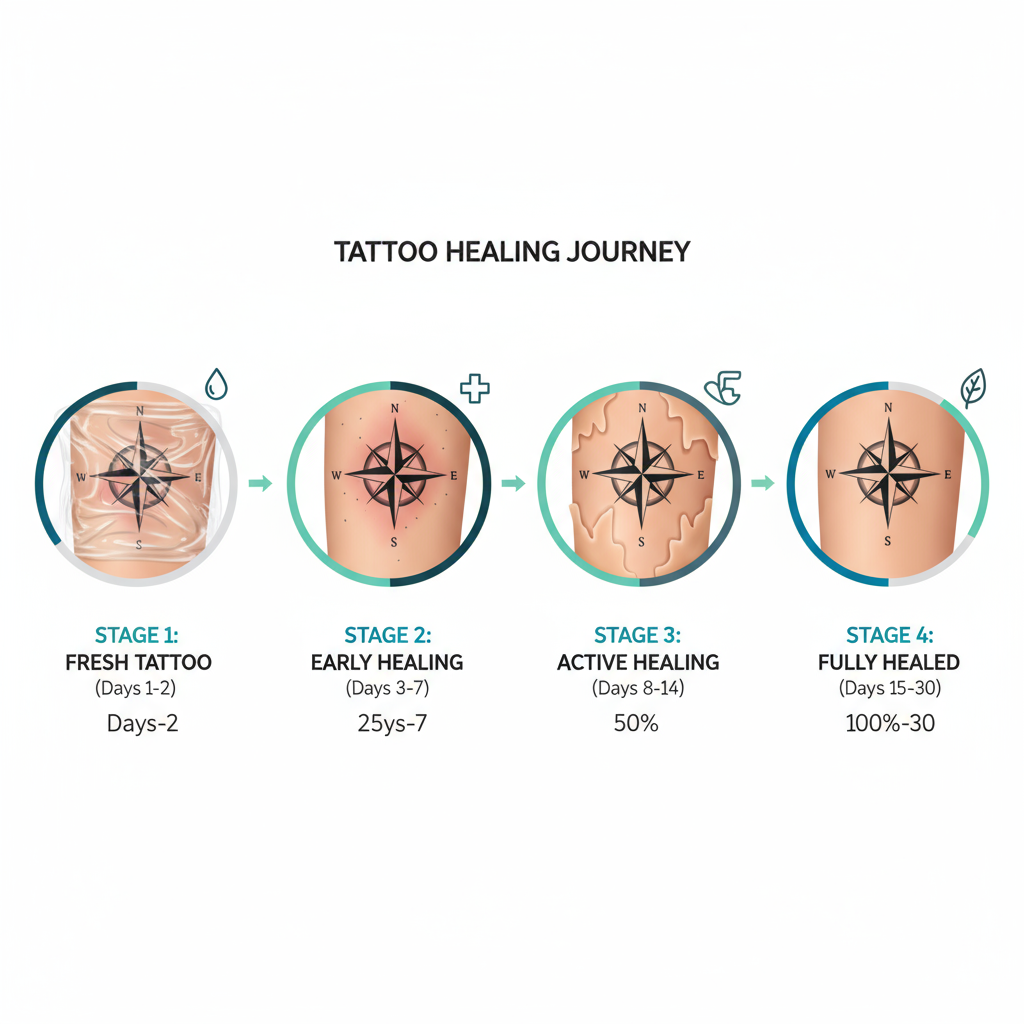
Most tattoo healing stages follow this pattern:
Days 1-3: Immediate Response Phase
- Your body treats this as an open wound
- Inflammatory response kicks in
- Swelling and redness are normal
- Oozing of blood, lymph fluid, and ink occurs
- Bacteria protection is critical
Days 4-7: Early Healing Phase
- Scab formation begins
- Itching sensation starts
- Light peeling may occur
- Tissue repair accelerates
Days 8-14: Active Healing Phase
- Scabbing peaks then starts falling off
- Tattoo peeling stages become obvious
- New skin forms over the ink
- Color may look dull (this is temporary)
Days 15-30: Final Healing Phase
- Deep skin regeneration continues
- True colors start showing through
- Cellular repair completes
- Tattoo reaches 90% of final appearance
Understanding these stages helps you know what’s normal versus what needs attentiaon.
My Complete Step-by-Step Tattoo Care Instructions
Days 1-2: The Critical Window
Your artist just covered your new tattoo with either plastic wrap or adhesive film.
Don’t mess with their system.
They’ve seen thousands of tattoos heal and know what works.
Plastic wrap method:
- Keep it on for 3-4 hours max
- The wrap prevents bacteria from entering
- It also catches initial oozing
- Remove gently (no ripping or pulling)
- Wash immediately with lukewarm water
- Pat dry with clean paper towels
- Apply fresh, breathable covering before bed
Adhesive film method (my preference):
- Leave it alone for full 48 hours
- This creates the perfect healing environment
- Bacteria protection while allowing skin regeneration
- Maintains optimal moisture levels
- Prevents scab formation from getting too thick
- Your tattoo can “breathe” while staying protected
- The first 48 hours determine everything.
- This is when infection risk is highest.
- This is when improper care causes permanent damage.
- Pro tip: Sleep on clean sheets.
- Your tattoo is basically an open wound right now.
- Treat it like one.
- Change your sheets the night before getting tattooed.
- Use old sheets if you’re worried about staining (though good aftercare minimizes this).
- Avoid sleeping directly on the tattoo if possible.
Day 3: When Real Tattoo Care Routine Begins
- Time to start the moisturizing routine.
- Remove that adhesive film after exactly 48 hours.
- Don’t leave it longer thinking it’ll help.
- Extended coverage can actually trap bacteria.
- Wash your hands first, Always. This isn’t negotiable.
Gentle cleaning process:
- Lukewarm water only (not hot, not cold)
- Hot water increases inflammation
- Cold water doesn’t clean effectively
- Use [best soap for tattoos] (fragrance-free only)
- Fragrances can irritate healing skin
- Use your clean hands (no washcloths, no sponges)
- These trap bacteria and can tear delicate healing tissue
- Pat dry technique with paper towels
- Never rub or scrub
- Apply thin layer of antibacterial moisturizer
- Thick layers prevent skin regeneration
Wash 2-3 times daily.
More isn’t better.
Over-cleaning strips natural oils your skin needs for healing.
Let it air dry completely before adding more cream.
Trapped moisture under moisturizer creates perfect conditions for bacteria growth.
This is where many people mess up.
They think more attention means better healing.
Proper aftercare is about consistency, not intensity.
Days 4-15: The Long Game
This is where most people screw up.
They get bored with the routine.
The novelty wears off.
They start taking shortcuts.
Don’t be most people.
Daily routine:
- Wash hands thoroughly (30 seconds minimum)
- Clean with lukewarm water and [best soap for tattoos] (fragrance-free only)
- Pat dry (never rub or scrub)
- Apply healing ointment (thin layer only)
- Repeat 2-3x daily religiously
- Set phone reminders if you need to
Larger tattoos need extra attention and longer healing time.
Give them a full 2 weeks minimum.
Sometimes 3-4 weeks for complex pieces.
Size matters because:
- More surface area = more wound healing required
- Complex shading takes longer to settle
- Multiple colors may heal at different rates
- Tissue repair varies across the piece
Want more specific advice?
Check out these proven Tattoo Styles and Techniques that actually work.
Don’t rely on random internet advice or your friend’s experience.
Every tattoo heals differently.
Days 15-30: The Home Stretch
Most people think they’re done at week 2.
They’re not.
Deep tissue healing continues for weeks.
This is when skin regeneration happens at the dermis level.
Your tattoo might look healed on the surface.
Underneath, cellular repair is still active.
During this phase:
- Continue gentle cleaning
- Reduce moisturizing to once daily
- Watch for any infection signs
- Avoid picking at any late peeling
- Tattoo peeling stages can extend into week 3
- Colors start showing true vibrancy
This is also when you’ll know if you need touch-ups.
Some areas might look lighter or patchy.
This is normal with larger tattoos or complex work.

What to Expect During Tattoo Recovery: The Real Timeline
Swelling and Redness (Days 1-5)
- Completely normal reaction.
- Your body is doing its job.
- Inflammatory response means healing is happening.
- Your immune system recognizes tissue damage and sends help.
- Blood flow increases to the area.
- White blood cells arrive to prevent infection.
- Swelling peaks around day 2-3, then gradually decreases.
- Redness should start fading by day 4-5.
- If it gets worse after day 3, that’s a red flag.
- Call your artist or see a doctor.
- Don’t wait and hope it gets better.
- Early infection intervention prevents serious problems.
Oozing (Days 1-7)
- You’ll see blood, lymph fluid, and ink coming out.
- This freaks most people out.
- It shouldn’t.
- It’s part of tissue repair.
- Blood appears first, usually mixed with ink.
- Lymph fluid is clear or slightly yellow.
- This is your body’s natural cleaning system.
- Excess ink gets pushed out during wound healing.
- Don’t panic if you see colors in the fluid.
- Gently dab it away with clean paper towels.
- Don’t let it build up into thick, crusty scabs.
- Large scabs can pull out ink when they fall off.
- This causes patchy healing and fading.
Scab Formation and the Itching Phase (Days 5-15)
- Scabs are protective barriers your body creates.
- Do NOT pick at them.
- I know it’s tempting.
- I know they itch like crazy.
- I know they look gross.
- Picking ruins your tattoo.
- Period.
- Scabs protect the ink underneath while new skin grows.
- Understanding [tattoo peeling stages] helps you know what’s normal and what’s not.
[Tattoo scabbing normal] phases include:
- Light scabbing (days 5-7)
- Peak scabbing (days 8-10)
- Natural shedding (days 10-15)
The itching sensation during scab formation is your skin regenerating.
- New nerve endings are growing.
- New skin cells are forming.
- This creates that maddening itch.
- Use cold compress for relief (only after protective layer forms).
- Never scratch, rub, or pick.
- Distract yourself with activities.
- Keep your hands busy.
- Wear gloves to bed if you scratch in your sleep.
Mild Discomfort and System Response (Days 1-7)
- Some people feel flu-like symptoms with larger tattoos.
- Your body is working overtime on cellular repair.
- Your immune system is activated.
- Energy gets diverted to healing processes.
- This is normal and usually passes within 3-5 days.
- Larger tattoos create more systemic stress.
- Your body treats it like a significant injury.
- More surface area = more wound healing required.
- More ink = more foreign material to process.
- Stay hydrated, get extra sleep, and eat well during this period.
How to Actually Speed Up Your Healing Process?
Most advice online is garbage.
People repeat myths without understanding the science.
Here’s what actually works based on wound healing research:
Stay properly hydrated.
- Water supports skin regeneration from the inside out.
- Dehydrated skin heals slower and looks worse.
- Aim for half your body weight in ounces daily.
Don’t oversaturate with products.
- Too much moisturizer slows wound healing by preventing skin from breathing.
- Check out our guide on [best tattoo ointments] to find products that won’t clog your healing skin.
Avoid hot water completely.
- Heat increases inflammation and delays tissue repair.
- Hot water also strips natural oils your skin needs for healing.
- Lukewarm is the sweet spot for cleaning.
Let it breathe between applications.
- Don’t wrap it 24/7 after day 3.
- Your skin needs air circulation for proper cellular repair.
- Over-protection actually slows healing.
Get quality sleep consistently.
- Skin regeneration happens primarily during deep sleep.
- Growth hormone peaks during sleep, accelerating tissue repair.
- Poor sleep directly impacts healing speed.
Eat protein-rich foods.
- Your body needs amino acids for cellular repair.
- Collagen production requires specific nutrients.
- Vitamin C, zinc, and protein are crucial for wound healing.
Follow your artist’s instructions religiously.
- They’ve seen thousands of tattoos heal.
- Your buddy with two tattoos hasn’t.
- Quality Tattoo Shops and Artists in the US will give you specific aftercare protocols based on your piece.
Manage stress levels.
- Chronic stress elevates cortisol, which impairs healing.
- Stress hormones interfere with inflammatory response.
- Find healthy ways to manage tattoo anxiety.
Infection Prevention: The Non-Negotiables
Bacteria will try to get into your new tattoo.
Don’t let it happen.
Infection can destroy your tattoo and threaten your health.
Hygiene protocols that actually matter:
Clean hands before any contact.
- 30-second wash with antibacterial soap.
- Not a quick rinse – a proper wash.
- Dirty hands are the #1 infection source.
Fresh towels and linens only.
- Change towels after each use.
- Wash in hot water with bleach if possible.
- Bacteria multiply rapidly on damp fabric.
Avoid contaminated water sources.
- No pools, hot tubs, baths, or natural bodies of water.
- These are bacteria breeding grounds.
- Shower water is fine if you follow proper technique.
Don’t let clothing rub the area.
- Friction creates micro-tears that invite infection.
- Tight clothing traps sweat and bacteria.
- Loose, breathable fabrics only.
Skip the gym for first few days.
- Sweat contains bacteria and salt.
- Both interfere with healing and increase infection risk.
- Equipment is covered in other people’s germs.
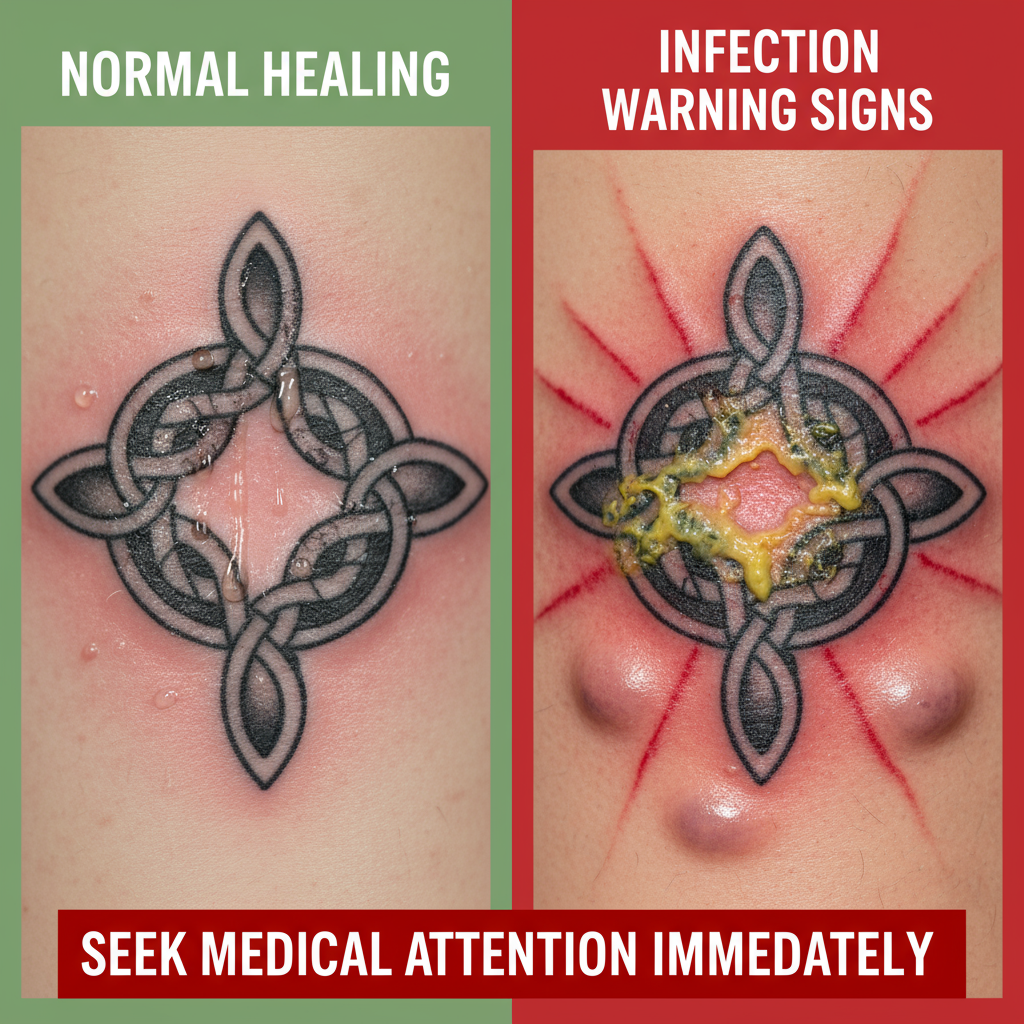
Signs of infection you cannot ignore:
- Increasing redness after day 3
- Red streaks extending from tattoo
- Pus (different from clear lymph fluid)
- Fever or chills
- Excessive heat at the site
- Foul smell
- Worsening pain instead of improvement
See a doctor immediately if you spot any of these.
Don’t wait to see if it gets better.
Infection can permanently damage your tattoo and spread to your bloodstream.
Learn more about tattoo infection signs to catch problems early.
Early treatment prevents serious complications.
What NOT to Do After Getting a New Tattoo: The Expensive Mistakes
- Direct sun exposure for first 2-3 weeks.
- UV rays destroy fresh ink and delay healing.
- Even through clothing, UV can cause problems.
- Fresh tattoos are essentially open wounds.
- Sun exposure increases inflammation and infection risk.
- Use high SPF sunscreen after healing completes.
- Hot baths, saunas, and steam rooms.
- Your tattoo isn’t waterproof yet.
- Hot water increases blood flow and oozing.
- Steam opens pores, increasing infection risk.
- Soaking softens scabs prematurely.
- Quick, lukewarm showers only until fully healed.
- Heavy exercise and sweating for first week.
- Sweat contains bacteria and salt.
- Both interfere with healing and irritate fresh ink.
- Excessive movement can crack forming scabs.
- Gym equipment is covered in other people’s germs.
- Light walking is fine, intense workouts aren’t.
- Tight clothing over the tattooed area.
- Friction irritates healing skin.
- Tight fabric traps moisture and bacteria.
- Rubbing can damage forming scabs.
- Choose loose, breathable fabrics.
- Cotton is usually best during healing.
- Shaving on or near the tattoo.
- Razors can nick healing skin.
- Shaving cream can clog pores.
- Hair removal creates tiny wounds that invite infection.
- Wait until healing is completely finished.
- Alcohol consumption during first week.
- Alcohol thins blood, increasing oozing.
- It dehydrates you, slowing skin regeneration.
- It impairs immune function when you need it most.
- It affects sleep quality, which impacts healing.
- Swimming in any body of water.
- Pools, lakes, oceans – all are bacteria sources.
- Soaking fresh wounds is asking for infection.
- Chlorine and salt irritate healing skin.
- Water pressure can damage delicate new tissue.
Advanced Tattoo Healing Strategies That Actually Work
Hydration from the inside out
Most people focus on topical care and ignore internal healing support.
Your skin is your largest organ.
What you put in your body affects how it heals.
Proper hydration supports:
- Cellular repair processes
- Nutrient transport to healing tissue
- Waste removal from damaged areas
- Optimal skin regeneration
Aim for clear or very light yellow urine.
This indicates proper hydration levels.
Nutrition for optimal healing
- Protein is crucial for tissue repair.
- Your body breaks down protein into amino acids.
- These become building blocks for new skin cells.
- Aim for 0.8-1 gram per pound of body weight daily.
- Vitamin C supports collagen production.
- Collagen is essential for strong, healthy skin.
- Citrus fruits, berries, and leafy greens are good sources.
- Zinc accelerates wound healing.
- It’s involved in cellular repair and immune function.
- Oysters, beef, and pumpkin seeds are zinc-rich.
- Omega-3 fatty acids reduce inflammation.
- They support healthy skin regeneration.
- Fish, walnuts, and flaxseeds provide omega-3s.
Sleep quality and healing
- Skin regeneration happens primarily during deep sleep.
- Growth hormone peaks during sleep cycles.
- This hormone accelerates tissue repair.
- Poor sleep directly impacts healing speed.
- Aim for 7-9 hours of quality sleep nightly.
- Keep your bedroom cool and dark.
- Avoid screens 2 hours before bed.
- Consider meditation or relaxation techniques.
Stress management during recovery
Chronic stress elevates cortisol levels.
Cortisol impairs immune function and healing.
It interferes with inflammatory response.
High stress can literally slow your tattoo healing.
Stress reduction techniques:
- Regular exercise (after initial healing)
- Meditation or mindfulness practice
- Deep breathing exercises
- Time in nature
- Social support from friends and family
Long-term Tattoo Care: Beyond Initial Healing
Sun protection for life
- UV rays are your tattoo’s biggest enemy.
- They break down ink molecules over time.
- They cause fading and blurring.
- They increase skin cancer risk.
- Use broad-spectrum SPF 30+ sunscreen daily.
- Reapply every 2 hours when outdoors.
- Consider UV-protective clothing for extended sun exposure.
Moisturizing for longevity
- Keep tattooed skin well-moisturized.
- Dry skin makes tattoos look dull.
- Cracked skin can damage ink over time.
- Use fragrance-free moisturizers designed for sensitive skin.
- Apply daily, especially after showering.
Regular skin checks
- Monitor your tattooed skin for changes.
- New moles, growths, or unusual spots need attention.
- Tattoos can make it harder to spot skin cancer.
- Annual dermatologist visits are smart.
- Point out any concerns immediately.
Touch-ups and maintenance
- Even perfectly healed tattoos may need touch-ups.
- Some areas naturally fade faster than others.
- Touch-up work is usually minor and inexpensive.
- Most artists offer free touch-ups within 30-60 days.
- Learn about the [tattoo touch up process] if you need corrections later.
- Wait until complete healing before evaluating need for touch-ups.
Frequently Asked Questions
Tattoo Aftercare and Healing
Tattoo aftercare is literally the difference between a masterpiece and a disaster sitting on your skin.
I’ve watched too many people mess this up.
You spend hours in that chair, drop serious cash, and then completely blow it in the first 48 hours.
Here’s what actually works.
Why Your Tattoo Healing Process Makes or Breaks Everything
Look, I’m not going to sugarcoat this.
Your new tattoo care routine determines if your ink looks crisp for decades or turns into a blurry mess by next year.
The healing process isn’t just about avoiding infection (though that’s huge).
It’s about preserving every single detail your artist put into that piece.
Most people think the hard part is sitting through the session.
Wrong.
The hard part starts when you walk out that door.
The Real Tattoo Healing Time Nobody Talks About
Everyone asks “how long does a tattoo healing take?”
Here’s the truth: healing time depends on way more than you think.
Size matters.
Bigger tattoos = longer recovery process.
Location matters even more.
Elbows and knees heal slower because they move constantly.
Your age matters.
Sorry, but 40-year-old skin doesn’t bounce back like 20-year-old skin.
Your lifestyle matters most.
If you’re hitting the gym hard and sweating buckets, you’re slowing down tissue repair.
Most tattoo healing stages follow this pattern:
- Days 1-2: Open wound phase
- Day 3-7: Scab formation begins
- Days 4-15: Skin regeneration kicks in
- Weeks 2-4: Final healing completes
My Step-by-Step Tattoo Care Instructions
Days 1-2: The Critical Window
Your artist just covered your new tattoo with either plastic wrap or adhesive film.
Don’t mess with their system.
Plastic wrap method:
- Keep it on for 3-4 hours max
- Remove gently (no ripping)
- Wash with lukewarm water only
- Pat dry with clean paper towels
- Apply fresh covering before bed
Adhesive film method (my preference):
- Leave it alone for full 48 hours
- This creates the perfect healing environment
- Bacteria protection while allowing skin regeneration
Pro tip: Sleep on clean sheets.
Your tattoo is basically an open wound right now.
Treat it like one.
Day 3: When Real Tattoo Care Routine Begins
Time to start the moisturizing routine.
Remove that adhesive film after 48 hours.
Wash your hands first.
Always.
Gentle cleaning process:
- Lukewarm water only (not hot, not cold)
- Use best soap for tattoos (fragrance-free only)
- Use your clean hands (no washcloths, no sponges)
- Pat dry technique with paper towels
- Apply thin layer of antibacterial moisturizer
Wash 2-3 times daily.
Let it air dry completely before adding more cream.
Days 4-15: The Long Game
This is where most people screw up.
They get bored with the routine.
Don’t be most people.
Daily routine:
- Wash hands thoroughly
- Clean with lukewarm water and best soap for tattoos
- Pat dry (never rub)
- Apply healing ointment
- Repeat 2-3x daily
Larger tattoos need extra attention.
Give them a full 2 weeks minimum.
Sometimes longer.
Want more specific advice? Check out these proven tattoo aftercare tips that actually work.
What to Expect During Tattoo Recovery
Swelling and Redness (Days 1-3)
Completely normal.
Your body is doing its job.
Inflammatory response means healing is happening.
If it gets worse after day 3, call your artist.
Oozing (Days 1-5)
You’ll see blood, lymph fluid, and ink coming out.
This freaks people out.
It shouldn’t.
It’s part of tissue repair.
Gently dab it away.
Don’t let it build up into massive scabs.
Scab Formation and Itching (Days 5-10)
Scabs are protective barriers.
Do NOT pick at them.
I know it’s tempting.
I know they itch like crazy.
Picking ruins your tattoo.
Period.
Understanding tattoo peeling stages helps you know what’s normal and what’s not.
Tattoo scabbing normal phases include light peeling, thicker scabs, and eventual shedding.
Use cold compress for itching sensation (only after protective layer forms).
How to Actually Speed Up **Healing Process**
Most advice online is garbage.
Here’s what actually works:
Stay hydrated.
Water supports skin regeneration from the inside out.
Don’t oversaturate.
Too much moisturizer slows wound healing.
Check out our guide on best tattoo ointments to find products that won’t clog your healing skin.
Avoid hot water.
It increases inflammation and delays tissue repair.
Let it breathe.
Don’t wrap it 24/7 after day 3.
Follow your artist’s instructions.
They’ve seen thousands of tattoos heal.
Your buddy with two tattoos hasn’t.
Quality Tattoo Shops and Artists in the US will give you specific aftercare protocols based on your piece.
Infection Prevention: The Non-Negotiables
Bacteria will try to get into your new tattoo.
Don’t let it.
Hygiene protocols:
- Clean hands before touching
- Fresh towels only
- Avoid pools, hot tubs, baths
- No tight clothing rubbing the area
- Skip the gym first few days
Signs of infection:
- Increasing redness after day 3
- Pus (different from clear lymph fluid)
- Red streaks extending from tattoo
- Fever
See a doctor immediately if you spot these.
Learn more about tattoo infection signs to catch problems early.
Common Tattoo Myths That Cost You Money
“More cream = faster healing”
False.
The Bottom Line on Tattoo Aftercare
Proper aftercare isn’t complicated.
It’s consistent.
Follow the routine. Trust the process. Don’t take shortcuts.
Your tattoo healing success comes down to discipline, not tricks.
Do this right and your ink stays vibrant for decades.
Mess it up and you’re looking at expensive touch-ups or laser removal. Nobody wants to end up researching Tattoo Removal and Cover-Ups because they skipped proper aftercare.
The choice is yours.
Quality work from experienced [Tattoo Shops and Artists in the US] combined with proper tattoo aftercare determines whether you love looking at your ink for the next 50 years or regret it within 5.