
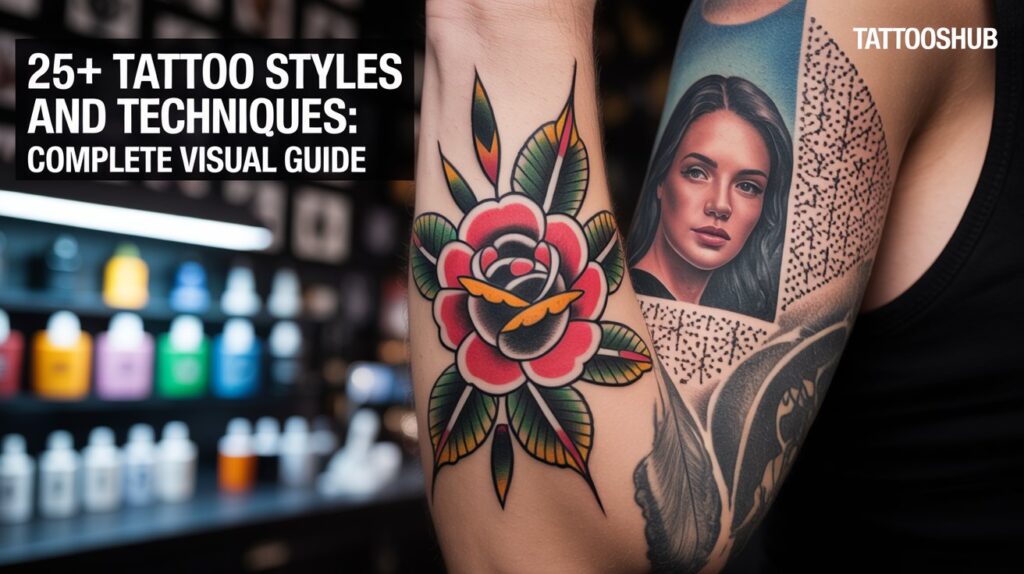
Tattoo Styles and Techniques have completely blown up over the past decade.
I mean, walk into any coffee shop and you’ll see someone with a geometric tattoo, watercolor design, or classic American traditional piece.
But here’s what nobody tells you.
Most people pick a tattoo style without understanding what they’re actually getting into.
They see a cool realism tattoo on Instagram and think “I want that” without knowing if their tattoo artist can even pull it off.
So let me break down the tattoo techniques and styles that actually matter.
Table of Contents
Quick Summary: Tattoo Styles and Techniques
Tattoo Styles & Techniques Quick Reference Guide
Main Tattoo Styles Comparison
| Style | Key Features | Best For | Aging Quality | Difficulty Level | Time Required |
|---|---|---|---|---|---|
| American Traditional | Bold black lines, bright colors, simple designs | First tattoos, timeless look | Excellent | Beginner-friendly | Single session |
| Neo-Traditional | Traditional + broader colors, detailed patterns | Modern twist on classics | Very Good | Intermediate | 1-2 sessions |
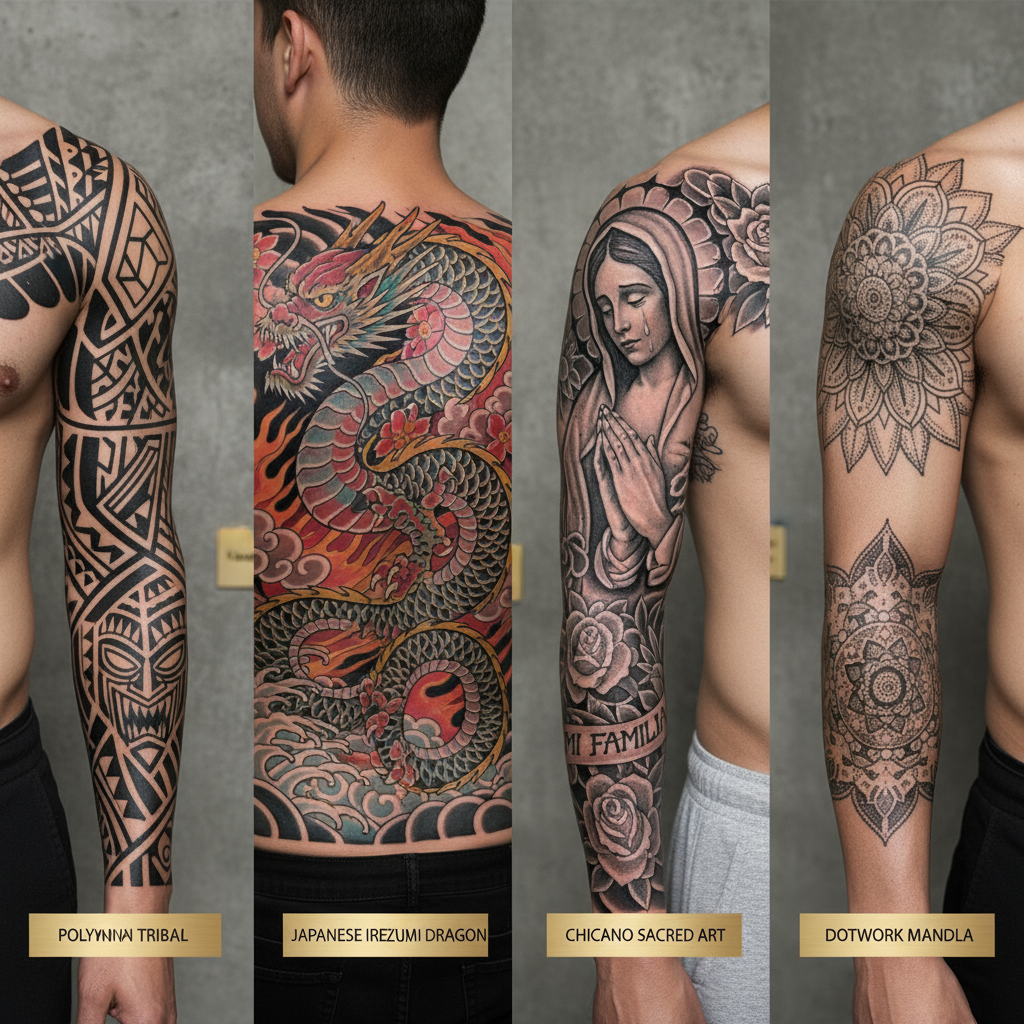
| Japanese Traditional | Full stories, mythology, large coverage | Body suits, cultural appreciation | Excellent | Expert only | Multiple sessions |
| Realism/Portrait | Photo-realistic images, fine details | Portraits, detailed art | Good (with skill) | Expert only | Multiple sessions |
| Black & Grey | No color, gradient shading, versatile | Professional settings, aging well | Excellent | Intermediate | 1-2 sessions |
| Chicano | Cultural themes, smooth tones, illustrative | Cultural expression | Very Good | Intermediate | 1-2 sessions |
| Biomechanical | Machine-like illusions, anatomical blend | Sci-fi fans, unique look | Good | Expert only | Multiple sessions |
| Trash Polka | Black/red, collage style, organized chaos | Artistic statement | Good | Advanced | Multiple sessions |
| Watercolor | Paint-like effects, vibrant colors | Artistic, colorful designs | Fair (controversial) | Advanced | 1-2 sessions |
| Dotwork | Thousands of dots, pointillism style | Detailed patterns, unique texture | Very Good | Advanced | Multiple sessions |
| Fine-Line/Minimalist | Thin lines, simple compositions | Subtle tattoos, professional | Fair (fades faster) | Intermediate | Single session |
| Geometric | Shapes, patterns, mathematical precision | Modern, abstract designs | Very Good | Intermediate | 1-2 sessions |
| Tribal | Bold black patterns, cultural significance | Cultural connection, bold look | Excellent | Beginner-friendly | Single session |
| New School | Cartoon style, exaggerated features | Pop culture, fun designs | Good | Intermediate | 1-2 sessions |
Tattoo Techniques Breakdown
| Technique | Description | Used In | Skill Required |
|---|---|---|---|
| Bold Black Lines | Thick outlines for structure | Traditional styles | Beginner |
| Single Needle | Fine detail work | Realism, portraits, dotwork | Expert |
| Hand Tattooing | Manual application without machine | Japanese traditional, stick & poke | Expert |
| Gradient Shading | Smooth tone transitions | Realism, chicano, black & grey | Intermediate |
| Stippling | Dot-by-dot application | Dotwork, texture work | Advanced |
| Color Blending | Seamless color transitions | Watercolor, neo-traditional | Advanced |
Cost & Pain Reference
| Factor | Low | Medium | High |
|---|---|---|---|
| Cost | Minimalist, Fine-line | Traditional, Tribal | Realism, Japanese Traditional |
| Pain Level | Depends on placement, not style | Dotwork (longer sessions) | Complex multi-session work |
| Maintenance | Traditional, Tribal | Black & Grey, Neo-Traditional | Watercolor, Fine-line |
Quick Selection Guide
| Category | Recommended Styles |
|---|---|
| For Beginners | American Traditional, Minimalist, Tribal |
| For Professionals | Black & Grey, Fine-line, Minimalist |
| For Art Lovers | Realism, Japanese Traditional, Biomechanical |
| For Quick Healing | Single-session styles (Traditional, Minimalist) |
| For Longevity | Bold black line styles (Traditional, Tribal, Black & Grey) |
The Foundation: Understanding Different Tattoo Styles
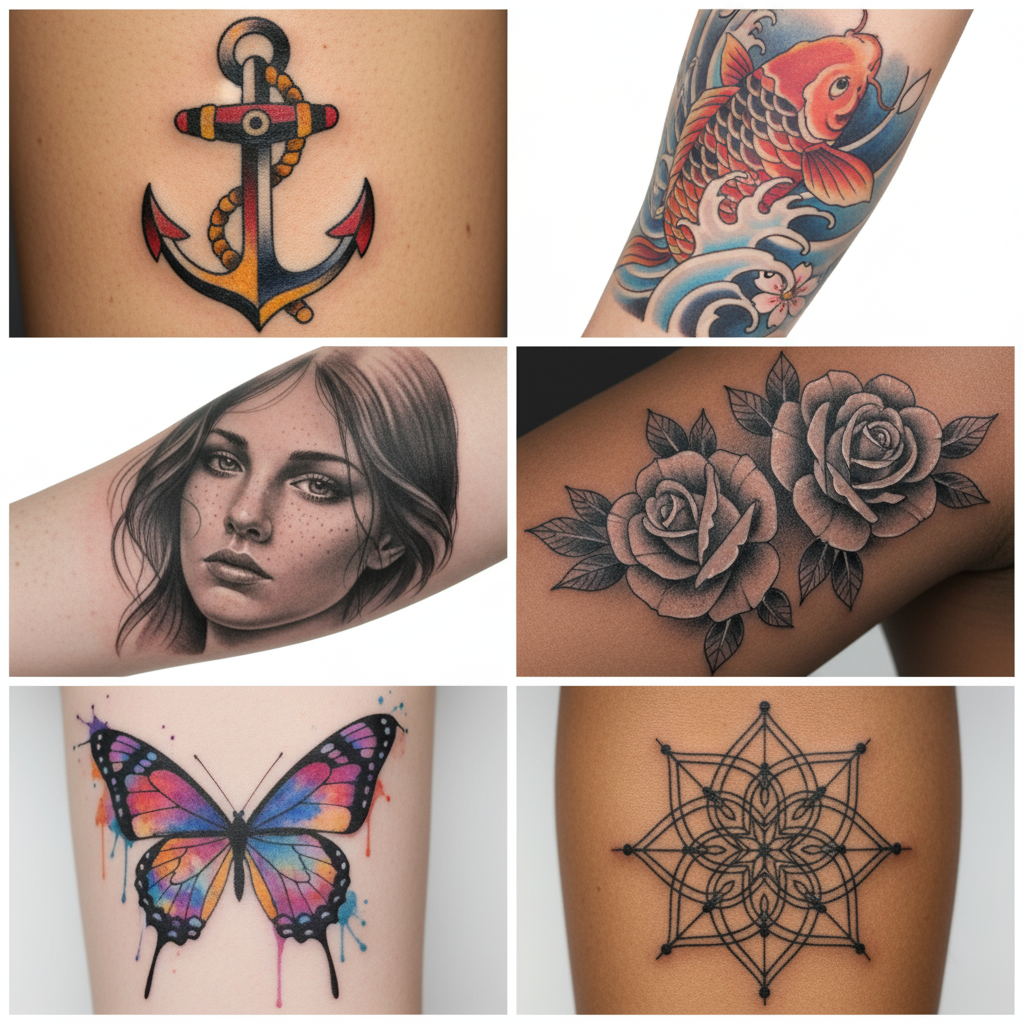
Look, I’ve been around tattoo culture long enough to see trends come and go.
But certain tattoo styles have staying power for a reason.
They work.
They age well.
And they look good on different skin types.
American Traditional: The OG of Tattoo Art
American traditional tattoos are like the iPhone of body art.
- Simple
- Reliable
- Timeless.
This traditional american tattoo style came from sailors coming back from World War II.
These guys wanted bold black lines and bright colors that would last.
Norman “Sailor Jerry” Collins, Bert Grimm, and Don Ed Hardy basically created the playbook.
Common motifs include:
- Roses
- Eagles
- Pin-up girls
- Anchors
- Skulls
- Classic animals
The tattoo shading techniques are straightforward:
- Bold black lines for structure
- Minimal gradients
- 2D appearance (no fancy effects)
- Limited color palette
Here’s why this traditional american tattoo style works:
- It ages like fine wine because those bold black lines hold their shape over decades.
When looking for Tattoo Shops and Artists in the US who specialize in this style, find someone who truly understands the classic approach.
Neo-Traditional: Traditional with a Twist
Neo-traditional tattoos take everything good about American traditional and turn up the volume.
Think of it as traditional tattoo style on steroids.
You get:
- Broader color palette
- More detailed ornamental patterns
- Lush decorative details
- Modern subject matter
Popular subjects:
- Nature imagery (flowers, animals)
- Everyday objects with artistic flair
- Pop culture references
The tattoo techniques here require serious skill.
Your tattoo artist needs to balance traditional bold black lines with modern shading techniques.
Japanese Traditional (Irezumi): The Art of Storytelling
Japanese tattoos are not just ink.
They’re entire stories told through body art.
These japanese tattoo designs date back to the Edo Period (1603-1868).
Yakuza culture made these famous in the West, but the roots go way deeper.
Key elements:
- Samurai warriors
- Koi fish and water themes
- Dragons and mythical creatures
- Tigers and snakes
- Clouds and natural elements
Traditional japanese tattoo designs require:
- Hand tattooing methods (traditional approach)
- Experienced tattoo artists only
- Understanding of Japanese mythology
- Respect for cultural significance
Here’s the thing about Japanese style tattoos:
- They’re meant to cover large areas.
- Arms, backs, entire body suits.
This isn’t a small commitment, and proper Tattoo Aftercare and Healing becomes even more critical with large-scale pieces.
Modern Tattoo Styles That Actually Work
Realism and Portrait Tattoos
Realism tattoos are exactly what they sound like.
Photo-realistic images on skin.
This tattoo style exploded when tattoo artists started pushing the boundaries of what’s possible.
Portrait tattoos are a subset of realism.
They focus on faces and facial features.
Popular subjects:
- Celebrities
- Family members
- Pets
- TV/movie characters
Realism tattoo techniques require:
- Perfect photo reference
- Artistic skill at the highest level
- Single needle work for fine details
- Choice between color or black and grey
Real talk: Most tattoo artists can’t master realism tattoo techniques well.
Find someone who specializes in it or don’t bother.
Black and Grey: The Versatile Choice
Black and grey tattoos remove color from the equation entirely.
But that doesn’t make them boring.
These blackwork tattoos use:
- Black ink and water for different shades
- Single needle application
- Gradient shading
- Multiple weights of lines
Blackwork tattoos work with almost any style:
- Realism
- Ornamental
- Chicano
- Illustrative
- Floral designs
The beauty of this approach is that blackwork tattoos age incredibly well and require less touch-ups than color pieces.
Chicano Style: Culture and Art Combined
Chicano tattoos came from Mexican-American artists in Southwest United States and Southern California.
This tattoo style is deeply rooted in culture.
Common themes:
- Religious imagery (Jesus, Virgin Mary, crosses)
- Family portraits and themes
- Lowriders and cars
- Gang symbols and prison culture
- Clowns with “Laugh now, Cry Later” theme
Technical approach:
- Smooth black and grey tones
- Highly illustrative designs
- Single needle work for fine details
Specialized Tattoo Techniques
Biomechanical: Transform Your Body
Biomechanical tattoos create the illusion that you’re part machine.
This tattoo style combines:
- Realism techniques
- Anatomical elements
- Strategic placement based on body structure
- Shading to create depth
The goal? Make it look like robotic parts are actually under your skin.
Trash Polka: Organized Chaos
Don’t let the name fool you.
Trash Polka originated in Germany and it’s brilliant.
This tattoo style combines:
- Realism
- Script
- Surrealism
- Mainly black and red ink
- Collage-like compositions
Trash Polka tattoos tell stories through organized chaos.
Watercolor: Paint on Skin
Watercolor tattoos bring the brightness and vividness of watercolor painting to skin.
Key techniques for watercolor tattoos:
- Subtle color gradients
- Fading techniques
- Brushwork effects
- Abstract elements
But here’s the controversy: Some tattoo artists argue that watercolor tattoos don’t age well without bold black lines as structure.
Choose your artist carefully when considering this style, and follow proper How to Become a Tattoo Artist protocols to maintain the vibrancy.
Dotwork: Pointillism on Skin
Dotwork tattoos use thousands of dots to create images.
This comes from pointillism art (think George Seurat).
Dotwork tattoo techniques include:
- Single needle work
- Stippling one dot at a time
- Shading through dot density
- Works with realism, ornamental, and minimalist styles
Dotwork tattoo techniques can be as simple or complex as you want.
The precision required makes this one of the more time-consuming approaches, but the results are stunning.
Tattoo Techniques for Different Preferences
Fine-Line and Minimalist
Fine-line tattoos focus on forms and outlines over everything else.
Minimalist tattoos take this further:
- Crisp black lines
- Limited color palette
- Negative space usage
- Clean, simple compositions
Perfect for people who want tattoos without going “too crazy.”
Geometric: Shapes and Patterns
Geometric tattoos use shapes to build larger images.
The geometric tattoo style incorporates:
- Multiple line weights
- Black ink primarily
- Precise geometric shapes
- Abstract or representational designs
Popular subjects for geometric tattoo style:
- Animals made from geometric shapes
- Landscapes
- Stars and galaxies
The precision required for clean geometric tattoo style work means you need an artist with steady hands and mathematical precision.
Stick and Poke: Old School Method
Stick and poke tattoos remove electric tattoo machines entirely.
This tattoo technique uses:
- Single needle
- Hand tattooing
- Manual ink placement
- DIY accessibility (though not recommended)
Stick and poke tattoos have become popular for their organic, imperfect look.
However, without proper training and sterile equipment, stick and poke tattoos can lead to infections that might require Tattoo Removal and Cover-Ups down the line.
Cultural and Historical Tattoo Styles
Tribal: The Foundation of All Tattoos
Tribal tattoos get a bad rap because of the generic Viking-inspired stuff from the late 90s.
But real tribal tattoo styles are the foundation of all tattoo culture.
Traditional tribal tattoo styles come from:
- Polynesian culture
- African tribes
- Indigenous peoples of the Americas
- Arabic traditions
These tribal tattoo styles feature:
- Geometric patterns
- Minimalist approach
- Cultural and spiritual significance
- Bold black lines
When considering authentic tribal tattoo styles, research the cultural significance and find artists who respect these traditions.
Victorian: European Tattoo History
Victorian-style tattoos recreate England’s early tattoo culture.
During Victorian times, tattoos were popular among:
- Working classes
- Aristocracy
- Travelers to exotic locations
- People with “dangerous spirits”
Common designs:
- Naval imagery
- Religious symbols
- Hearts and love expressions
- Simple portraits
Modern Innovations in Tattoo Art
New School: Cartoon Style
New School tattoos are perfect for cartoon fans.
Key features:
- Exaggerated features
- Heavy outlines
- Vivid color palettes
- Pop culture subjects
Popular subjects:
- TV show characters
- Video game characters
- Cartoon figures
Otaku: Anime Art
Otaku tattoos celebrate Japanese anime culture.
Popular subjects:
- Pokemon characters
- Naruto scenes
- Spirited Away imagery
- Manga scenes
Can be done in color or black and grey.
Horror: Embrace the Dark
Horror tattoos celebrate the macabre year-round.
Popular subjects:
- Horror movie icons
- Scary imagery
- Nightmares brought to life
Usually done in realism style for maximum impact.
Choosing the Right Tattoo Artist
Here’s what most people get wrong.
They pick a tattoo artist based on location or price.
That’s backwards.
Find the artist first, then worry about logistics.
Questions to ask:
- Do they specialize in your chosen tattoo style?
- Can you see examples of their work in that style?
- Do they understand the cultural significance (for Japanese, Chicano, tribal)?
- Are they experienced with the tattoo techniques required?
Red flags:
- Claims to do “everything”
- No specialization
- Cheap prices (you get what you pay for)
- No understanding of cultural context
Many people end up needing Tattoo Removal and Cover-Ups because they chose the wrong artist initially.
Research Tattoo Shops and Artists in the US thoroughly before committing.
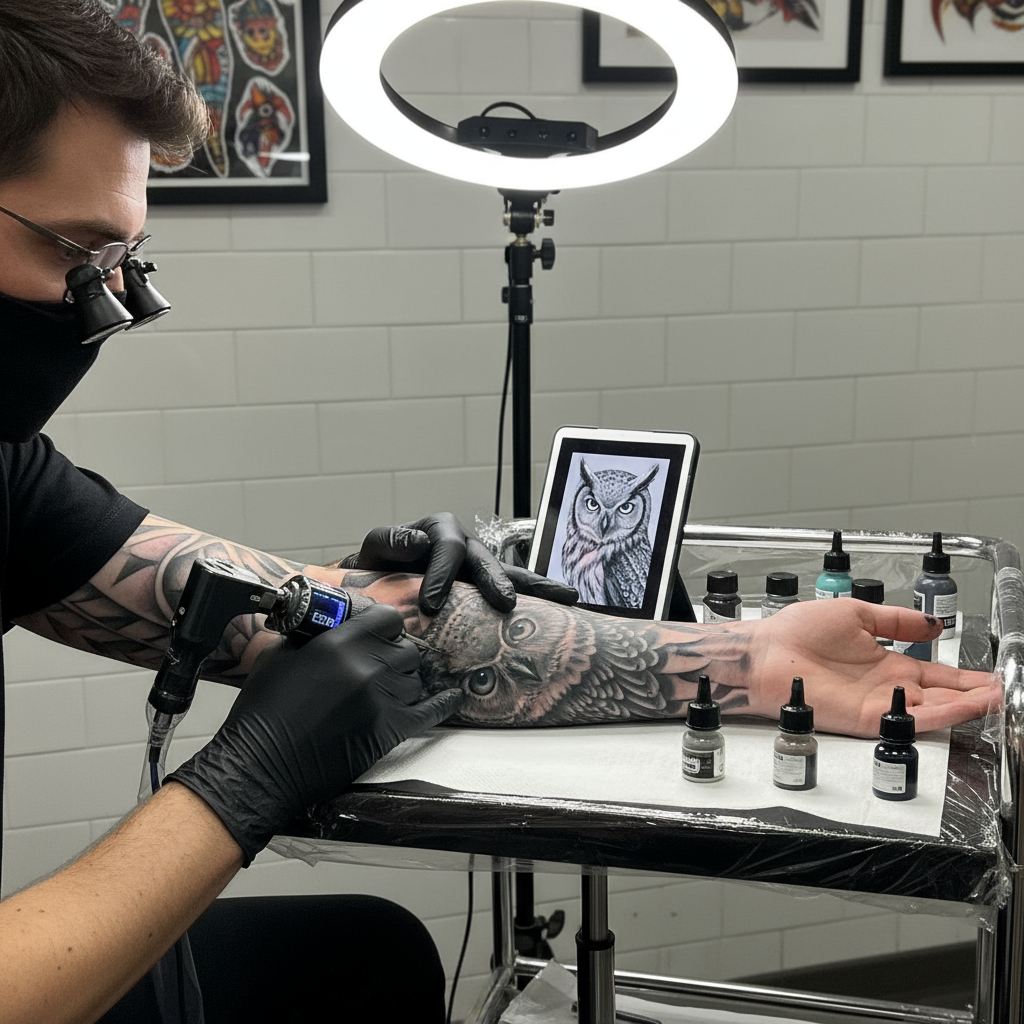
Tattoo Aftercare and Longevity
Different tattoo styles age differently.
Best for longevity:
- American traditional (those bold black lines)
- Japanese traditional
- Black and grey
- Tribal
Require more maintenance:
- Watercolor (without black structure)
- Fine-line (thin lines fade faster)
- White ink (fades quickly)
Proper tattoo shading techniques during application also affect how well your piece ages.
Aftercare basics:
- Keep it clean
- Moisturize properly
- Avoid sun exposure
- Follow your artist’s instructions
Planning Your Tattoo Journey
Start small if you’re new to tattoos.
You can always add more.
Consider these factors:
- Pain tolerance (different areas hurt more)
- Professional requirements (can you show tattoos at work?)
- Budget (good tattoos aren’t cheap)
- Time commitment (large pieces take multiple sessions)
FAQs About Tattoo Styles and Techniques
What is the best style of tattoo?
The best style depends on personal taste—popular ones include realism, traditional, tribal, and minimalist. Each has its own charm and artistic value. Choose based on what resonates with your personality.
What does a 777 tattoo mean?
A 777 tattoo is often linked to luck, spiritual growth, and divine guidance. In numerology, 7 is a powerful number representing intuition and enlightenment. Many see it as a symbol of positivity.
What are the different methods of tattooing?
Tattooing methods include machine tattooing, hand-poking, stick-and-poke, and cosmetic tattooing. Each technique has its own tools, styles, and effects. Machine tattooing is the most common today.
What does 444 mean in tattoos?
The 444 tattoo is often a sign of protection and guidance from angels. It symbolizes stability, balance, and inner strength. Many people get it as a reminder of spiritual support.
How do I choose my tattoo style?
Choosing a tattoo style depends on personal expression, meaning, and aesthetics. Research different styles like realism, traditional, or minimalist. Consult a skilled tattoo artist to match your vision.
What is the longest lasting tattoo style?
Bold, black ink tattoos like tribal or traditional styles tend to last longest. Their thick lines and solid shading age better over time. Lighter colors often fade faster.
What is the newest style of tattooing?
Watercolor, geometric, and fine-line tattoos are among the newest styles. These modern approaches focus on vibrant effects and delicate details. They’re trendy but may require touch-ups.
What’s the most painful type of tattoo?
Areas with thin skin or lots of nerve endings, like ribs, spine, or feet, hurt most. The pain also depends on size, shading, and your pain tolerance. Smaller tattoos in fleshy areas hurt less.
How long do tattoos take to heal?
Tattoos usually take 2–3 weeks for the surface to heal, but complete healing under the skin can take up to 2–3 months. Proper aftercare helps speed up recovery and prevents infection.
Where is the best place to get a tattoo?
The best place depends on visibility, pain tolerance, and personal preference. Popular spots include the arm, forearm, thigh, and back because they provide space and are less painful.
What is the most painless way to get a tattoo?
There’s no completely painless way, but choosing fleshy areas (like the upper arm or thigh) helps reduce discomfort. Some artists also offer numbing creams to make the process easier.
Conclusion
The world of tattoo styles and techniques is constantly evolving.
New innovations in equipment, inks, and artistic creativity push boundaries every day.
Clients want to explore what’s possible, and tattoo artists are delivering.
Whether you choose traditional approaches or modern innovations, the key is finding the right artist who specializes in your chosen tattoo style.
Because at the end of the day, a tattoo is permanent body art that should represent you perfectly.
Take your time, do your research, and choose wisely.
If you wanna buy Tattoo Supplies, then you can check our guide. Your future self will thank you.