
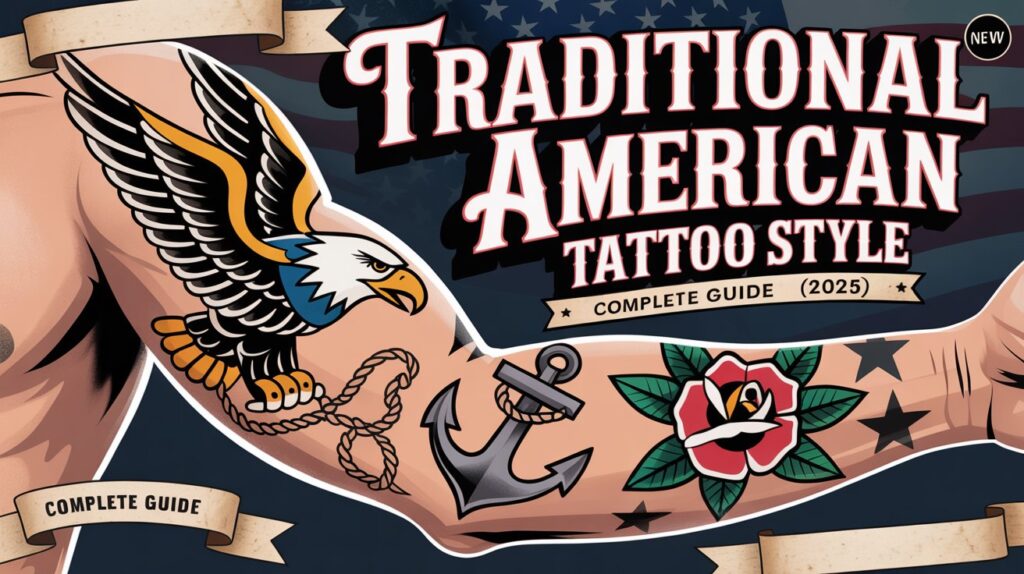
Traditional American tattoo style is making a massive comeback, and honestly, I get it.
I’ve been watching tattoo trends for years, and nothing beats the raw power of bold lines and iconic imagery that screams “America” from your skin.
But here’s what nobody’s telling you about this classic style.
Most people think they understand traditional American tattoos because they’ve seen a few eagles and anchors.
They’re wrong.
The real story goes way deeper than sailor Jerry and pin-up girls.
And if you’re thinking about getting one, there’s stuff you need to know that could make or break your tattoo experience.
Let me walk you through everything I’ve learned about this legendary style.
No BS, just the facts that matter.
Table of Contents
What is Traditional American Tattoo Style?
Traditional American tattoo style isn’t just another tattoo trend.
It’s the OG of American ink culture.
Born from rebellion, refined by sailors, and perfected by legends.
Here’s what makes it different from every other style out there:
- Bold, thick outlines that look like they were drawn with a Sharpie.
- Limited color palette – we’re talking primary colors only.
- Red, blue, yellow, green, black.
That’s it.
Iconic imagery that tells stories without words.
Eagles soaring over American flags.
Anchors holding steady against life’s storms.
Hearts pierced with daggers.
Roses blooming despite the thorns.
But here’s the thing most people miss.
Traditional American tattoo style isn’t about being pretty.
It’s about being permanent.
These tattoos were designed to last decades on working hands and weathered skin.
While other styles like watercolor tattoos might fade or blur over time, traditional American ink stays bold.
The thick lines prevent bleeding.
The solid colors resist fading.
The simple designs age like fine wine.
I’ve seen 50-year-old traditional tattoos that still look crisp.
Can’t say the same about most geometric tattoo style pieces or delicate dotwork tattoo techniques.
What Traditional American Style Is NOT:
- It’s not realism tattoo techniques with photographic detail
- It’s not japanese tattoo designs with flowing water and wind bars
- Also, it’s not tribal tattoo styles with abstract patterns
- It’s not blackwork tattoos with solid black fills
- It’s not stick and poke tattoos with rough, handmade lines
Traditional American is its own beast entirely.
- Clean.
- Bold.
- Timeless.
- American.
Complete History of American Traditional Tattoos
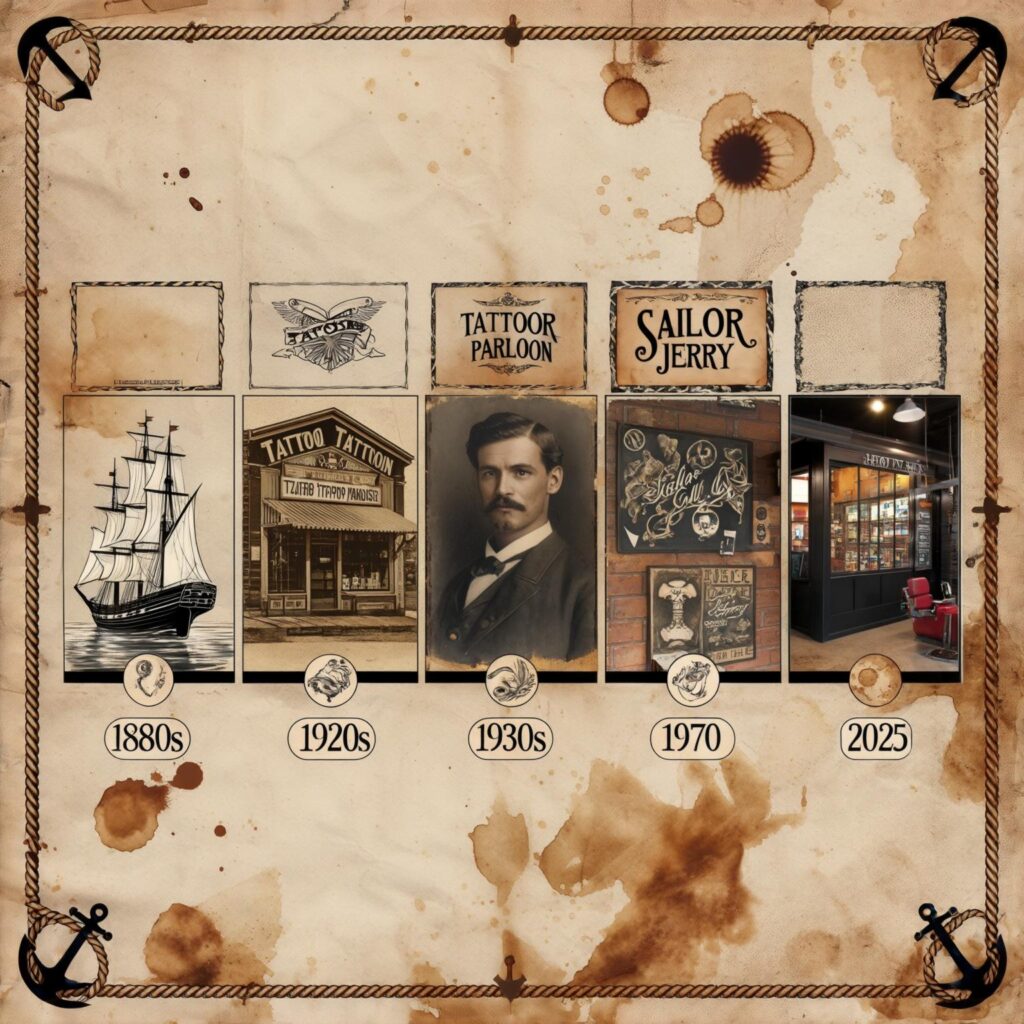
The real story of traditional American tattoo style starts in the late 1800s.
Not with some fancy artist in a studio.
But with sailors getting inked in sketchy port towns.
The Sailor Connection (1880s-1900s)
American sailors were traveling the Pacific, hitting up places like Polynesia and Asia.
They saw tattooing cultures that had been around for thousands of years.
And they brought those techniques back home.
But they didn’t just copy what they saw.
They made it American.
The Birth of American Flash (1900-1930)
Tattoo shops started popping up near naval bases and in rough neighborhoods.
Artists created “flash sheets” – pre-drawn designs that sailors could choose from.
Think of it like a menu, but for tattoos.
These flash sheets became the foundation of traditional American tattoo style.
Sailor Jerry’s Revolution (1930s-1970s)
Then came Norman “Sailor Jerry” Collins.
This guy changed everything.
He took those rough sailor tattoos and refined them into art.
What Sailor Jerry Did Different:
- Used better pigments that lasted longer
- Created cleaner, bolder line work
- Introduced more vibrant colors
- Standardized the iconography we know today
Jerry wasn’t just tattooing people.
He was creating a visual language.
The Underground Years (1950s-1980s)
For decades, traditional American tattoo style lived in the shadows.
Society looked down on tattoos.
You got inked if you were:
- Military
- Working class
- A rebel
- An outsider
Tattoo shops were hidden in rough parts of town.
Getting tattooed meant you were making a statement about who you were.
The Mainstream Explosion (1990s-Present)
Then tattoos went mainstream.
Suddenly everyone wanted ink.
But instead of embracing traditional American tattoo style, people chased trends.
- Tribal tattoo styles in the 90s.
- Japanese tattoo designs in the 2000s.
- Watercolor tattoos in the 2010s.
- Geometric tattoo style and dotwork tattoo techniques now.
But you know what?
Traditional American never went away.
It just waited.
And now it’s back stronger than ever.
Because while trends come and go, classics last forever.
Essential Characteristics & Visual Elements
Let me break down what makes traditional American tattoo style instantly recognizable.
Bold, Black Outlines
This isn’t negotiable.
Every traditional American tattoo has thick, black outlines.
Usually 3-5mm wide.
These aren’t just for looks.
They’re functional.
Why Thick Outlines Matter:
- Prevent color bleeding over time
- Keep the design readable as skin ages
- Create strong visual impact from a distance
- Allow for imperfect tattoo shading techniques
Compare this to stick and poke tattoos or fine line work.
Those styles rely on thin, delicate lines.
They look great fresh.
But after 10 years?
They’re often blurry messes.
Limited Color Palette
Traditional American uses maybe 6 colors total:
- Black (for outlines and shadows)
- Red (for blood, hearts, roses)
- Blue (for water, flags, uniforms)
- Yellow (for gold, highlights, sun)
- Green (for leaves, military, money)
- Brown (for skin, wood, earth)
That’s it.
- No purple.
- No orange.
- No pink.
- No pastels.
This limitation isn’t a weakness.
It’s a strength.
Benefits of Limited Colors:
- Colors stay true longer
- Creates visual harmony
- Easier for artists to master
- Cheaper to produce
- Ages better than complex palettes
Solid Color Fills
Traditional American doesn’t mess around with fancy tattoo shading techniques.
- No gradients.
- No blending.
- No watercolor tattoos effects.
Just solid blocks of color.
Fill it in. Move on.
This approach serves a purpose:
Why Solid Fills Work:
- Fade more evenly over time
- Look bold at any size
- Easier to touch up years later
- Work on any skin tone
- Don’t require master-level shading skills
Minimal Shading
When traditional American does use shading, it’s simple.
Basic black shading. Maybe some cross-hatching. Simple drop shadows.
Nothing fancy.
This is the opposite of realism tattoo techniques that rely heavily on complex shading.
Iconic Subject Matter
Traditional American tattoos stick to specific imagery:
Nautical Themes:
- Anchors
- Ships
- Swallows
- Nautical stars
- Pin-up sailors
- Lighthouse
- Compass roses
Patriotic Symbols:
- American eagles
- Flags
- Military insignia
- Lady Liberty
- Uncle Sam
- Stars and stripes
Romantic Elements:
- Hearts
- Roses
- Banners with names
- Cupid
- Love birds
- Wedding rings
Symbols of Luck/Protection:
- Horseshoes
- Four-leaf clovers
- Dice
- Playing cards
- Lucky number 7
- Black cats
Tough Guy Imagery:
- Skulls
- Daggers
- Panthers
- Snakes
- Brass knuckles
- Smoking guns
This isn’t random.
- Each symbol has meaning.
- Each design tells a story.
- Each tattoo serves a purpose.
Iconic Traditional American Tattoo Designs
Let me walk you through the greatest hits of traditional American tattoo style.
These are the designs that built the foundation of American tattoo culture.
The American Eagle
This is the king of traditional American tattoos.
What It Represents:
- Freedom
- Strength
- Patriotism
- Power
- Independence
Common Variations:
- Eagle holding American flag
- Eagle perched on anchor
- Eagle with banner reading “Freedom”
- Eagle attacking enemies
- Eagle protecting young
I’ve seen grown men tear up getting their first eagle tattoo.
It’s not just ink.
It’s identity.
The Anchor
Sailors got these to show they’d crossed the Atlantic.
But the meaning goes deeper.
Anchor Symbolism:
- Stability in chaos
- Hope during storms
- Connection to home
- Strength under pressure
- Grounded foundation
Popular Anchor Designs:
- Anchor with rope and chain
- Anchor with roses and banner
- Also, anchor with eagle perched on top
- Anchor with ship’s wheel
- Anchor breaking through waves
The Rose
Don’t let anyone tell you roses are just for women.
In traditional American tattoo style, roses are hardcore.
Rose Meanings:
- Beauty despite pain (thorns)
- Love worth fighting for
- Life’s fragile nature
- Passion and romance
- Memorial for lost love
Classic Rose Variations:
- Single red rose with stem
- Rose with dagger through it
- Rose with banner and name
- Bouquet of roses
- Rose with skull (life and death)
The Swallow
This little bird carries massive meaning in sailor culture.
Swallow Significance:
- Safe return from dangerous voyage
- 5,000 nautical miles traveled
- Loyalty (swallows mate for life)
- Hope and good fortune
- Protection at sea
Traditional Swallow Designs:
- Pair of swallows in flight
- Swallow carrying banner
- Swallow with anchor
- Swallow over ship
- Swallow with compass
The Dagger
Sharp, dangerous, and loaded with symbolism.
Dagger Meanings:
- Betrayal overcome
- Quick decision making
- Willingness to fight
- Protection of loved ones
- Cutting through BS
Popular Dagger Combos:
- Dagger through heart (heartbreak)
- Dagger through skull (victory over death)
- Dagger with snake (deadly combo)
- Dagger with roses (love hurts)
- Crossed daggers (ready for war)
The Pin-Up Girl
Controversial now, but essential to traditional American history.
Pin-Up Symbolism:
- Feminine beauty
- Motivation during war
- Dreams of home
- American ideal woman
- Reward for sacrifice
Classic Pin-Up Styles:
- Sailor girl in uniform
- Betty Grable pose
- Victory girl with flag
- Pinup with military insignia
- Rockabilly girl style
The Heart
Simple, powerful, universal.
Heart Variations:
- Sacred heart with flames
- Heart with banner and name
- Broken heart with stitches
- Heart with dagger
- Heart with wings
The Skull
Death, but make it American.
Skull Meanings:
- Mortality reminder
- Fearlessness
- Protection from death
- Victory over enemies
- Living life fully
Traditional Skull Designs:
- Skull with crossbones
- Skull wearing military helmet
- Skull with roses
- Skull with snake
- Flaming skull
The Panther
Fierce, powerful, American.
Panther Symbolism:
- Courage
- Ferocity
- Protection
- Independence
- Raw power
Panthers usually appear crawling up arms or legs.
Always black. Always fierce. Always ready to fight.
Symbolism & Meaning Guide
Here’s what nobody tells you about traditional American tattoo style symbolism.
Every element means something.
And getting it wrong can be embarrassing.
Color Meanings
Red:
- Blood and sacrifice
- Passion and love
- Danger and warning
- American pride
- Life force
Blue:
- Ocean and sky
- Loyalty and trust
- Sadness and loss
- American flag
- Stability
Yellow:
- Sun and gold
- Wealth and prosperity
- Cowardice (sometimes)
- Enlightenment
- Energy
Green:
- Money and luck
- Nature and growth
- Military service
- Envy and jealousy
- Irish heritage
Black:
- Death and mourning
- Power and strength
- Mystery and unknown
- Rebellion
- Protection
Nautical Symbol Meanings
- Anchor: Stability, hope, safe harbor
- Ship: Life’s journey, adventure, exploration
- Compass: Direction, guidance, finding your way
- Rope: Binding, connection, strength through unity
- Lighthouse: Guidance, warning, safe passage
- Shark: Fearlessness, danger, survival
- Octopus: Intelligence, flexibility, mystery
- Mermaid: Temptation, mystery, dual nature
Military Symbol Meanings
- Eagle: American power, freedom, victory
- Flag: Patriotism, sacrifice, national pride
- Star: Guidance, achievement, divine protection
- Ribbon Banner: Honor, remembrance, dedication
- Helmet: Protection, service, readiness
- Dog Tags: Identity, service, brotherhood
- Crossed Swords: Ready for battle, honor in combat
Religious Symbol Meanings
- Sacred Heart: Divine love, devotion, sacrifice
- Cross: Faith, salvation, spiritual protection
- Praying Hands: Faith, hope, divine guidance
- Angel: Protection, divine messenger, lost loved one
- Devil: Temptation, rebellion, dark side
- Rosary: Prayer, devotion, spiritual journey
Luck Symbol Meanings
- Horseshoe: Good fortune, protection, blessing
- Four-Leaf Clover: Rare luck, Irish heritage
- Dice: Taking chances, gambling with fate
- Playing Cards: Life’s game, luck, risk
- Lucky Number 7: Divine perfection, good fortune
- Black Cat: Good luck (contrary to superstition)
Combination Meanings
This is where it gets interesting.
Traditional American tattoos often combine symbols for deeper meaning.
- Rose + Dagger = Love hurts but it’s worth fighting for
- Skull + Rose = Beauty in death, life’s fragility
- Eagle + Anchor = Patriotic stability, American strength
- Heart + Banner = Love for specific person
- Swallow + Anchor = Safe return from dangerous journey
- Panther + Rose = Fierce love, dangerous beauty
Getting the Symbolism Right
Here’s my advice:
Don’t just pick symbols because they look cool.
Understand what they mean. Make sure they represent your story. Talk to your artist about combinations.
I’ve seen too many people regret tattoos because they didn’t understand the meaning.
Symbols to Be Careful With:
- Teardrop: Can indicate prison time or murder
- Spider Web: Often associated with prison or white supremacy
- Certain Numbers: Can have gang or hate group meanings
- Military Insignia: Don’t claim service you didn’t do
- Religious Symbols: Be respectful if you’re not religious
Do your homework.
Ask questions.
Make sure your traditional American tattoo style tells YOUR story accurately.
Traditional vs Neo-Traditional vs Other Styles
Let me clear up the confusion about traditional American tattoo style and its cousins.
People mix these up all the time.
And it matters more than you think.
Traditional American vs Neo-Traditional
Traditional American:
- Thick black outlines (3-5mm)
- Limited color palette (6 colors max)
- Simple, solid shading
- Classic American imagery only
- Minimal detail work
- Bold, readable designs
Neo-Traditional:
- Varied line weights (thin to thick)
- Extended color palette (20+ colors)
- Complex tattoo shading techniques
- Mixed imagery (American + other cultures)
- High detail work
- More realistic proportions
The Key Difference:
Traditional sticks to the rules. Neo-traditional breaks them intentionally.
Think of traditional as a classic Mustang. Neo-traditional is a modern Mustang with all the upgrades.
Both are Mustangs. But they serve different purposes.
Traditional American vs Japanese Tattoo Designs
This comparison comes up a lot.
Both styles are traditional. Both have deep cultural meaning. Both use bold imagery.
But they’re completely different approaches.
Traditional American:
- Individual, standalone pieces
- American cultural symbols
- Primary color palette
- Simple composition
- Quick to complete
Japanese Tattoo Designs:
- Large, flowing compositions
- Japanese cultural symbols
- Complex color gradations
- Intricate background elements
- Takes months/years to complete
Traditional American vs Tribal Tattoo Styles
Tribal tattoo styles dominated the 90s.
But they’re fundamentally different from traditional American.
Traditional American:
- Representational imagery (eagles, anchors, roses)
- Multiple colors
- Cultural storytelling
- American symbols
Tribal Tattoo Styles:
- Abstract patterns
- Solid black only
- Geometric shapes
- Various cultural origins (Polynesian, Celtic, etc.)
Traditional American vs Modern Styles
Vs Realism Tattoo Techniques:
- Traditional: Simple, iconic
- Realism: Complex, photographic
Vs Watercolor Tattoos:
- Traditional: Solid colors with black outlines
- Watercolor: Flowing colors without outlines
Vs Geometric Tattoo Style:
- Traditional: Organic, flowing shapes
- Geometric: Mathematical, precise patterns
Vs Blackwork Tattoos:
- Traditional: Multiple colors with black outlines
- Blackwork: Solid black only, no outlines
Vs Dotwork Tattoo Techniques:
- Traditional: Solid lines and fills
- Dotwork: Built entirely from dots
Vs Stick and Poke Tattoos:
- Traditional: Machine-made, precise lines
- Stick and Poke: Hand-poked, rough texture
Why These Differences Matter
Choosing the wrong style can mess up your vision.
- If you want longevity: Choose traditional American
- If you want fine detail: Choose realism
- Also, if you want abstract art: Choose geometric or watercolor
- If you want cultural authenticity: Choose traditional American or Japanese
- If you want minimalism: Choose blackwork or dotwork
Mixing Styles (Advanced Move)
Some people successfully combine traditional American tattoo style with other approaches.
Popular Combinations:
- Traditional American + Neo-traditional (updated classics)
- Traditional American + japanese tattoo designs (East meets West)
- Traditional American + blackwork tattoos (high contrast)
But this requires an experienced artist.
Don’t try mixing styles for your first tattoo.
Master one style first. Then experiment later.
Finding the Right Traditional Tattoo Artist
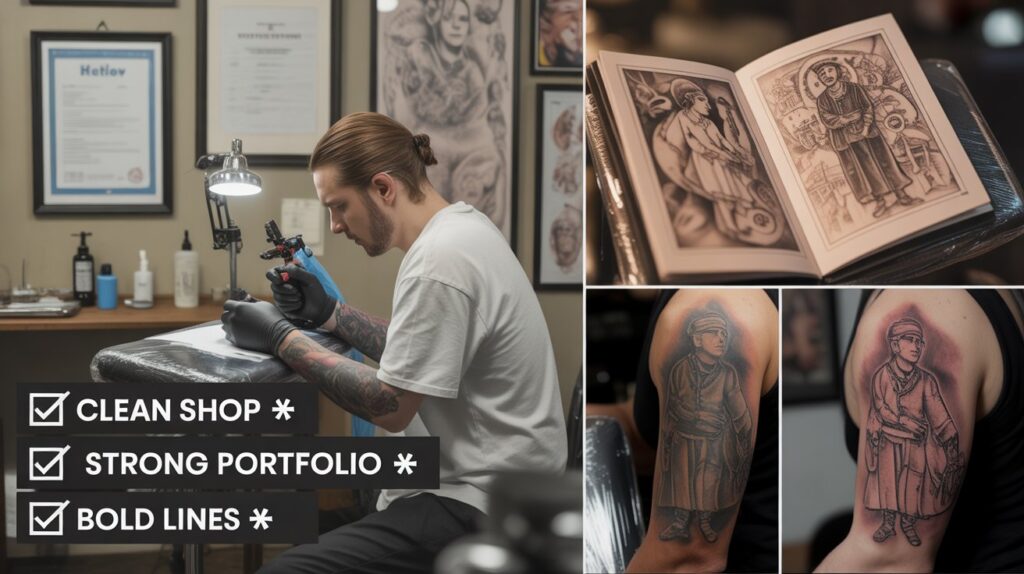
This is where most people screw up.
They pick an artist based on price or location.
Wrong move.
Traditional American tattoo style requires specific skills.
Not every tattoo artist can do it well.
What to Look For in a Traditional American Artist
Portfolio Check:
- Clean, bold line work
- Proper color saturation
- Classic American imagery
- Consistent style across pieces
- Aged tattoo photos (2+ years old)
Red Flags:
- Shaky or thin lines
- Muddy colors
- Over-complicated designs
- No traditional work in portfolio
- Only fresh tattoo photos
Technical Skills Required:
- Line Work: Must be able to pull consistent, bold lines. No wobbles. No thickness variations. Perfect circles and curves.
- Color Packing: Must saturate colors completely. No patchy areas. Even coverage. Proper color mixing.
- Composition: Must understand traditional American layout. Proper spacing. Balanced elements. Strong visual flow.
Questions to Ask Potential Artists:
- “How long have you been doing traditional American work?”
- “Can you show me some healed traditional pieces?”
- “What’s your experience with bold line work?”
- “Do you have flash sheets or just custom work?”
- “How do you ensure color saturation?”
Experience Levels:
Apprentice (0-2 years):
- Might be cheaper
- Higher risk of mistakes
- Good for simple flash pieces
- Avoid for large or complex work
Journeyman (2-5 years):
- Solid technical skills
- Building reputation
- Good value for money
- Can handle most traditional work
Master (5+ years):
- Consistent, high-quality work
- Premium pricing
- Booked months in advance
- Worth it for important pieces
Research Methods:
- Instagram Stalking: Look at their recent posts. Check tagged photos from clients. See how their work ages. Read comments for red flags.
- Shop Visits: Check cleanliness standards. Meet the artist in person. See work environment. Get a feel for professionalism.
- Client References: Ask for contacts of recent clients. See healed work in person. Get honest feedback. Learn about the experience.
Price vs Quality Balance
Cheap Traditional American Work:
- Often means corner-cutting
- Thin lines that won’t age well
- Poor color saturation
- Limited design options
- Higher touch-up needs
Premium Traditional American Work:
- Consistent, bold lines
- Proper color saturation
- Custom design options
- Long-term satisfaction
- Minimal touch-up needs
My Pricing Guidelines:
Budget at least $150/hour for quality traditional work. Don’t shop for the cheapest option. Remember: tattoos are permanent.
Booking Process:
- Research phase (1-2 weeks)
- Initial consultation (free or $50)
- Design approval (may require deposit)
- Appointment booking (1-6 months out)
- Tattoo session (2-8 hours depending on size)
Consultation Questions to Ask:
- “What’s your approach to traditional American work?”
- “How do you ensure the design will age well?”
- “Can you modify this flash design for me?”
- “What aftercare do you recommend?”
- “How long before I can get a touch-up if needed?”
Design Process & Customization Tips
Most people think traditional American tattoo style is just picking flash off the wall.
They’re missing the best part.
Flash vs Custom: The Real Difference
Flash Tattoos:
- Pre-drawn designs
- Available immediately
- Lower cost
- Limited personalization
- Quick turnaround
Custom Traditional:
- Designed specifically for you
- Takes 2-4 weeks to design
- Higher cost
- Complete personalization
- Your story told in ink
The Custom Design Process
Step 1: Story Collection
Your artist needs to understand your story.
Questions They Should Ask:
- What does this tattoo represent?
- What elements are most important to you?
- Do you have size/placement preferences?
- Any elements you definitely want/don’t want?
- What’s your pain tolerance and budget?
Step 2: Research Phase
Good traditional artists research before designing.
What They’re Looking For:
- Historical accuracy of symbols
- Proper proportions for traditional style
- Color combinations that work
- Composition that flows with your body
- Elements that age well together
Step 3: Initial Sketch
First draft is usually rough.
What to Evaluate:
- Overall composition and flow
- Proportion of elements
- Placement on your body
- Size relationships
- Missing elements
Don’t worry about details yet.
Focus on big picture stuff.
Step 4: Refinement
This is where your tattoo comes alive.
Elements Being Refined:
- Line weights and thickness
- Color placement and saturation
- Detail level and complexity
- Banner text and lettering
- Background elements
Step 5: Final Approval
Before needles touch skin:
Final Checklist:
- Spelling is correct (if text included)
- Proportions work for your body
- Colors complement your skin tone
- Design follows traditional American rules
- You’re 100% happy with everything
Customization Options Within Traditional Style
Color Variations:
- All black version of colored design
- Limited palette (2-3 colors only)
- Single color emphasis
- High contrast combinations
Size Modifications:
- Scaling for different body areas
- Element priority for smaller sizes
- Detail reduction for distance viewing
- Proportion adjustments for body curves
Personal Elements:
- Names or dates in banners
- Specific military branch symbols
- Regional elements (state flowers, etc.)
- Pet portraits in traditional style
- Family crests or heritage symbols
Placement Considerations
Classic Placements:
- Forearm: Perfect for vertical designs (daggers, roses)
- Upper arm: Great for eagles, panthers, ships
- Chest: Eagles, hearts, patriotic themes
- Back: Large ship scenes, eagle spreads
- Calf: Anchors, pin-ups, nautical themes
Modern Placements:
- Neck: Small traditional elements
- Hands: Tiny anchors, swallows
- Behind ear: Minimalist traditional symbols
- Wrist: Small hearts, stars, anchors
Working With Body Shape
Muscular Arms:
- Panthers work great
- Eagles spread across muscle
- Ships can follow arm curves
- Anchors emphasize strength
Thin Arms:
- Vertical elements work best
- Avoid wide horizontal designs
- Single roses or daggers
- Small nautical elements
Curved Areas:
- Design must flow with curves
- Elements may need adjustment
- Consider how design moves
- Account for skin stretching
Collaboration Tips
- Be Clear About Your Vision: Don’t just say “something traditional.” Bring reference images. Explain the meaning you want. Share your story honestly.
- Trust Your Artist’s Expertise: They know what works and what doesn’t. Listen to technical advice. Don’t fight traditional style rules. Remember they want you to love it too.
- Communication During Design: Ask questions when confused. Speak up about concerns early. Don’t assume they can read your mind. Be specific about changes needed.
Timeline Expectations:
- Simple flash modification: 1-2 weeks
- Custom traditional design: 2-4 weeks
- Complex multi-element piece: 4-8 weeks
- Large traditional scene: 2-3 months
Don’t rush this process.
Great traditional American tattoo style work takes time to design properly.
Traditional Tattoo Aftercare & Longevity
Here’s what separates traditional American tattoo style from other styles:
It’s built to last.
But only if you take care of it properly.
Why Traditional American Ages Better
Thick Lines Hold Structure:
- 3-5mm lines resist blurring
- Black outlines stay defined
- Design remains readable
- Details don’t disappear
Solid Colors Fade Evenly:
- No gradients to get muddy
- Primary colors stable over time
- Easy to touch up years later
- Consistent aging across design
Simple Shading Lasts:
- Basic black shading holds
- No complex tattoo shading techniques to fail
- Minimal areas to touch up
- Ages gracefully
The First 2 Weeks: Critical Period
Days 1-3: Fresh Wound Care
Your tattoo is an open wound.
Immediate Aftercare:
- Keep bandage on 2-4 hours
- Wash with antibacterial soap
- Pat dry with clean towel
- Apply thin layer of healing ointment
- No swimming, no soaking
Days 4-7: Peeling Phase
This is when people panic.
What’s Normal:
- Skin starts flaking off
- Colors look dull
- Mild itching begins
- Scabbing over line work
What to Do:
- Keep washing 2-3 times daily
- Switch to fragrance-free lotion
- DO NOT pick at peeling skin
- Let scabs fall off naturally
Days 8-14: Settling Phase
What’s Happening:
- New skin forming over tattoo
- Colors starting to brighten
- Itching decreases
- Scabs mostly gone
Aftercare Continues:
- Moisturize 2-3 times daily
- Avoid direct sunlight
- No heavy exercise yet
- Still no swimming
Months 2-6: Healing Completion
Month 2:
- Tattoo looks about 80% of final result
- Colors continue brightening
- Can resume normal activities
- Start using sunscreen
Months 3-6:
- Healing complete
- Final color saturation visible
- Time for touch-ups if needed
- Full aftercare routine established
Long-Term Care for Traditional American Tattoos
Daily Habits:
Moisturizing:
- Use quality, fragrance-free lotion
- Focus on tattooed areas
- Prevent skin from getting too dry
- Maintain skin elasticity
Sun Protection:
- SPF 30+ on tattoos always
- Reapply every 2 hours in sun
- Wear covering when possible
- UV exposure is tattoo enemy #1
Skin Health:
- Stay hydrated (affects skin quality)
- Eat foods rich in vitamins A, C, E
- Avoid excessive alcohol (dehydrates skin)
- Don’t smoke (reduces healing ability)
What Damages Traditional American Tattoos
UV Exposure:
- Fades colors faster than anything
- Breaks down ink molecules
- Causes premature aging
- Makes touch-ups necessary
Weight Fluctuations:
- Stretches skin and distorts design
- Can cause line work to spread
- Affects color saturation
- Particularly bad for large pieces
Poor Skin Care:
- Dry skin makes tattoos look dull
- Increases fading rate
- Makes details harder to see
- Speeds up aging process
Chemical Exposure:
- Harsh soaps and detergents
- Chlorine from pools
- Industrial chemicals
- Some medications
Touch-Up Timeline
- 6 Months: Minor touch-ups if needed
- 2-3 Years: Color refresh possible
- 5-7 Years: Lines may need reinforcement
- 10+ Years: Comprehensive refresh
Signs You Need a Touch-Up:
Line Work Issues:
- Lines looking fuzzy or spread
- Gaps in outlines appearing
- Inconsistent line thickness
- Blurring around edges
Color Problems:
- Fading to lighter shades
- Muddy or dull appearance
- Patchy color coverage
- Colors bleeding together
Age-Related Changes:
- Skin texture changes affecting appearance
- Natural fading from decades of wear
- Proportion changes from body changes
Maximizing Longevity
Best Practices:
Choose Placement Wisely:
- Areas with minimal sun exposure
- Locations that don’t stretch much
- Places you can easily protect
- Consider your lifestyle
Size Appropriately:
- Bigger tattoos age better than tiny ones
- Small details disappear over time
- Bold elements hold longest
- Plan for how it will look in 20 years
Color Selection:
- Darker colors last longer
- Primary colors more stable
- Black lasts longest of all
- Avoid trendy color combinations
Lifestyle Factors:
Jobs Affecting Tattoos:
- Outdoor work = more sun exposure
- Manual labor = more wear
- Chemical exposure = faster fading
- Consider your career path
Geographic Considerations:
- Sunny climates = more UV damage
- Humid areas = different healing
- Altitude affects healing
- Plan for where you’ll live
50-Year Outlook
I’ve seen traditional American tattoo style pieces from the 1960s.
What Holds Up:
- Basic shapes still visible
- Black outlines mostly intact
- Simple color blocks readable
- Overall design recognizable
What Doesn’t:
- Fine details disappear
- Complex shading gets muddy
- Thin lines blur together
- Light colors fade completely
This is why traditional American tattoo style was designed the way it was.
Those old sailors knew their tattoos needed to last decades on working hands.
They built longevity into the style itself.
Modern Evolution & Contemporary Trends
Traditional American tattoo style isn’t stuck in the past.
It’s evolving.
And some of these changes are incredible.
The New School Revolution
What’s Different:
- Larger scale pieces (full sleeves, body suits)
- Higher quality equipment and ink
- Better trained artists
- Improved hygiene standards
- More diverse clientele
What Stays the Same:
- Bold black outlines
- Limited color palette
- Classic American imagery
- Symbolic storytelling
- Rebellious spirit
Female-Friendly Traditional Designs:
- Strong women instead of pin-ups
- Flowers with thorns (beauty with strength)
- Female sailors and mechanics
- Rosie the Riveter imagery
- Mother and child themes
- Fierce animals (panthers, eagles)
- Hearts with personal meaning
Cultural Diversity in Traditional American
Another gap competitors missed.
Traditional American isn’t just for white sailors anymore.
Modern Inclusive Elements:
- Latino cultural symbols adapted to traditional style
- African American heritage elements
- Native American respectful incorporation
- Asian American fusion pieces
- LGBTQ+ pride symbols in traditional format
Regional Variations
West Coast Traditional:
- More colorful palettes
- Beach and surf elements
- California bear imagery
- Hollywood influences
- Tech industry symbols
East Coast Traditional:
- Darker, grittier aesthetic
- Industrial imagery
- City skylines
- Working class symbols
- Historical colonial elements
Southern Traditional:
- Confederate imagery (controversial)
- Country music themes
- Agricultural symbols
- Religious elements stronger
- Family heritage emphasis
Southwest Traditional:
- Desert imagery
- Mexican cultural fusion
- Cowboy and ranch themes
- Native American influences
- Border culture elements
Technology’s Impact
Better Equipment:
- Rotary machines for smoother lines
- Improved ink formulations
- Better needles and tubes
- Digital design tools
- Social media portfolio sharing
New Possibilities:
- More precise line work
- Better color saturation
- Faster healing inks
- Custom flash creation
- Global artist collaboration
Celebrity Influence
Traditional American in Hollywood:
Positive Impacts:
- Normalized tattoo acceptance
- Showcased quality artwork
- Brought style to mainstream
- Increased artist demand
Negative Impacts:
- Trend-driven choices
- Poor quality copycat work
- Misunderstood symbolism
- Cultural appropriation issues
Social Media Revolution
Instagram Changes Everything:
For Artists:
- Global portfolio reach
- Direct client booking
- Style trend spreading
- Technique sharing
For Clients:
- Easy artist research
- Style comparison
- Healed tattoo examples
- Real client reviews
Contemporary Traditional Artists to Watch:
- Bert Krak: NYC legend keeping old school alive
- Stephanie Tamez: Female traditional powerhouse
- Luke Jinks: UK traditional master
- Mike Boyd: Australian traditional innovator
- Myke Chambers: Canadian traditional specialist
Modern Traditional Trends
Bigger is Better:
- Full sleeves instead of small pieces
- Chest panels and back pieces
- Large scale traditional compositions
- Bold visibility statements
Color Innovation:
- Improved pigment stability
- New color combinations
- Better healing formulations
- Longer-lasting vibrancy
Hybrid Styles:
- Traditional + japanese tattoo designs
- Traditional + blackwork tattoos
- Traditional + geometric tattoo style
- Traditional + watercolor tattoos (carefully done)
Quality Over Quantity:
- Fewer, larger pieces
- Higher investment per tattoo
- Better artist selection
- Long-term planning
The Collector Culture
Modern Traditional Collectors:
- Plan full body suits
- Work with single artists
- Focus on cohesive themes
- Invest significant money/time
Collection Strategies:
- Start with smaller test pieces
- Build relationships with artists
- Plan for body flow and composition
- Consider lifestyle changes over time
Future of Traditional American
What’s Coming:
- Even better ink technology
- More female and diverse artists
- Global style fusion
- Virtual reality design tools
- AI-assisted flash creation
What Won’t Change:
- Bold black outlines
- Primary color focus
- American cultural symbolism
- Rebellious spirit
- Working class roots
Sustainability Movement
Eco-Friendly Traditional:
- Vegan ink formulations
- Biodegradable aftercare products
- Sustainable shop practices
- Ethical ink sourcing
- Reduced waste processes
Traditional American is adapting to modern values without losing its core identity.
Your Next Steps
So there you have it.
Everything you need to know about traditional American tattoo style.
From the sailor origins to modern innovations.
From basic symbolism to advanced customization.
From healing to long-term care.
Here’s what I want you to do next:
Step 1: Define Your Why
Don’t get a traditional American tattoo because it looks cool.
Get it because it means something to you.
What’s your story? What does America mean to you? Which symbols represent your journey? How do you want to be remembered?
Step 2: Research Artists
Use the criteria I gave you.
Look at portfolios. Check healed work. Read reviews. Visit shops.
Don’t settle for “good enough.”
Step 3: Plan Your Investment
Budget properly.
Good traditional American work costs money.
But it lasts decades.
Calculate cost per year over 20+ years.
Suddenly that $500-1000 investment looks pretty smart.
Step 4: Start Small
If it’s your first traditional piece, don’t go huge.
Get a classic flash piece.
See how you like the style.
Learn how your skin heals.
Build relationship with your artist.
Step 5: Commit to Care
Traditional American tattoo style will only look as good as you maintain it.
Daily moisturizing. Consistent sun protection. Healthy lifestyle choices. Regular touch-ups when needed.
Frequently Asked Questions
How much does a traditional American tattoo cost?
Expect $150-300 per hour for quality work.
- Small flash pieces: $100-300
- Medium custom work: $300-800
- Large traditional pieces: $800-2000+
- Full sleeves: $1500-4000+
Price varies by location, artist experience, and complexity.
Don’t shop for cheapest option.
How long do traditional American tattoos take to heal?
2-3 weeks for surface healing.
3-6 months for complete healing.
Healing Timeline:
- Week 1: Scabbing and peeling
- Week 2: New skin formation
- Month 1: 80% healed appearance
- Months 2-6: Full color development
Follow aftercare religiously during this period.
Can I mix traditional American with other styles?
Yes, but carefully.
Good Combinations:
- Traditional + japanese tattoo designs (experienced artists only)
- Traditional + blackwork tattoos (high contrast)
- Traditional + Neo-traditional (natural evolution)
Avoid Mixing:
- Traditional + watercolor tattoos (different line philosophies)
- Traditional + stick and poke tattoos (different aesthetic)
- Traditional + dotwork tattoo techniques (clashing styles)
Talk to experienced artists about hybrid approaches.
Do traditional American tattoos hurt more than other styles?
The bold lines can be more intense.
Why It Might Hurt More:
- Thick outlines require multiple passes
- Solid color packing takes time
- Bold approach means no skipping areas
Pain Management:
- Choose less sensitive body areas
- Schedule shorter sessions
- Take breaks as needed
- Use numbing cream if artist approves
How do I know if my traditional tattoo is healing properly?
Look for these normal signs:
Good Healing:
- Mild scabbing over line work
- Even peeling of top skin layer
- Gradual color brightening
- Minimal swelling after day 3
Warning Signs:
- Excessive swelling after week 1
- Pus or strange discharge
- Red streaking from tattoo
- Severe pain increasing over time
- Fever or feeling sick
Contact your artist or doctor if concerned.
Can I get a traditional American tattoo if I have dark skin?
Absolutely.
Considerations:
- Choose darker colors for better visibility
- Black and red show up excellently
- Yellow might not show as well
- Work with experienced artist familiar with darker skin
- Healing might take slightly longer
Many of the original traditional American tattoos were on sailors of all ethnicities.
Should I get flash or custom traditional work?
Depends on your goals.
Choose Flash If:
- You want classic, timeless design
- Budget is limited
- You want tattoo same day
- You like existing traditional imagery
- First traditional tattoo
Choose Custom If:
- You have specific personal story
- Want unique elements
- Have unusual placement needs
- Planning larger composition
- Working with preferred artist long-term
How often will I need touch-ups?
Depends on care and lifestyle.
Typical Timeline:
- 6 months: Minor fixes if needed
- 2-3 years: Possible color refresh
- 5-10 years: Line reinforcement
- 10+ years: Major refresh consideration
Factors Affecting Touch-Up Needs:
- Sun exposure level
- Skin care routine
- Body weight changes
- Original tattoo quality
- Lifestyle factors
Can I cover up an old tattoo with traditional American work?
Often yes, but requires planning.
Traditional American Cover-Up Advantages:
- Bold black outlines hide old work well
- Solid colors can cover most things
- Large traditional pieces work great for cover-ups
- Experienced traditional artists know cover-up tricks
Limitations:
- Old tattoo can’t be too dark
- Size constraints (new must be larger)
- Color limitations (darker colors needed)
- May require multiple sessions
What’s the difference between American traditional and japanese tattoo designs?
Completely different approaches:
American Traditional:
- Individual pieces that stand alone
- American cultural symbols
- Bold outlines, solid colors
- Quick completion (hours/days)
- Primary color palette
Japanese Tattoo Designs:
- Large, flowing compositions
- Japanese cultural elements
- Complex shading and gradients
- Long completion time (months/years)
- Extensive color range
Both are traditional, but from different cultures and approaches.
Is traditional American tattoo style going out of fashion?
Never.
Why Traditional American Stays Relevant:
- Timeless aesthetic appeal
- American cultural significance
- Proven aging characteristics
- Celebrity and media presence
- Quality tattoo shop staple
While other styles like watercolor tattoos or geometric tattoo style come and go, traditional American remains constantly popular.
It’s not a trend – it’s a classic.
Can I get traditional American work over stick and poke tattoos?
Usually yes.
Considerations:
- Stick and poke tattoos are typically lighter
- Traditional bold lines cover well
- May need extra sessions for full coverage
- Quality varies widely with stick and poke work
Consult with experienced traditional artist about specific situation.
Final Thoughts
Traditional American tattoo style isn’t just body art.
It’s American history written in ink.
It’s rebellion and conformity.
It’s individual and universal.
It’s simple and complex.
When you get a traditional American tattoo, you’re not just getting decorated.
You’re joining a tradition that goes back over a century.
You’re connecting with sailors who crossed dangerous oceans.
You’re honoring workers who built this country.
You’re claiming your place in American culture.
But you’re also making it your own.
Your story. Your symbols. Your skin.
That’s the real power of traditional American tattoo style.
It gives you a way to carry your identity permanently.
Bold. Visible. Unapologetic.
Just like America itself.
Ready to get started?
Find your artist. Tell your story. Make your mark.